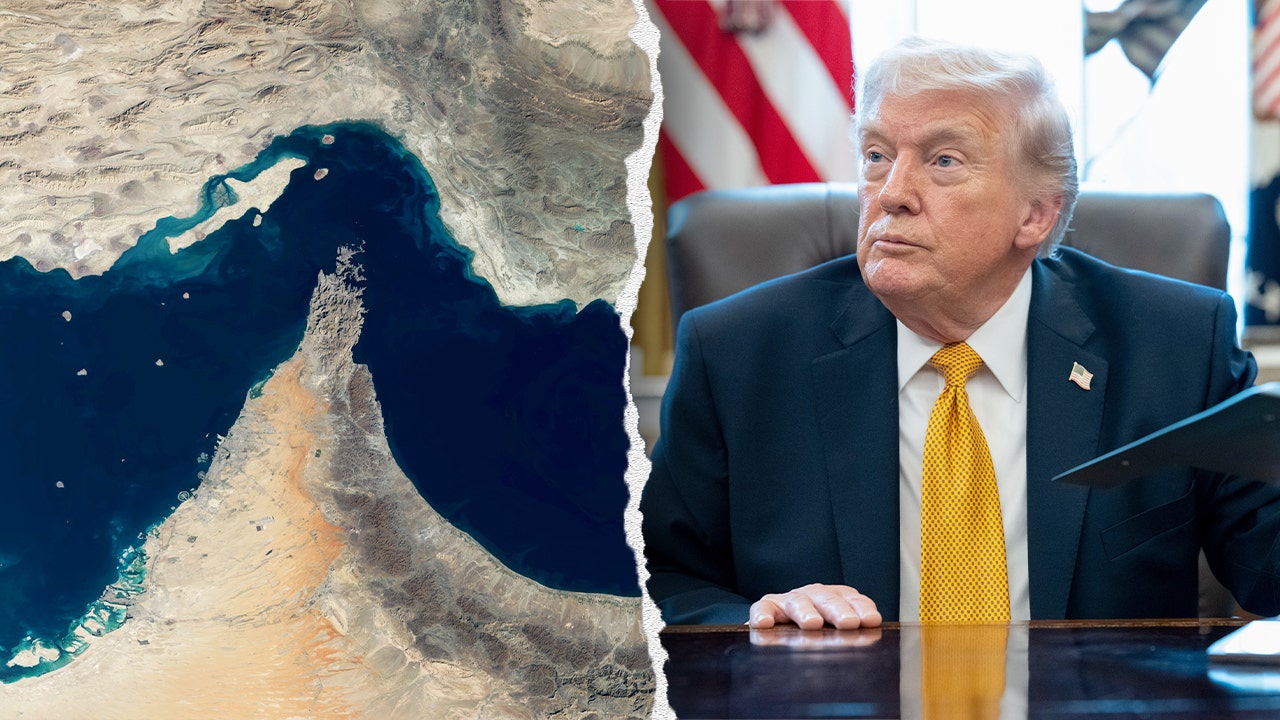

As the Trump administration intensifies its efforts against Iran with sanctions, naval maneuvers, and financial crackdowns, a critical question arises: Will this unprecedented economic pressure truly destabilize the Iranian regime, or will its leaders once again endure the hardship, quash dissent, and maintain their grip on power?
Treasury Secretary Scott Bessent noted in a Tuesday post on X that the “Economic Fury” campaign has already disrupted revenue streams worth “tens of billions of dollars” that could have funded terrorism. He also highlighted that Iran’s inflation has doubled, and its currency has significantly depreciated under the ongoing maximum pressure strategy.
Bessent further cautioned that Kharg Island, Iran’s main oil export hub, is approaching its storage limits, which might compel production cuts. This situation, he claimed, could cost the regime approximately $170 million per day in lost revenue.
This heightened pressure campaign represents one of the most assertive U.S. attempts in recent years to economically isolate Iran. The pressing question remains whether this approach can extract substantial concessions from a regime known for withstanding economic challenges, or if it risks inciting broader instability—from energy market disruptions to regional escalations—before Iran reaches a breaking point.
A cargo ship navigates the Persian Gulf towards the Strait of Hormuz on April 22, 2026. (AP Photo)
A senior administration official disclosed to Fox News Digital that the Treasury is broadening the “Economic Fury” initiative beyond conventional sanctions, aiming at Iran’s capacity to produce, transfer, and reclaim funds through oil, banking, cryptocurrency, and clandestine trade networks.
The official said Treasury has disrupted billions in projected Iranian oil revenue in recent days alone, including freezing half a billion dollars in regime-linked cryptocurrency, while also escalating pressure on Chinese “teapot” refineries, foreign banks and sanctions-evasion networks facilitating Tehran’s trade.
The Treasury has also warned financial institutions in China, Hong Kong, the United Arab Emirates and Oman that continued facilitation of Iranian illicit commerce could trigger secondary sanctions, while signaling that foreign companies — including airlines — may also face penalties if they support prohibited Iranian activity.
But Alireza Nader, an Iranian independent analyst based in Washington, is skeptical that economic pressure alone will force a strategic breaking point.
“It looks like a game of chicken and I think the regime thinks that it can win this game of chicken with President Trump,” he told Fox News Digital.
“I don’t see this economic blockade … leading to some sort of breaking point for the regime,” Nader added, arguing that Iran’s leadership has repeatedly shown it is willing to let ordinary citizens bear extraordinary suffering to preserve power.
“The regime cares about staying in power,” he said, warning that public hardship does not necessarily translate into vulnerability.
“The economic clock is moving much faster on Iran than on its adversaries.”
That skepticism stands in stark contrast to Miad Maleki, a former Treasury sanctions analyst, who argues Washington may now hold its greatest leverage over Iran since the 1979 revolution.
“We’ve never had the level of leverage that we have today with Iran in the history of our conflict … since 1979,” Maleki said.
A senior administration official said Treasury has disrupted billions in projected Iranian oil revenue in recent days alone. (CENTCOM)
For Maleki, what makes this moment different is not sanctions alone, but the convergence of sanctions, naval blockade and aggressive secondary enforcement.
He said Iran’s already fragile economy — marked by 104% food inflation and a roughly 90% collapse in purchasing power — could face roughly $435 million in daily economic losses if maritime restrictions hold.
“Iran’s economy relies on the Strait of Hormuz more than any other economy,” Maleki said, arguing that disruption around the strait may ultimately hurt Iran faster than its adversaries.
If restrictions are fully enforced, Maleki warned, “crude onshore storage shortages in about 7 to 14 days, then they can buy a few weeks with filling up a dozen tankers already in the Persian Gulf, but they have to start dropping oil extraction now in anticipation of running out of storage. They are also facing gasoline shortages in matters of days or a few weeks, forced oil-production cuts, and eventually banking or salary strain.”
Independent shipping intelligence from shipping intelligence firm Kpler suggests Iran’s oil bottleneck may already be intensifying, though perhaps on a slightly longer timeline than some sanctions advocates predict.
Before the conflict, Iran exported roughly 2 million barrels of oil per day, Court Smith, Kpler’s head of engagements and partnerships, told Lauren Simonetti at FOX Business, but current exports appear closer to 1 million barrels daily, leaving an estimated 1 million barrels per day accumulating in storage.
Smith estimated Iran may have roughly 30 days before shoreside storage faces severe capacity constraints under current conditions, while warning that older fields or marginal wells could already be facing early shut-in pressures.
To buy time, Iran has reportedly begun pulling decades-old tankers out of storage for temporary floating capacity, a sign of mounting logistical strain.
Former Israeli national security adviser Yaakov Amidror argues the blockade should not be judged by whether it forces immediate capitulation, but by whether Washington has the patience to let time erode Iran’s strength.
“Blockade is one of the oldest forms of warfare,” Amidror said. “Blockade equals time.”
In his view, the strategy’s advantage is precisely that it imposes relatively low costs on the United States while gradually exhausting Iran’s economy.
“The siege does its work. It weakens Iran,” he said, describing it as one of the cheapest long-term methods of pressure available.
Amidror also pushed back forcefully against claims that modern enforcement is unrealistic.
“I don’t buy the idea that the U.S. Navy in the 21st century can’t monitor the 35 kilometers of blockade,” he said, arguing that American surveillance, satellites and naval assets are more than capable of controlling the choke point over time.
Danny Citrinowicz, a nonresident fellow with the Atlantic Council’s Middle East Programs, offers a far more skeptical view.
“The blockade won’t force Iran to capitulate,” Citrinowicz said.
Treasury Secretary Scott Bessent said in a Tuesday post on X that the “Economic Fury” campaign has already disrupted “tens of billions of dollars in revenue” that would otherwise support terrorism. (U.S. Navy/Handout via Reuters)
“This country is under sanctions since 1979 … they know how to make adjustments,” he added.
“The regime isn’t just dependent on oil and energy exports to survive, it has other means of income,” Nader argued, “Oil and natural gas are its biggest sources of income, but I think this regime has made a calculation that it can withstand even months of economic siege because it may think that the Trump administration is more vulnerable to political pressure.”
“Look,” he added, “American voters vote in the president and vote out the president. In Iran, nobody’s voted in and out. The regime maintains power through brutal force. If there are public disturbances, if there are new uprisings, the regime will try to deal with them as it has in the past to mass violence, killing thousands of people. That’s how this regime stays in power.”
Citrinowicz warned that Iran may escalate regionally or exploit global energy vulnerabilities long before economic collapse forces surrender, potentially driving oil prices sharply upward and creating international political pressure before Tehran truly breaks.
“In the pain game … the world will feel that before,” he said.
That leaves the administration facing a strategic endurance contest: Can economic warfare degrade Iran faster than the regime can adapt, repress and weaponize global pain?
Nader believes Iran’s rulers may still calculate that they can outlast U.S. patience through repression and resource management.
Maleki believes the economic “clock is moving much faster” on Iran than on its adversaries.
Amidror argues time itself may be Washington’s greatest weapon.

A senior administration official told Fox News Digital that Treasury is aggressively expanding “Economic Fury” beyond traditional sanctions by targeting Iran’s ability to generate, move and repatriate funds across oil, banking, cryptocurrency and covert trade networks. (Petty Officer 3rd Class Tajh Payne/U.S. Navy/Reuters)
And Citrinowicz warns that if the United States expects quick capitulation, it may be underestimating both Iran’s resilience and its willingness to escalate.
Fox News Digital has reached out to the Iranian mission to the U.N., CENTCOM and the Pentagon for comment.