Less than a year after finally getting the breast implants I had always wanted, I felt more disconnected from my body than ever. I looked the way I had dreamed of looking, yet I felt as though I was dying.
I had no idea that the implants I had spent years longing for might be behind my symptoms. Before I understood what was happening, the experience had taken a toll on me financially, emotionally and physically.
Like many teenagers, I spent years padding my bras with socks and wearing push-up styles because I wanted larger breasts.
By 29, I was a new mother who barely recognized her own body. After pregnancy and breastfeeding my son for two years, my breasts had stretched and begun to sag. Like countless other mothers adjusting to changes in their bodies, I wanted to feel confident again. I decided the time had come to get implants.
I researched the procedure for years, comparing saline and silicone implants, learning about recovery and speaking with several doctors about the risks. Many women close to me had implants, including my mother, aunts, sister and most of my friends. In my circle, breast implants were never really discussed as something dangerous or worrisome.
I had the surgery in January 2021. I was sore and swollen at first, but those symptoms subsided within a few weeks, and I was delighted with the results. I chose 495 cc implants, which on my 5-foot-1, 105-pound frame took me from an A cup to a DD. I felt sexy and more confident than ever.
That happiness lasted only a short time. Nine months later, everything had changed.
Before the operation, I had read accounts from women who said they were suffering from breast implant illness, or BII, and I raised my concerns with my doctor.

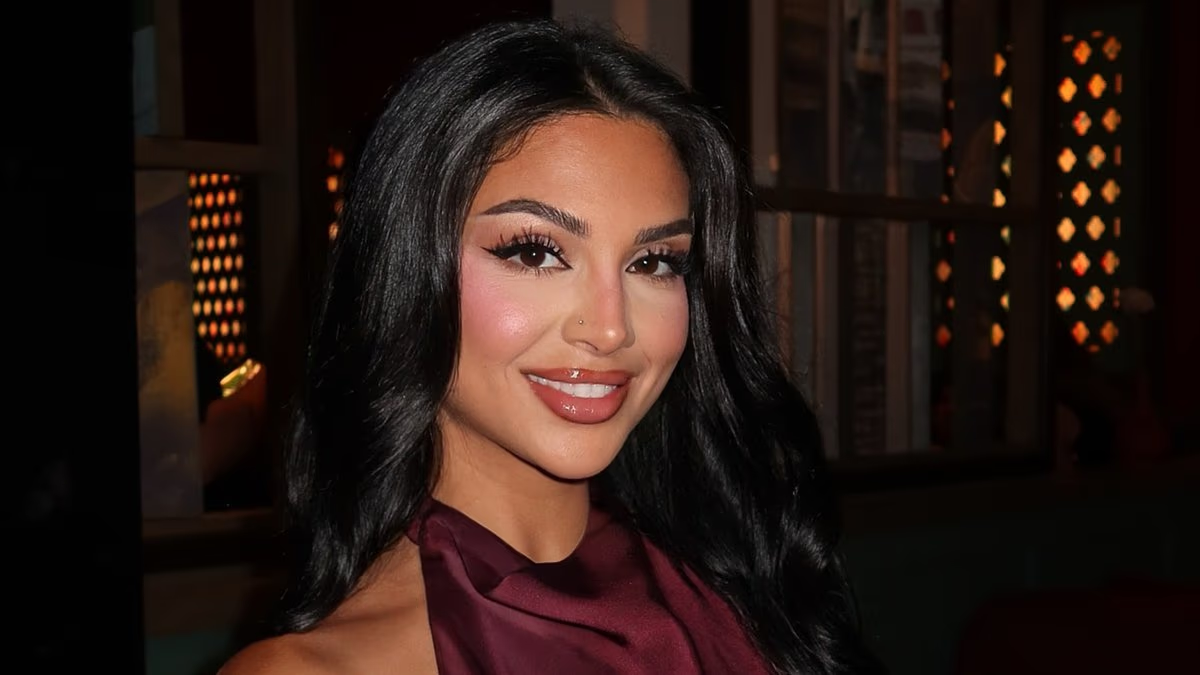
At first, Sadia did not consider that the breast implants she had wanted for years could be behind her life-threatening symptoms (Courtesy of Sadia Mansoor)

She had dreamed of getting breast implants for years, but within a year of the operation she felt as though she was dying (Courtesy of Sadia Mansoor)
He explained that BII has no formal diagnosis and is essentially a collection of symptoms that can also be linked to other conditions. In hindsight, I believe that explanation made my clinicians too quick to dismiss the possibility.
That was certainly how my doctor treated it, telling me, “It’s not a big deal. That’s not a real thing.” The surgeon I ultimately chose did not discuss BII with me while reviewing the other potential risks. By the time I underwent surgery, the condition was no longer on my mind.
When the symptoms I now believe were connected to my implants began, I had no idea what was happening.
My face started swelling, and my skin seemed to puff up uncontrollably. I developed migraines with stabbing pain behind my eyes, something I had never experienced before. I also began feeling strange nerve sensations in my head and chest, including disorienting zaps and sudden shocks.
I could not identify the cause and never considered my implants until one day, while experiencing the zaps in my head and neck, the muscle surrounding my right implant suddenly tightened. It squeezed the implant so forcefully that my breast became hard as a rock. The spasm lasted about a minute before easing. That was the first time I wondered whether the implants could be responsible for all of my symptoms.
After that, I began experiencing problems throughout my body. A rash repeatedly appeared from my armpit down the right side of my torso—the same side where I had felt the muscle spasm around the implant.
I became shaky and mentally detached. I felt lightheaded and trapped in an almost constant dreamlike fog. It was as if I were never completely present.
The nerve pain eventually became so severe that I could barely function. By November, I stopped leaving the house and remained there for months because I was in so much pain and felt so disconnected from reality.

After receiving her implants, Sadia says she developed symptoms including facial swelling and uncontrollable puffiness in her skin (Courtesy of Sadia Mansoor)
My doctors ordered every test imaginable, including an MRI, CAT scan, blood work and a nerve test. Everything came back normal. They prescribed one medication after another but could not determine what was wrong. BII was never raised as a possibility.
What troubled me most was the insistence from my doctors that I was healthy, despite everything I was telling them about my disabling symptoms. In the final months, I genuinely felt as though I was dying and pursued every possible avenue in search of an answer.
I became so desperate that I returned to the surgeon who had performed my implant surgery, hoping he would consider the implants as the cause. Instead, he told me, verbatim, to go outside, get some sunshine and “take a hike.” Essentially, he was suggesting that my symptoms were imaginary and that BII did not exist.
I heard similar responses from several doctors, most of them men. They told me that my symptoms were not real, were all in my head or were the result of anxiety.
Being made to feel irrational by predominantly male doctors, then having to investigate the problem alone, made an already frightening experience even harder. Medicine can feel like a man’s world, where women are dismissed as emotional, stressed or dramatic. There is still not enough research, medical study or attention devoted to women’s health.
After seven months of feeling unwell, I realized I had to research the issue myself. I joined Facebook groups and found hundreds of thousands of women describing symptoms similar to mine—and saying their concerns had also been dismissed.
The most reassuring discovery was that some surgeons recognized BII as a genuine concern and specialized in implant removal, known as explant surgery. Learning that gave me the confidence to accept that the implants might be making me ill.
The number of people worldwide who experience breast implant illness remains unclear because so much about the condition is still unknown. However, in 2025, the International Society of Aesthetic Plastic Surgeons reported more than 360,000 explant procedures worldwide. That represented 22 percent of the 1.6 million people who received breast implants that year. The number of explant operations also rose 63.6 percent between 2019 and 2025.

Sadia says her doctor dismissed her concerns about breast implant illness before her surgery (Courtesy of Sadia Mansoor)

She experienced nerve pain, brain fog and rashes (Courtesy of Sadia Mansoor)
IN CASE YOU MISSED IT: Search Underway for Pregnant New Mexico Prisoner Who Escaped Corrections Vehicle

After pregnancy and breastfeeding her son, Sadia decided to get breast implants (Courtesy of Sadia Mansoor)
In March 2022, I decided to have the implants removed, just over a year after they had been placed.
At that point, having larger breasts or achieving a perfect figure no longer mattered to me. I simply wanted my life back.
Within two months of the explant procedure, I felt almost 100 percent better. Nearly all of my symptoms had disappeared.
Many people do not realize that removing implants can cost far more than putting them in, particularly when additional procedures are needed for recovery or appearance.
Explant surgery is more complex than augmentation. Surgeons may need to remove the capsule, the scar tissue that forms around an implant, which requires additional precision and time. The procedure can also involve greater surgical risks, including bleeding, nerve or blood-vessel damage and complications affecting the chest wall.
An explant is also frequently combined with a breast lift because implants can stretch the breast tissue. That can make the operation considerably more expensive than the original augmentation. Recovery can be more difficult too, involving drains as well as the removal of scar tissue and implant residue.
None of this is explained clearly when you get implants. No one tells you, “If these need to be removed and you require a lift because your breasts have been stretched, you could end up paying nearly $20,000.” Instead, the procedure is presented as a simple way to get a new look.
I received my implants for free through an influencer collaboration with the surgeon. I paid $18,000 to have them removed and undergo a lift, and it was the best money I have ever spent. The surgery gave me back my health and my life.

Sadia chose to have her implants removed just over a year after receiving them (Courtesy of Sadia Mansoor)

By the time she underwent explant surgery, Sadia no longer wanted a perfect body—she wanted her life back (Courtesy of Sadia Mansoor)
Knowing that I am not alone has helped. Facebook groups such as Breast Implant Illness and Healing, which has more than 200,000 members, allow women to discuss the same troubling symptoms and concerns that I experienced.
There are other costs I am still trying to process, including the emotional trauma of returning to the body I originally wanted to change.
Mentally, I have had to confront how unwell I became—so unwell that I believed I would rather die than continue living with those symptoms. At times, I truly felt unable to go on because I was in such relentless pain and misery.
Now I am working on accepting and loving myself as I am, even though I have more scars. The process has brought plenty of highs and lows.
That is why sharing my story with my million followers was so important to me and to other women who may be becoming as sick as I was while being told they are healthy.
My mother has multiple sclerosis and has experienced many health problems over the years, but she also kept the same implants for 30 years. After seeing what happened to me, she had them removed and chose not to replace them. It makes me wonder whether some of her health problems, as Christina Applegate has also suspected, could have been connected to her implants.
My sister also decided to have hers removed and replaced after witnessing what I went through and experiencing problems of her own. She considered leaving them out permanently but ultimately chose to get new implants.
I wish I had researched the risks more thoroughly. If someone I admired had spoken openly about the potential dangers of breast implants, perhaps I would have made a different choice.

Like Sadia, many women—including Christina Applegate—have questioned whether breast implants may be contributing to their health problems

Sadia says women’s health still lacks sufficient research, medical studies and attention

She is now learning to love her body as it is, scars and all (Courtesy of Sadia Mansoor)
I want to be clear that I support plastic surgery. I recently had a tummy tuck and am very happy with the result. If a procedure helps someone feel better about themselves, I understand why they choose it. But for me, placing a foreign object inside my body is no longer worth the risk.
After having the implants removed, I considered a breast fat transfer. Recently, however, I underwent BRCA screening, which came back positive for a BRCA2 gene mutation that increases the risk of cancer.
At this stage, undergoing another procedure simply to make my breasts larger is not worth the potential risk. Looking better should never come at the expense of our health.
I would be lying if I said I never compared myself with women at the gym, in advertisements or online and wished I had breasts like theirs. Those thoughts still come up sometimes. But I remind myself that my body did not feel healthy with implants.
If I could speak to my younger self, I would tell her to love her body because it was already perfect. If I could return to that body—with small breasts and all—I would do it.
As told to Cady Lang
FIND OUT MORE: Hairdresser Michaela, 32, Battles Rare Deadly Sinus Cancer