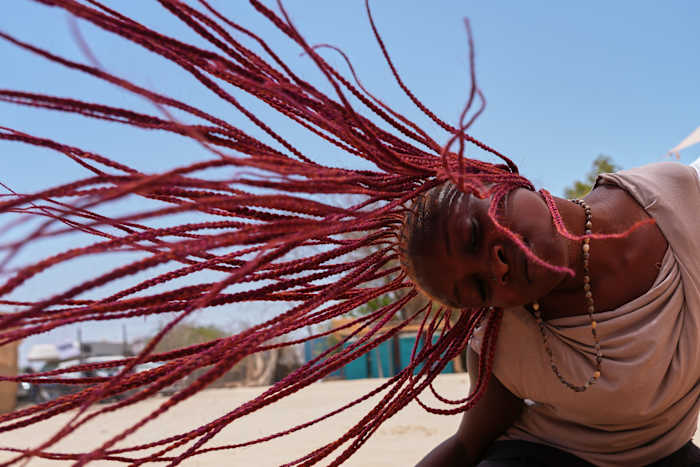


TOUBAB DIALAO – Over the weekend, the tranquil fishing village of Toubab Dialao in Senegal was transformed into a vibrant hub as 25 dance troupes from across Africa gathered for the continent’s largest contemporary dance event, the African Dance Biennial.
Amidst a vivid palette of oranges, greens, and blues, dozens of dancers energetically stomped, leaped, and gracefully tumbled into the warm sands of Toubab Dialao, located just an hour away from Dakar, the capital.
Since its inception in 1997, the African Dance Biennial has journeyed through various African cities to shine a spotlight on the continent’s rich choreographic heritage. The most recent gathering before this year’s was held in Maputo, Mozambique, in 2023.
The three-day festival wrapped up on Sunday evening at the École des Sables, also known as the School of Sands, situated in Toubab Dialao.
In recent years, the school has risen to prominence as Africa’s leading institution for professional dance training. Established in 1998 by Germaine Acogny, often hailed as the matriarch of African contemporary dance, the school is renowned for its open-air sand studio. This unique setting is a testament to Acogny’s philosophy, which integrates natural elements into teaching, combining her own contemporary techniques with traditional West African and Black modern dance forms.
The École des Sables has captured global attention, particularly as the venue for the first African rendition of Pina Bausch’s “The Rite of Spring.” This groundbreaking production toured internationally from 2021 to 2025, further cementing the school’s reputation on the world stage.
The biennial comes as the school faces an uncertain future. A billion-dollar deep water port project overseen by Dubai Port World, under construction just south of the fishing village, threatens to expropriate surrounding land, including property the school acquired to protect its natural ecosystem. Arts institutions in the area have formed an association to resist the development.