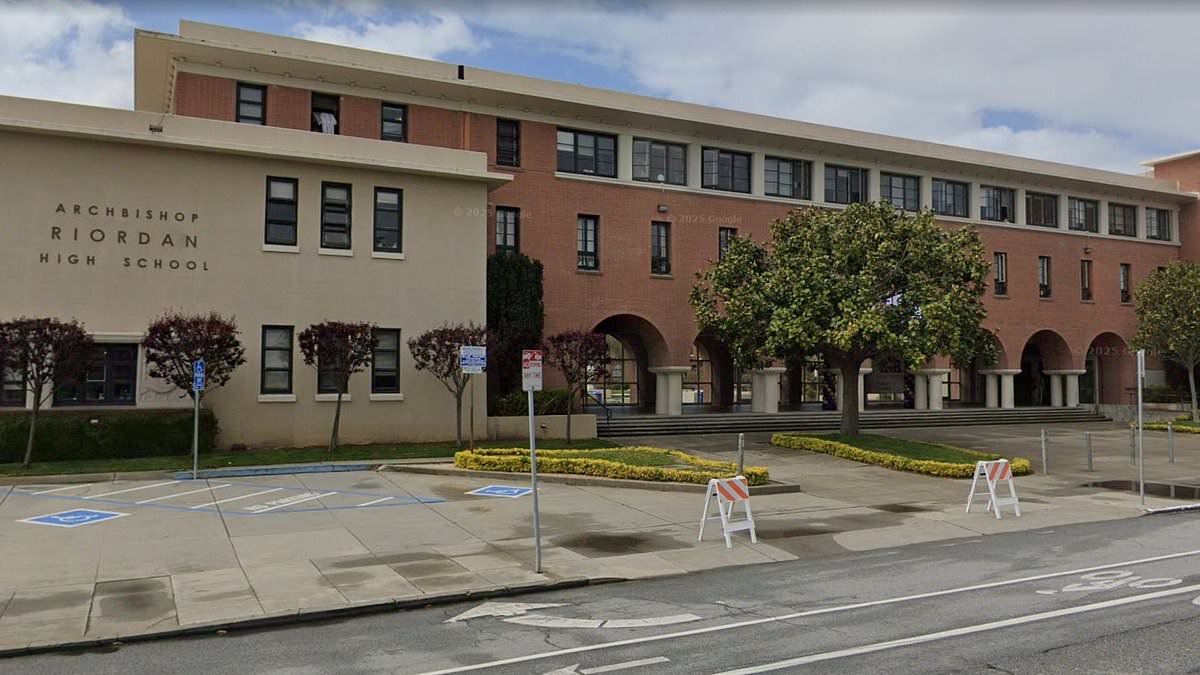

A high school in California is grappling with a significant outbreak of tuberculosis, according to health officials’ warnings.
At Archbishop Riordan High School in San Francisco, nearly 20% of tested students and staff have been diagnosed with tuberculosis (TB). This respiratory disease is considered the deadliest globally due to its resistance to certain antibiotics and its increased prevalence in developing nations without access to modern treatments.
The San Francisco Department of Public Health reports that the outbreak began in November, resulting in seven active TB cases to date.
Additionally, there are 241 latent cases, where individuals carry the Mycobacterium tuberculosis bacteria. However, their immune systems prevent the disease from becoming active.
“People with latent TB infection (LTBI) are not contagious,” health officials stated in an April 27 letter to the school community. “However, if left untreated, latent TB could progress to active TB — a serious illness.”
They emphasized the importance of treating latent TB to safeguard both the long-term health of the individuals and the well-being of those around them.
The school has about 1,200 students and costs about $30,000 a year to attend.
The letter states four active and three suspected cases of TB were reported in February, and an infectious individual was last detected on school grounds on February 19.
Nearly one in five tested students and staff at Archbishop Riordan High School in San Francisco (pictured above) have tested positive for tuberculosis, health officials announced
Health officials said testing beginning Wednesday and Friday of this week will focus on individuals who were exposed to a recently confirmed TB case or who are part of ‘a small group of individuals with new LTBI cases identified on this round of testing.’
The entire school community also went through testing in March, which health officials told SFGate in a statement ‘indicate a strong reduction in transmission.’
The department also said the new testing is ‘out of an abundance of caution.’
The California Department of Public Health defines a TB cluster as having four or more active cases.
‘This is a big outbreak,’ Dr Monica Gandhi, an infectious disease expert at the University of California San Francisco, told SFGATE.
She also noted that while latent TB does not cause symptoms, it is unusual to see such a high percentage of the school population diagnosed with the condition.
‘Kids in this country do not have latent TB like that,’ she said. ‘Those kind of numbers, of 20 percent having latent TB, are in low-income countries.’
TB infects a few thousand Americans every year and kills around 500, but the threat is much more prevalent in developing countries. Worldwide TB kills 1.2 million people each year.
Around the world, the disease is primarily prevented with the Bacillus Calmette-Guérin (BCG) vaccine, but because the risk of TB in the US is low, BCG is not routinely administered, except for children regularly exposed to people with active TB or for healthcare workers in high-risk areas.

Mycobacterium tuberculosis bacteria, which cause tuberculosis, are pictured above (stock image)
TB is caused by the Mycobacterium tuberculosis bacteria, and it spreads through airborne droplets released when a person with active TB coughs, sneezes, or speaks. Early symptoms include a persistent cough, sometimes coughing up blood, chest pain, unexplained weight loss, fever, night sweats, and loss of appetite.
In later stages, patients may experience severe breathing difficulties and extensive lung damage, and the infection can spread to other organs, including the brain and spine.
TB in the brain, also known as tuberculous meningitis, can damage vital tissues, increase intracranial pressure, and kill nerve cells, potentially leading to paralysis or strokes. Deaths are most often caused by respiratory failure due to bacterial damage to the lungs.
TB in the US was on a steady decline from 1993 until 2020, when the overall number of cases hit an all-time low of 7,170. But in 2021, that number jumped to 7,866.
Prevalence has gone up every year since.
The latest CDC data shows the US provisionally recorded 10,110 TB cases in 2025, down slightly from 10,330 in 2024, which was the highest tally since 2011, when there were 10,471 cases. The majority of 2025 cases (7,858) were in non-US born citizens.
Cases in 2024 were on the rise in 80 percent of US states, which experts have blamed on missed cases and distrust of doctors forged by the Covid pandemic. In California, cases in 2025 hit a 12-year high of 2,150.
State health officials have also had a ‘substantially higher’ rate of disease in 2025 compared to the US overall, with 5.4 infections per 100,000 compared to 3 per 100,000 nationwide.
The demographics of TB have also shifted, starting in 2001. That was the first year the CDC reported more non-US-born citizen patients than US-born, meaning immigrants and travelers were the driving force behind infections.
Active TB can be treated with medications called antitubercular agents, which include Isoniazid (INH), Rifampin (RIF), Pyrazinamide (PZA) and Ethambutol (EMB). These are usually taken for at least six months to ensure bacteria has fully been eliminated.