
The drama of the 2026 NBA Playoffs escalated on Saturday with two pivotal Game 3s that kept fans on the edge of their seats.
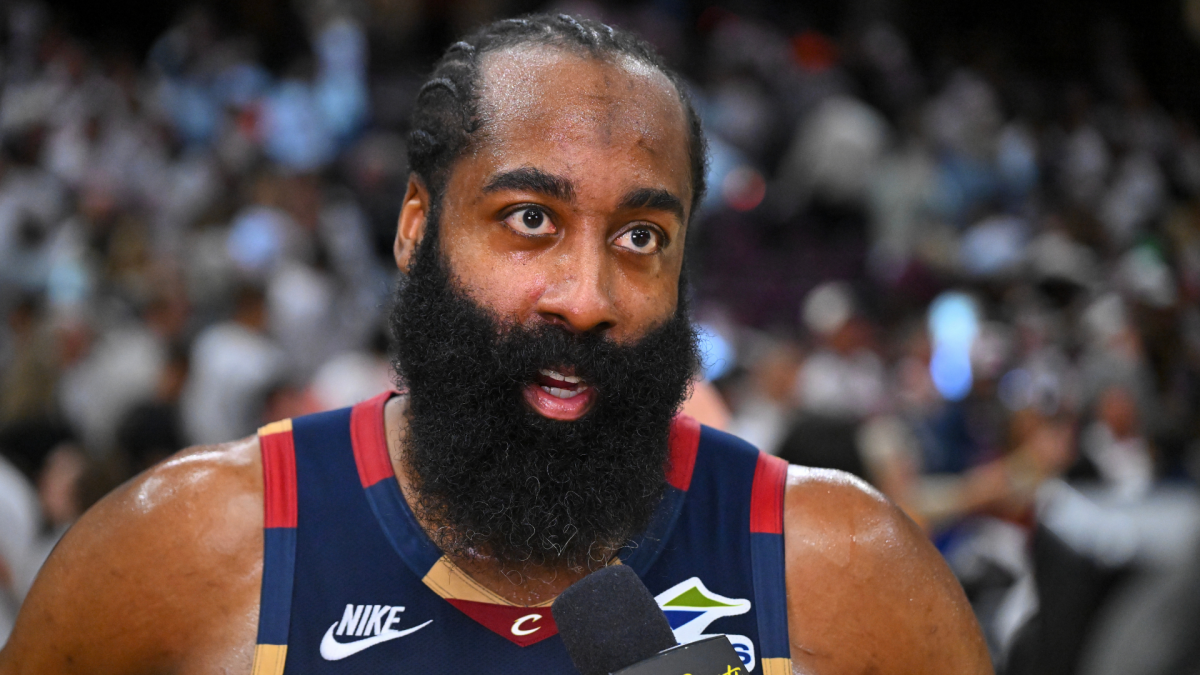
In a thrilling showdown, the Cleveland Cavaliers secured a crucial victory against the top-seeded Detroit Pistons, clinching a 116-109 win at home. Desperate to steer clear of a daunting 3-0 deficit, the Cavaliers showcased resilience by fending off every surge from the Pistons, narrowing the series gap to 2-1. Donovan Mitchell was instrumental in the win, contributing an impressive 35 points along with 10 rebounds. Meanwhile, James Harden added 19 points and seven assists, sealing the game with three decisive baskets, including a pivotal three-pointer with just 25.9 seconds remaining.
Later that evening, the Oklahoma City Thunder continued their commanding postseason performance with a dominant 131-108 victory over the Los Angeles Lakers. As the defending champions, the Thunder remain undefeated in this year’s playoffs and are poised to complete a series sweep with another win in Game 4, scheduled for Monday.
Saturday’s games offered a mix of triumphs and setbacks. Let’s delve into the highlights and lowlights:
Winner: Cavs’ clutch backcourt
James Harden stepped up when it mattered most
James Harden, often criticized this postseason for having more turnovers than field goals in four separate games, including the initial two of this series, made a notable impact in Saturday’s game. Though he wasn’t the primary spotlight for most of the 116-109 victory, Harden became a decisive force in the final minutes.
With the Cavaliers clinging to a slim two-point advantage, Harden executed a strategic pick-and-roll against Tobias Harris, successfully switching into isolation. It’s interesting how Harden’s midrange step-back shot, once a rarity during his Houston Rockets days, has become a signature move in his repertoire, reflecting his evolving gameplay.
Then, after a huge Cade Cunningham dunk, Harden hunted Duncan Robinson, shook him with a crossover and made a clutch floater over Jalen Duren:
Cunningham responded with a 3, setting up the biggest bucket of the day. Harden went at Harris again, danced with the ball and then drilled a three in his face, giving Cleveland a four-point lead with 25.9 seconds left:
Asked how he quieted the chatter in his walkoff interview with NBC’s Ashley ShahAhmadi, Harden said, “What chatter?”
He continued: “I play basketball, and whatever this team needs me to do, I’m going to go out there and do it. So letting the game play out. Fourth quarter, my number was called, and I go to work.”
Before that seven-point outburst, Harden had done most of his damage as a passer. Operating out of high pick-and-rolls, he set up a massive Evan Mobley dunk and repeatedly created wide-open 3s. He finished with 19 points on 8-for-14 shooting and seven assists in 40 minutes, and Mitchell, his backcourt partner, had a game-high 35 points on 13-for-24 shooting, plus 10 rebounds and four assists.
With the exception of the disastrous third quarter, Mitchell and Harden built on some of the good stuff that they did offensively in the second half of Game 2. Led by their two star playmakers, the Cavs got into their offense more quickly, attacked matchups more purposefully and put more pressure on the rim. As a result, Cleveland had far and away its most efficient offensive game of the series. — James Herbert
Loser: Deandre Ayton gets benched
Lakers big man struggled mightily on the glass
The ongoing Dr. Jekyll and Mr. Ayton saga persists for the No. 1 pick of the 2018 NBA Draft. It’s a shame, too, because for most of the past two months, Deandre Ayton has more or less been exactly what the Lakers have hoped he’d be: low-maintenance on offense, physical on the glass, generally engaged defensively. That’s the version of him that took the Suns to the Finals in 2021 and got a max contract a year later. That’s the version of him that showed up for the most part in the first round against Houston.
And tonight against the Thunder, especially in the second half, we got the version of Ayton that Portland was eager to buy out. Ayton had one defensive rebound. He failed to get to the line for the second time this series. The Lakers allowed 64 points in the paint, quite a few of them on his watch. When even the broadcast is willing to call you out for your lackadaisical defensive effort, you know you’re not doing your part.
JJ Redick’s frustration was evident. With around nine minutes to go, he pulled Ayton out for rookie Adou Thiero, who is 6-foot-7 and played 149 regular-season minutes. He is, quite clearly, not ready for playoff minutes. But he plays hard, and subbing him in in that situation sends a message. The Lakers didn’t use a center after that point, which is pretty damning for Jaxson Hayes as well. Remember, Redick played an entire playoff half last season against Minnesota without using a center. Ayton and Hayes have had all season to earn Redick’s trust. It seems as though neither has done so.
It’s a shame, too, because for most of March and April, the Lakers really did get the best of Ayton. If he played that way consistently, he’d be able to comfortably decline his player option and re-sign at a typical starter’s salary this offseason. Instead? It’s yet again clear that the Lakers need to shake up their center rotation this offseason. — Sam Quinn
Winner: Ajay Mitchell
Thunder’s depth on full display once again
Let’s compare stat lines in this series:
Now, Mitchell statistically outperforming Gilgeous-Alexander in this series is mostly meaningless. The whole Lakers game plan revolves around stopping Gilgeous-Alexander. The MVP of the league is still the MVP of this series, no matter what the numbers say. But just having to explain this amounts to an enormous win for Mitchell, a second-year second-round pick. How many times over the past two postseasons did the opposing defense key in on Gilgeous-Alexander only for none of his teammates to step up and fill in the shot-creation gap? If there was a concern about Oklahoma City this postseason, especially with Jalen Williams out, that was it.
And Mitchell is erasing it. The Jalen Brunson comparison has been made to death, but that really might be what’s happening here. Mitchell is getting to the rim completely at will. He’s shooting 18-of-28 in the paint in this series and using all of that rim pressure to create easy looks for teammates. Through three games, the Thunder have outscored the Lakers by 23 points in the minutes Gilgeous-Alexander sits. Mitchell is the biggest reason why.
The bar right now is relatively low. The Lakers pose nowhere near the challenge in this round that the Spurs will in the next. If Mitchell is headed where we think he is, that’s the series he needs to thrive in. But he’s passed every test this postseason has thrown at him thus far, and no matter what happens against San Antonio, he’s cemented himself as a core player for the Thunder moving forward. — Sam Quinn

Loser: The possession game
Pistons won the possession game, but not the actual game
Especially during the playoffs, coaches love to talk about the importance of the possession game. It’s imperative, they all say, to get “shots on goal,” and you simply cannot afford to throw the ball away or allow opponents to pile up offensive rebounds.
Well, Game 3 of the Cavaliers-Pistons series is the exception that proves the rule, I guess. Detroit attempted 17 more field goals than Cleveland did, but somehow lost by seven points.
The main reason this happened: the Cavs couldn’t keep the Pistons off the offensive glass. Detroit had 17 offensive boards, which means they rebounded 40.4% of their misses. Cleveland, meanwhile, had five offensive boards and rebounded 27.8% of its misses.
“It’s really hard to win in this league with that disparity, so I’d just say that’s a little lucky on our part,” Cavs coach Kenny Atkinson told reporters.
Atkinson added that they can’t have another game like this: “It’s not sustainable.”
Cleveland overcame this by scoring far more efficiently than Detroit did. At the end of the first quarter, the numbers were absurd — the Cavs had a 25% turnover rate and zero offensive rebounds, but had an 88.2% effective field goal percentage, while the Pistons had a 16% turnover rate and a 50% offensive rebounding percentage, but their effective field goal percentage was also exactly 50%, per Cleaning The Glass. In the halfcourt, the Cavs were scoring 142.9 points per 100 possessions to the Pistons’ 90.5 per 100, but they led by only two points heading into the second quarter.
By the end of the game, the contrast wasn’t quite that extreme, but it was still there. In the halfcourt, Cleveland scored 113.5 per 100, and Detroit scored an ugly 89.9 per 100. The Pistons may have dominated the possession game, but they couldn’t execute well enough to come away with a win on the road. Their 17 offensive boards turned into only 19 second-chance points, and the Cavs’ 16 turnovers turned into only 19 points off turnovers for Detroit. — James Herbert