Visualizing the budget as a $100 note can simplify the complex figures and data, offering a clearer view of how the government intends to allocate your tax contributions.
This year, the federal government plans to spend a total of $833.2 billion, marking a rise of $47.5 billion. A significant portion, more than one-third, is earmarked for pensions and social support initiatives.
A substantial share of this expenditure, 37.1%, is designated for social security and welfare payments, maintaining a level similar to the previous year’s allocation.
Looking ahead to 2030, social security expenditures are anticipated to approach 40% of the budget, largely due to increasing demands in disability support and aged care services.
Following social security, health care captures the next largest portion at 16.4%, with education and defense receiving 6.9% and 6.2% respectively.
Additionally, the government has allocated 19.6% for “other purposes,” which encompasses costs for public debt servicing and funds for natural disaster relief efforts.
The remainder of spending or “all other services” includes housing, transport and energy.
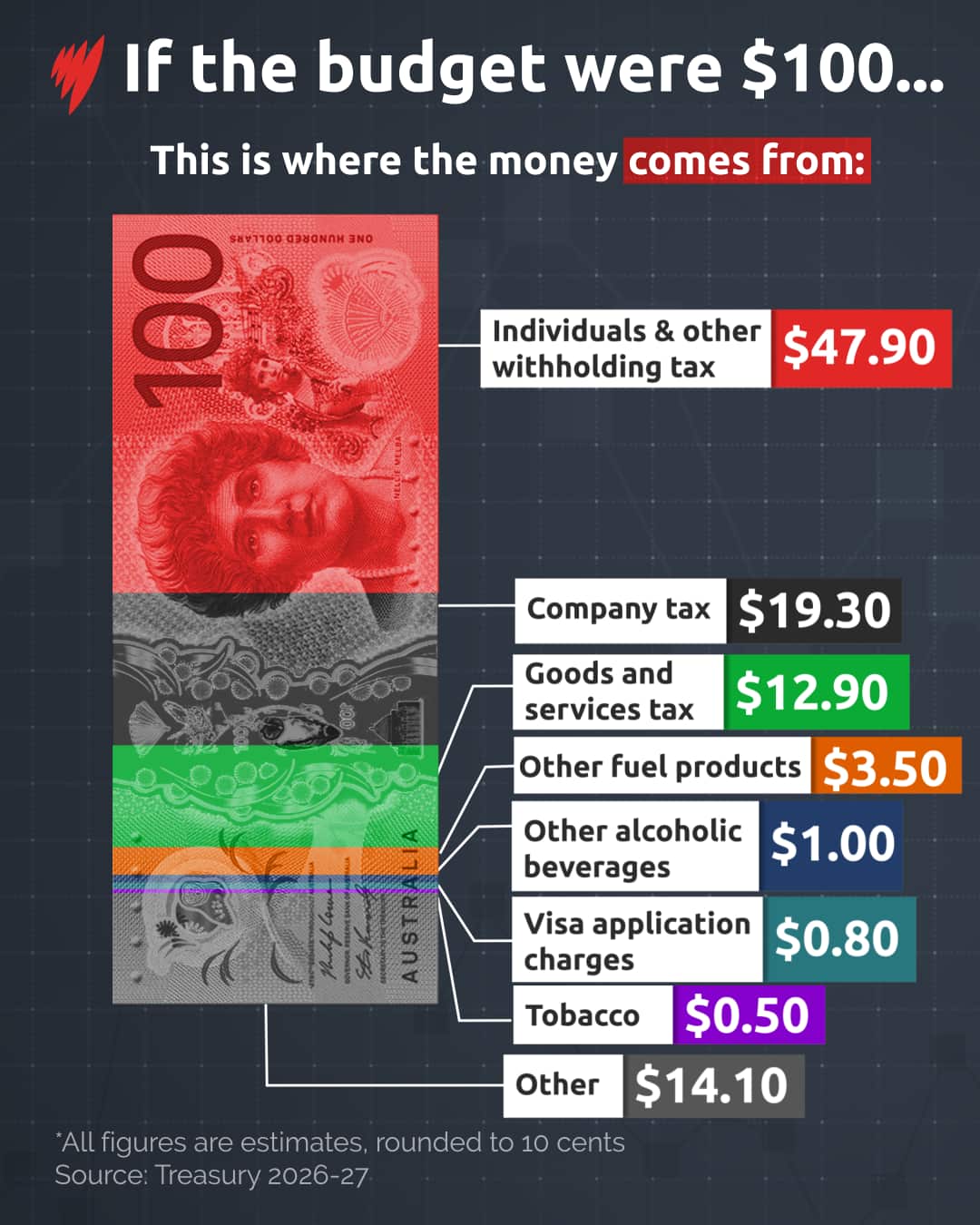
Almost half of projected revenue will come from individual and other withholding tax, followed by company tax and goods and services tax.
Taxes and fees on petrol products, tobacco, alcohol and visa applications will contribute about 5.8 per cent of revenue.
For the latest from SBS News, download our app and subscribe to our newsletter.