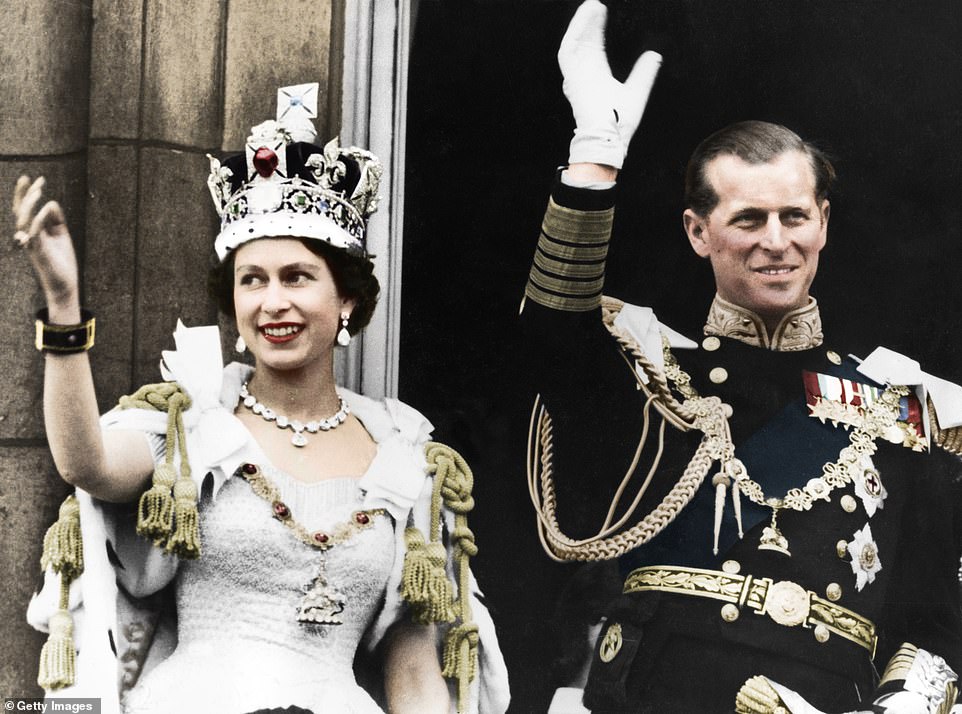

In a unique episode of the Daily Mail’s Palace Confidential, royal editor Rebecca English embarks on a tour of an exhibition that showcases Queen Elizabeth’s remarkable reign through her iconic wardrobe. Guided by curator Caroline de Guitaut, the exhibition, titled “Queen Elizabeth II: Her Life in Style,” commemorates what would have been the monarch’s 100th birthday by displaying many of her most memorable outfits and accessories at The King’s Gallery, Buckingham Palace. Among these historic garments is the gown from the Queen’s 1953 coronation. This masterpiece was crafted by the esteemed royal couturier Sir Norman Hartnell, who had approximately eight months to bring his vision to life, ultimately offering the Queen eight different designs to select from.
Diplomatic messaging
The Queen chose the final design out of Hartnell’s proposals, as de Guitaut revealed to English. The selected gown was made of ivory silk satin, reminiscent of her wedding dress from 1947. However, the Queen had a specific request for its embellishments. “The Queen made it very clear that she did not just want emblems from the United Kingdom embroidered on it,” de Guitaut explained. “She wanted emblems from all the countries where she was then Queen. The gown is almost like a piece of diplomatic messaging.”
The Australian wattle
The initial design by Hartnell featured only four emblems: the Tudor rose, the Scottish thistle, the Irish shamrock, and a daffodil representing Wales. Following the Queen’s directive, the final gown was adorned with a rich tapestry of emblems from across the Commonwealth. These included the Canadian maple leaf, the Australian wattle, New Zealand’s silver fern, the South African protea, a lotus for India, and wheat for Pakistan. This marked the first instance where a coronation outfit paid tribute to nations beyond the British Isles, heralding a new era in royal fashion.
‘The Queen actually instructed for all the embroidery to be done in colour,’ de Guitaut explained. ‘This was a first at the time – but helped make the piece completely timeless.’ Where past coronation gowns had been worked almost entirely in silver and white thread, the Queen wanted the emblems stitched in lifelike colour, giving the dress a richness that has not faded today. All the embroidery is thought to have brought the gown’s weight to between four and five kilograms. Hartnell was forced to sew horsehair padding into the hips to help it keep its shape. For more of the late Queen’s most iconic outfits explained, subscribe to Palace Confidential on YouTube to watch the full episode.