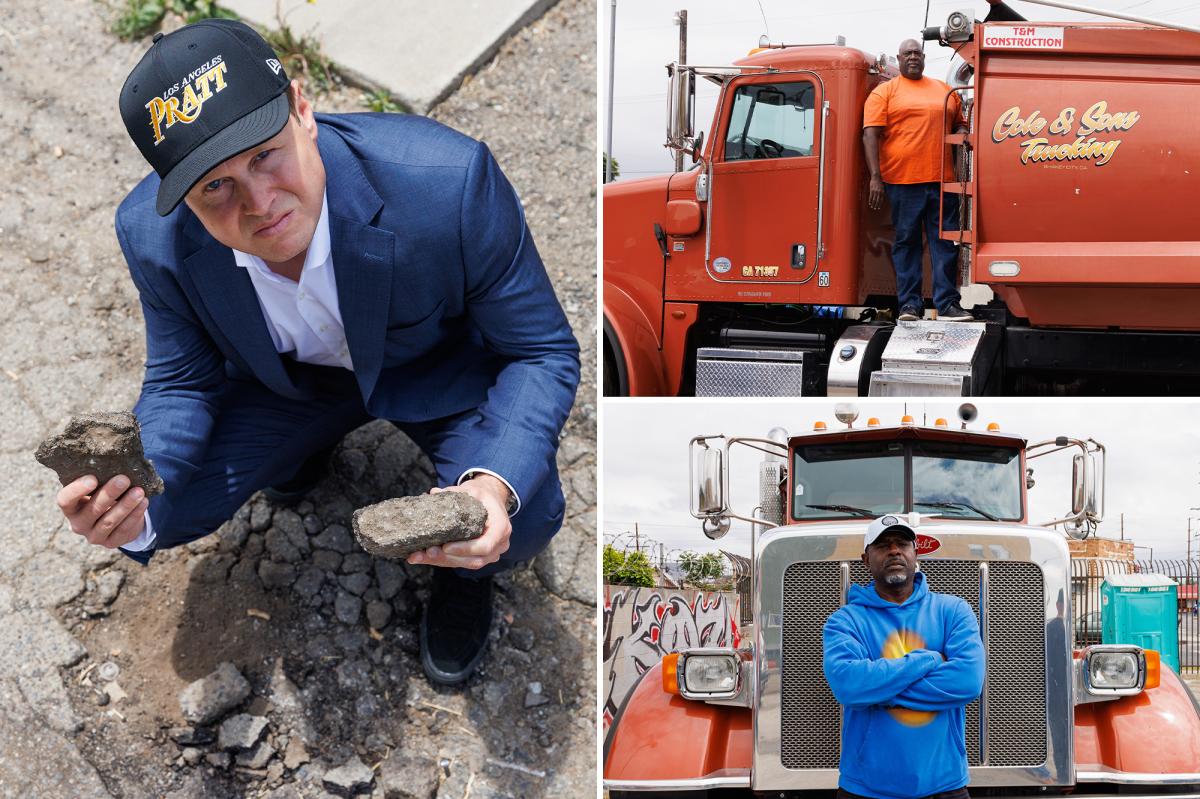


Spencer Pratt has sharply criticized Mayor Karen Bass over the escalating pothole issue plaguing Los Angeles, vowing to reinstate a $100 million repair initiative that he claims has been dismantled by city officials.
“Infrastructure should be a top priority for everyone in the city,” Pratt remarked to The California Post. “Our tax dollars are intended for projects like these.”
Pratt highlighted a $100 million federal grant that he alleges was redirected from street maintenance to other areas, such as the homelessness programs, including Bass’ Inside Safe initiative. Should he be elected, Pratt plans to reallocate funds from homelessness initiatives back to the city’s infrastructure needs.
He has increasingly used the pothole problem to argue that Mayor Bass and city leaders have lost touch with the needs of working families.
“There’s $400 million available for Inside Safe, yet she didn’t allocate $17 million requested by the fire chief to ensure public safety,” Pratt stated.
“Funds should be available for infrastructure so that our roads are in proper working condition.”
Bass has blamed mounting deficits and rising labor costs for decreased funding available for preventative street maintenance.
Frustration at the city’s poor road conditions has become increasingly visible across Los Angeles.
Drivers have blasted worsening road conditions as potholes damaged vehicles, with complaints mounting citywide.
A report by Crosstown in January showed that the number of reports about potholes in Los Angeles hit 6,707, a 49% jump from the month prior.
The report cited recent rains but also noted that “years of deferred maintenance have degraded the condition of Los Angeles streets.”
The city’s As-Needed Haul Truck Program — which employed dozens of minority workers — played a central role in keeping street repair projects moving up until three years ago when it was halted by city officials.
“We were working six days a week consistently,” said Kenyatta Cole, a multigenerational truck driver whose family spent three generations in the business.
“We stayed busy because there was always work to do.”
Workers say crews hauled broken pavement, transported recycled materials and helped keep resurfacing projects moving across neighborhoods throughout Los Angeles.
“We were all proud of what we did,” Cole said. “I love this city. We not only took pride in our work, a lot of us went back into the communities where we worked and supported other small businesses.”
Cole said nearly 100 families, many who had trucking in their family for multiple generations, received an email on May 31, 2023, telling them that the program was being shut down. “We were let go through an email from the mayor,” Cole said.
“When I heard the story, it all made sense why our streets look like they do and why they are destroying tires and suspension,” Pratt told the Post.
When active, the program helped repair roughly 500 to 800 miles of city streets and nearly 800 alleys each year. Only 216 miles of road repairs were done in the year after the program was cut.
Truckers spent months trying to get answers after the program ended, including repeatedly seeking a meeting with Mayor Karen Bass without success. “We didn’t get a single meeting with Mayor Bass,” Cole said.
Cole said the decision blindsided families that had recently invested heavily in their businesses after California emissions rules required newer equipment.
“I spent almost $300,000. Six months later I got this letter saying we were out,” said Cole. Many workers financed trucks that cost between $250,000 and $300,000 using homes and other assets as collateral while taking on monthly payments they believed would support long-term businesses.
“I lost my truck and almost lost my house too,” said Devon Blankenship.
“These are multi-generational Angelenos who put their own money into these trucks and now they’re left hanging,” Pratt told the Post.
Anneli Rico said the program was far more than work for her family.
“My husband, my dad, my brother and my father-in-law were all part of this program,” Rico told the Post. “I was raised on this program.”
“We weren’t asking for handouts,” she added. “We were serving the city.”
California ranks third worst in the country when it comes to road conditions, with 28.4% of its major roadways in poor condition. Nationally, only 13.1% of major roadways are in poor condition, according to a new analysis from Construction Coverage.
The California Post reached out to Mayor Karen Bass’s office for comment on the decision to end the program and for clarification on how the funding was spent. The Post did not receive a response.


