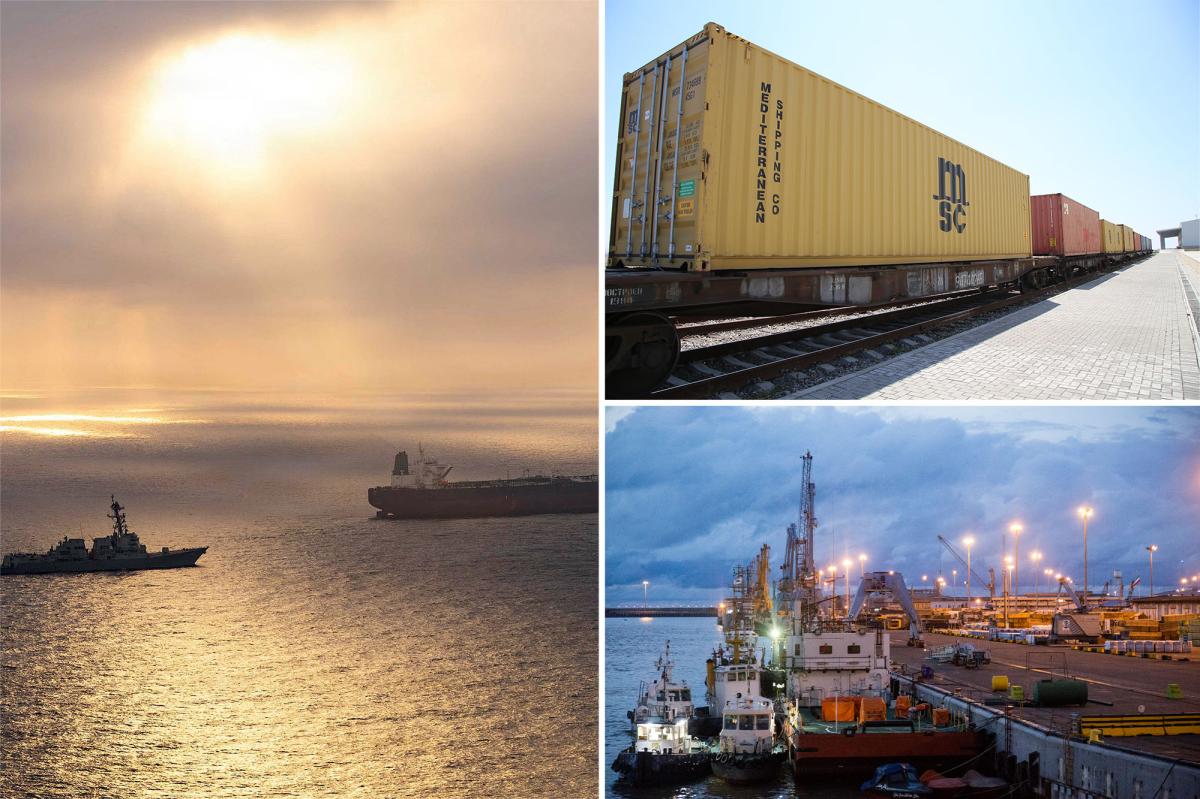


In an effort to circumvent the U.S. blockade at the Strait of Hormuz, Iran has strategically shifted to alternative trading routes. This includes utilizing northern sea ports, navigating land borders with trucks, and dispatching cargo via a rail system directed towards China. These methods aim to maintain Iran’s oil exports and secure crucial military components, as reported by several sources.
The ongoing American blockade has effectively restricted Iranian vessels from traversing the strait, compelling the nation to devise innovative solutions to sustain its export activities. This move is a part of Iran’s broader strategy to endure the economic challenges posed by the U.S.
Iran’s geographical advantage includes over 3,700 miles of land borders shared with seven neighboring countries and an extensive 435-mile coastline along the Caspian Sea. These features provide significant avenues for trade to continue despite the blockade.
However, experts caution that these alternative routes fall short of fully replacing the blocked ports. Rosemary Kelanic, director of the Middle East Program at the Defense Priorities think tank in Washington, noted to Radio Free Europe that while measures like trucking goods from nearby nations can help offset the blockade’s impact, they may not fully match the capacity of the sealed-off ports.
“The potential for Iran to creatively navigate around the blockade is vast,” Kelanic remarked, emphasizing the country’s extensive land borders as a strategic asset in countering the restrictions imposed by the U.S.
“The possibilities for the Iranians to ‘MacGyver’ their way around Trump’s blockade are endless because the country has thousands of miles of land border to work with,” she added.
The country — 636,000 square miles — is about the size of the American Southwest, including all of California.
Land routes
With the Strait of Hormuz and Gulf of Oman blocked by US warships, Iran has looked primarily to its land borders to pick up the slack.
Iran can supposedly transfer up to 40% of its regular maritime trade to land routes, the head of Tehran’s shipping association’s container committee told regime-backed media.
About two weeks after the US imposed its blockade on April 13, Pakistan established six land routes for goods to be transported through the Iranian border, allowing rice, meat and baby formula to flow in.
Iran’s ambassador to Pakistan also met with the country’s minister for railways last week to discuss how to increase freight volumes between the two nations.
Iran also has access to one of its biggest trading partners, Turkey, through the Kapikoy-Razi crossing into the country.
Freight firms in Istanbul noted an increase of traffic since the blockade went into effect, Bloomberg reported.
Samad Hassanzadeh, president of Tehran’s Chamber of Commerce, said Sunday that he was seeking to have Turkey remove its limit on how many Iranian trucks go through the border per day from 200 to 500.
Caspian Sea
While Iran suffered a blow to its military vessels at its port of Bandar Anzali, in the Caspian Sea, during the height of the war in March, the waters are in use as an alternative trade route connecting Tehran with Russia.
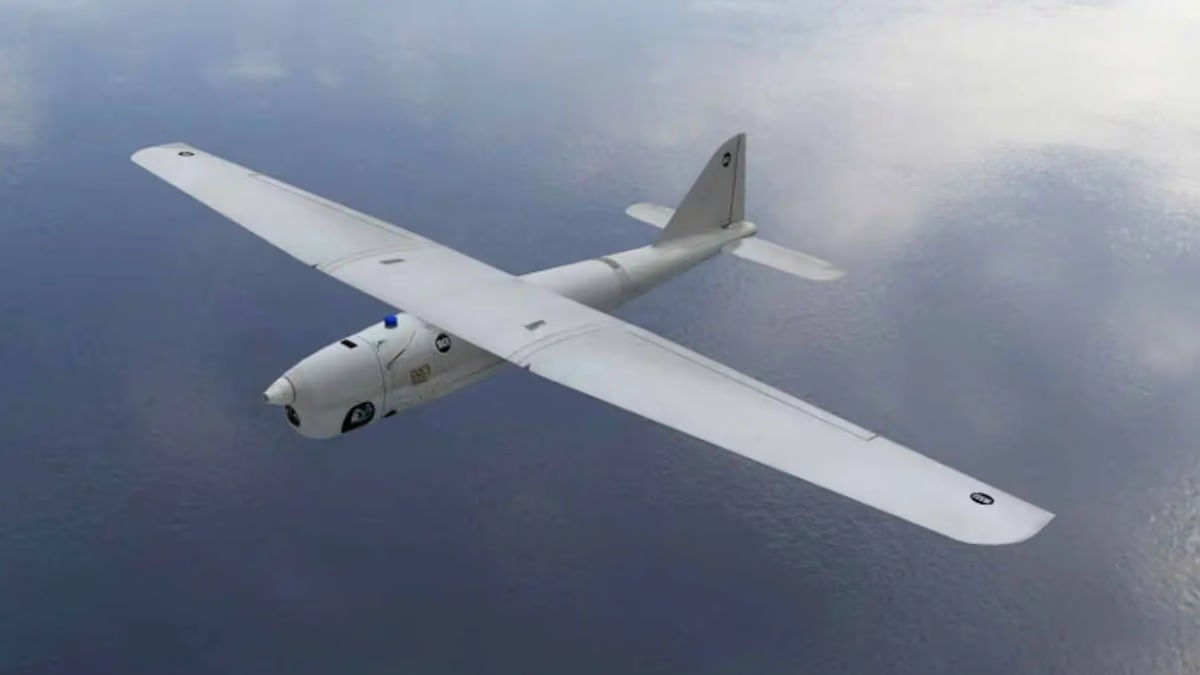
Moscow has been accused of shipping drone components to Iran via the Caspian Sea, helping Tehran maintain its UAV arsenal after losing 60% of it during the war, US officials told the New York Times.
Along with military aid, Russia has also been providing goods through the inland massive sea, which is the largest lake in the world.
Mohammad Reza Mortazavi, the head of the Association of Iran’s Food Industries, said Tehran is actively rerouting goods through the Caspian, with four ports working around the clock to make up for the impacts of the blockade, state broadcaster IRIB reported.
Oil by rail
Prior to the war, Iran sold an average of 1.38 million barrels a day to China, according to the Kpler analyst firm, exports that have been upended by the US blockade.
Iranian oil fields face the risk of permanent damage if exports remain frozen, so the regime has begun ramping up trade with China via rail, with Tehran eyeing expansions to keep it better connected with Beijing.
Before war broke out, only one cargo train would travel between Xi’an in central China and Tehran every week.
Trains are now going out once every three or four days, sources told Bloomberg.
Each train from Xi’an carries about 50 standard 40-foot containers, with traffic along the railway completely booked in May, the outlet added.
With goods traveling between the countries by rail increasing through the Kazakhstan-Turkmenistan-Iran corridor, Hamid Hosseini, spokesman for Iran’s oil exporters union, said exporting oil by rail will be viable.