
A groundbreaking DNA study on the remains of Christopher Columbus’ descendants has the potential to reshape our understanding of his roots.
Historians have long asserted that Columbus hailed from Genoa, Italy, climbing from modest beginnings to secure funding from the Catholic Monarchs for his daring transatlantic expedition.
However, a new preprint study from researchers at Citogen laboratory and Complutense University of Madrid proposes an intriguing alternative: Columbus may have been of Spanish origin, linked to the esteemed Sotomayor family from Galicia.
Renowned for their significant political and military influence in 15th-century northwestern Spain, the Sotomayors present a stark contrast to the accepted narrative of Columbus’ humble Italian heritage.
DNA findings suggest a familial connection to Pedro Alvarez de Sotomayor, a notable Galician aristocrat known as Pedro Madruga, who could be an ancestor of Columbus.
This revelation arose from a detailed analysis of DNA from 12 individuals interred in the Counts of Gelves family crypt in Spain.
The theory that Columbus may have had Galician roots is not new, as it dates back more than a century.
However, the study claimed to provide the strongest genetic evidence yet supporting the idea.
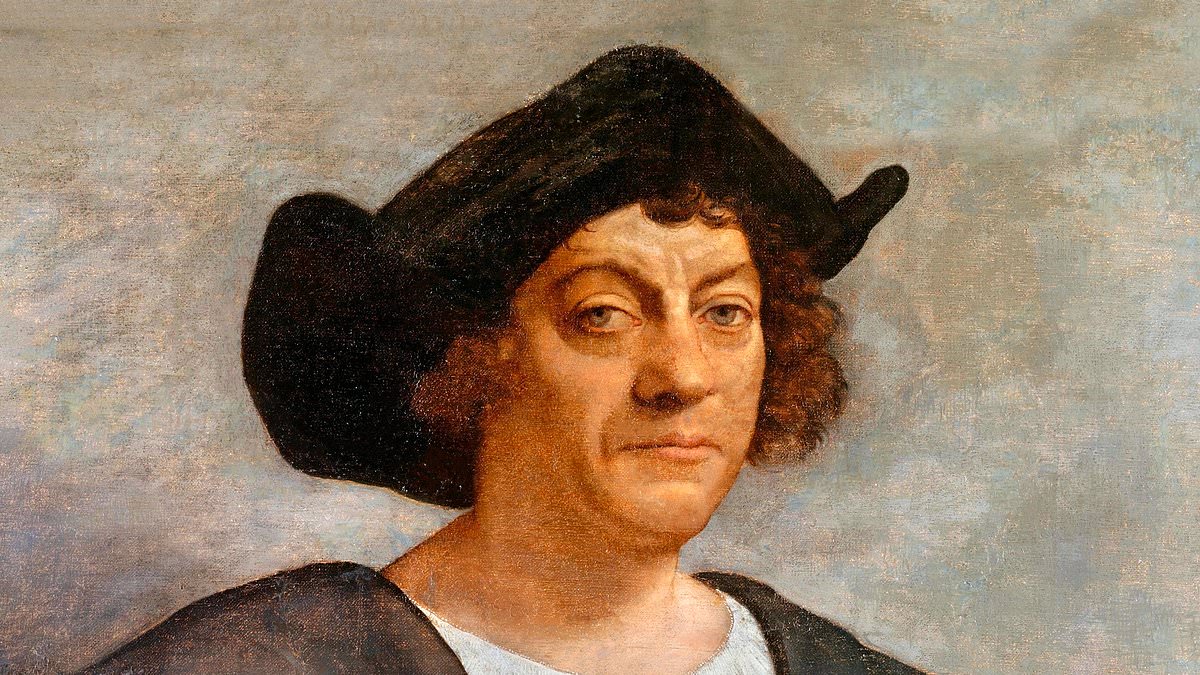
For centuries, historians have believed Christopher Columbus was born in Genoa, Italy, rising from humble beginnings to persuade the Catholic Monarchs to finance what many considered an impossible voyage across the Atlantic
‘To scientifically address the ancestral identity of Christopher Columbus, this study targeted the primary burial site of his direct lineage: the Santa Maria de Gracia church in Gelves,’ the team said in the study.
‘The site serves as the pantheon for the Counts of Gelves, housing the largest concentration of Columbus’ direct descendants, at least seven, including his granddaughter.’
The breakthrough came after researchers identified two individuals among the 12 exhumed from the crypt who shared genetic material despite no known historical connection between them.
One was Jorge Alberto de Portugal, the third Count of Gelves and a documented descendant of Columbus.
The other was Maria de Castro Giron de Portugal, a Galician noblewoman tied to one of Spain’s most influential aristocratic families.
Researchers said the unexpected DNA link led them to Pedro Madruga.
Using more than 10,000 genetic markers and a computer model tracing 16 generations of family history, the team concluded Pedro Madruga was the most likely shared ancestor.
Researchers said removing him from the reconstructed family tree caused the genetic link to disappear, suggesting he was a crucial ancestral connection within Columbus’s family line.
A new study has suggested that Columbus may instead have descended from Galician nobility in Spain, with genetic links pointing to the powerful Sotomayor lineage
They called the process a ‘Virtual Knock-out’ test, in which Pedro Madruga was digitally removed from the family tree model.
Once removed, the genetic relationship between the descendants vanished entirely.
Researchers also pointed to several historical clues they believe support the theory: Pedro Madruga vanished from records around 1486, the same time Columbus suddenly appeared at the court of the Catholic Monarchs.
Pedro Madruga was one of the most powerful feudal lords of 15th-century Galicia, controlling an extensive territory from the castle of Sotomayor, on the banks of the river Verdugo in the province of Pontevedra.
Columbus’s writings also contained Galician-Portuguese linguistic traits, and parts of his coat of arms resembled symbols linked to the Sotomayor family.
The researchers also found that the descendants buried in the crypt clustered genetically with populations from northern Spain and showed connections to both the Sotomayor family of Galicia and the Zuniga noble house of Navarre.
However, the team stressed the evidence remains indirect, because it is based on descendants rather than Columbus’s own DNA, meaning the findings still require independent verification.
Most historians continue to believe Columbus was born in Genoa, pointing to his 1498 will, which identifies Genoa as his birthplace.
But supporters of the Spanish-origin theory argue that Columbus may have concealed his true background, with the new study offering fresh, though not yet conclusive, evidence tying him to northern Spanish nobility.

In 2024, the team confirmed Columbus’s final resting place. They spent 20 years performing a DNA analysis on human bones found buried in Spain’s Seville Cathedral, confirming with ‘absolute certainty’ they belonged to the explorer who died in 1506
In 2024, the team confirmed Columbus’s final resting place.
They spent 20 years performing a DNA analysis on human bones found buried in Spain’s Seville Cathedral, confirming with ‘absolute certainty’ they belonged to the explorer who died in 1506.
The authors ultimately concluded that the research provides the first ‘robust genetic support’ for the theory that Columbus may have originated from Galicia rather than Italy.
Columbus set sail on August 3, 1492, from the Spanish port of Palos with hopes of finding a route to the fabled riches of Asia.
Along with three ships, the Nina, the Pinta and the Santa Maria, Columbus and roughly 100 men embarked on the journey that took them to the opposite side of the world, far from their original destination.
On October 12, 1492, the ships made landfall in what is now the Bahamas, and later that month, Columbus spotted Cuba and mistook it for mainland China.
On the second voyage in 1493, Columbus intentionally sailed back to the New World and landed in Puerto Rico, where he enslaved many of the Taino people native to the island, some of whom were sent back to Spain.
Many Spanish came over the next four years, resulting in the death of about seven million Taino, 85 percent of the population.