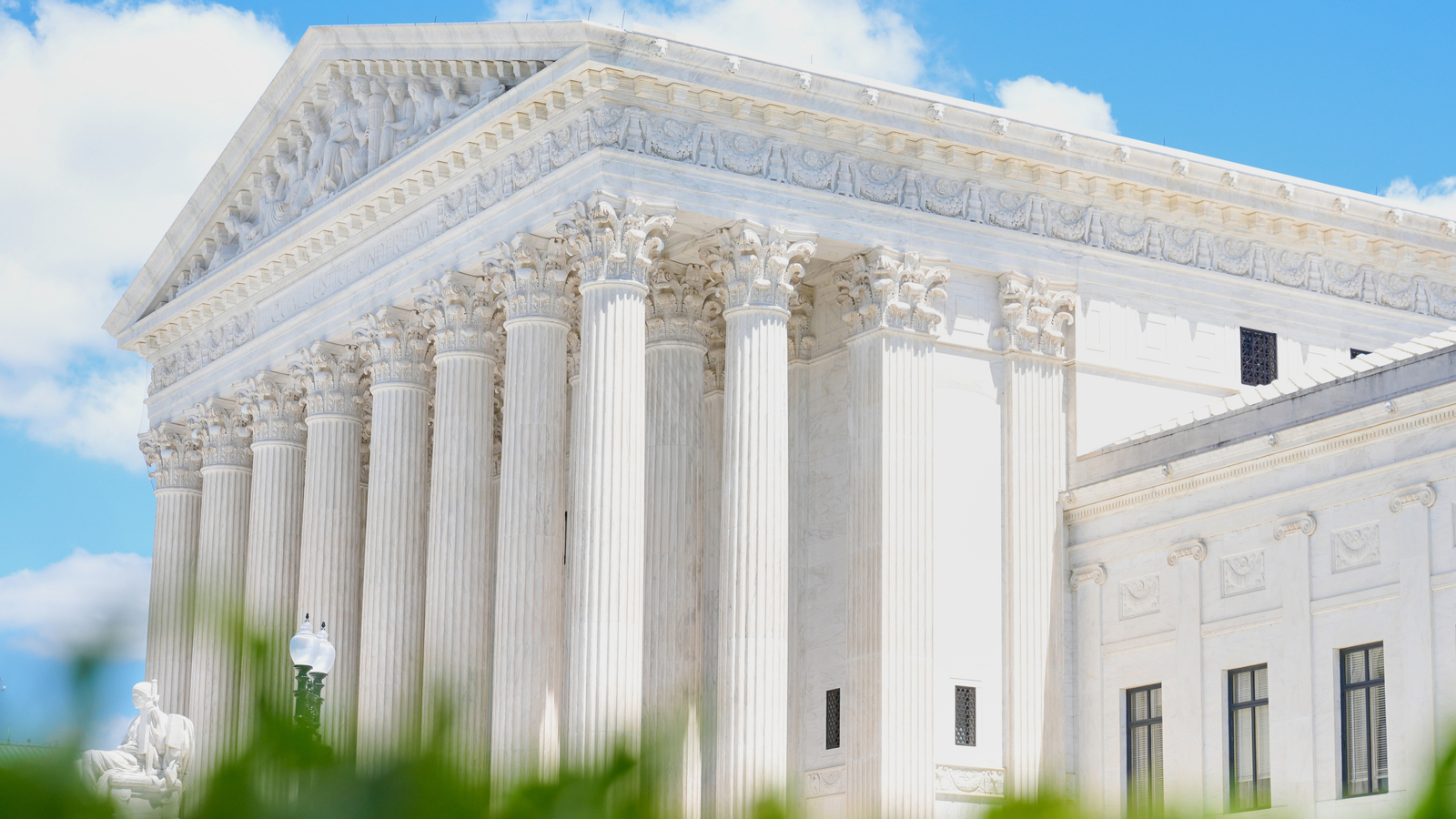

In a recent decision, the Supreme Court denied Virginia’s request to reinstate a congressional map that could have enabled Democrats to gain four seats in the narrowly split House of Representatives.
This ruling, which came without any noted dissent, marks another chapter in the ongoing mid-decade redistricting battle across the nation. The process was initially sparked last year when President Donald Trump encouraged Republican-led states to redraw electoral boundaries. The situation intensified following a Supreme Court decision that significantly weakened the Voting Rights Act, opening up more opportunities for the GOP to secure seats.
Recently, the justices have shown support for Republicans in Alabama and Louisiana, allowing efforts to revise their congressional maps to create more districts favorable to the GOP in light of the court’s voting rights ruling.
However, the case in Virginia is distinct. It originated from a 4-3 ruling by the Virginia Supreme Court, which invalidated a constitutional amendment narrowly approved by voters last month.
The state court concluded that the Democratic-majority legislature improperly initiated the process to place the amendment on the ballot after early voting had commenced for Virginia’s general election last fall.
The U.S. Supreme Court generally refrains from intervening in state court matters unless they involve federal law issues. Virginia Democrats aimed to convince the justices that the state court had incorrectly interpreted federal law and prior Supreme Court rulings, which state that an election is not officially conducted until Election Day, regardless of early voting.
Virginia’s amendment had been intended as a response to Republican gains in Texas, Missouri, North Carolina and Ohio, and to blunt a new map in Florida that just became law. Once the Virginia amendment passed, it briefly turned the nationwide redistricting scramble into a draw between the two parties.
That was unraveled by the Virginia Supreme Court’s decision.
The state’s attorney general, Democrat Jay Jones, slammed the U.S. Supreme Court’s decision, saying it was another example of what he described as a national attack on voting rights and the rule of law.
“Let’s be clear about what is happening. Donald Trump, Republican state legislatures, and conservative courts are systematically and unabashedly tilting power away from the people for Trump’s political gain,” Jones said in a statement issued late Friday night.
The state’s top Democrats had disagreed about whether it was even too late for help from the Supreme Court. “Time grows short, but it is not yet too late,” lawyers for the Democratic leaders of the legislature as well as the state told the justices in a brief filed Friday.
A day earlier, the office of Democratic Gov. Abigail Spanberger already had confirmed that the state will hold this year’s elections under the current districts established in 2021. Last month, Virginia Commissioner of Elections Steve Koski said a court order was needed by this past Tuesday to set the district lines for primary elections on Aug. 4.
Spanberger reacted to Friday’s decision by saying both courts had nullified the votes of the more than 3 million Virginians who cast ballots in the April 21 special election.
“These Virginians made their voices heard – casting their ballots in good faith to push back against a President who said he’s ‘entitled’ to more seats in Congress before voters go to the polls,” she posted on her X account.
The leader of the state Republican Party said the justices made the right call.
“Wisely, the Supreme Court of the United States has confirmed the judgment of the Supreme Court of Virginia,” state party chairman Jeff Ryer said. “This should once and for all put to rest the Democrats’ effort to disenfranchise half of Virginia.
___
Associated Press writer Safiyah Riddle in Montgomery, Alabama, contributed to this report.
Copyright © 2026 by The Associated Press. All Rights Reserved.