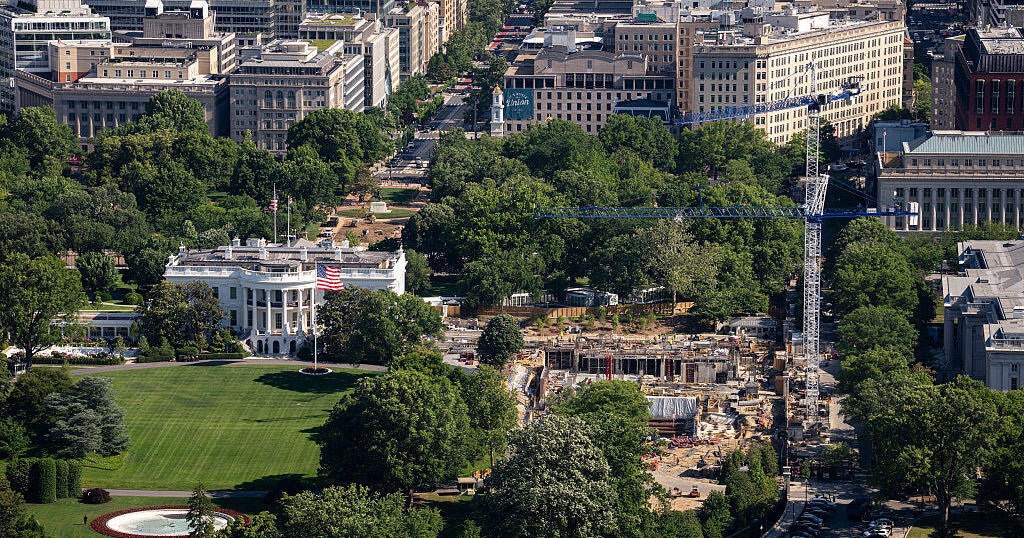

Washington — Senate Republicans are reworking a segment of their strategy to finance immigration agencies under the Department of Homeland Security. This shift comes after the Senate’s rulekeeper challenged the allocation of security funds meant for President Trump’s East Wing renovation at the White House, which features plans for a grand ballroom.
With Democrats consistently refusing to allocate funds for the DHS’s immigration enforcement agencies, Senate Republicans are advancing their funding proposal via the budget reconciliation process. This allows the Republican majority to proceed independently of Democratic support. Earlier this month, Republican members of the Senate Judiciary and Homeland Security committees introduced a $72 billion package intended to finance immigration enforcement through the fiscal year 2029, targeting delivery to the president by June 1.
Besides immigration enforcement funding, the proposal includes allocating $1 billion to the Secret Service for “security adjustments and upgrades.” This funding supports improvements relating to the expansive 90,000-square-foot “East Wing Modernization Project.” Announced by Mr. Trump last July, the project features updated underground national security and health care facilities, alongside the ballroom. Republicans note that security for the ballroom accounts for roughly 20% of the proposed Secret Service funds.
However, the Senate’s rulekeeper, known as the parliamentarian, indicated that the funding provision exceeds the jurisdiction of the Judiciary Committee and fails to align with the Byrd rule, as reported by Democrats on the Senate Budget Committee late Saturday.
Senator Jeff Merkley of Oregon, the leading Democrat on the committee, stated, “While we anticipate Republicans will amend this bill to satisfy Trump, Democrats are ready to contest any modifications. We must not allow Republicans to squander our national resources on a campaign of disorder and deception while ignoring the needs of the American people.”
Should the provision remain in the legislation, it would require a 60-vote approval. With only 53 Republicans, it stands little chance of garnering sufficient support in the Senate without modifications. A spokesperson for the Senate Judiciary Committee mentioned, “Discussions and adjustments are ongoing, as they have been for several days.”
Senate Republicans on the Judiciary Committee said Friday that technical adjustments “are a standard part of the budget reconciliation process,” noting that revisions and conversations were ongoing.
“Redraft. Refine. Resubmit. None of this is abnormal during a Byrd process,” said Ryan Wrasse, a spokesperson for Senate Majority Leader John Thune.
The provision has posed possible political hurdles for Republicans as well, putting lawmakers in competitive races in a vulnerable position ahead of November’s elections. While the legislation stipulates that none of the funds may be used for non-security elements related to the ballroom, Democrats have highlighted the funds as evidence of GOP support for the unpopular project.
The development also came after the parliamentarian determined days earlier that a number of other provisions within the package violated the Byrd rule and would be subject to a 60-vote threshold.
Senate Minority Leader Chuck Schumer celebrated the parliamentarian’s decision, saying in a statement late Saturday that Democrats “will keep fighting this every way we can — in the Byrd Bath, on the Senate floor with votes, and anywhere else Republicans try to raid Americans’ hard-earned money for Trump’s gilded palace.”