
BEIRUT – The ongoing conflict between Israel and Hezbollah, a group supported by Iran, has resulted in a death toll exceeding 3,000, according to Lebanon’s health ministry on Monday.
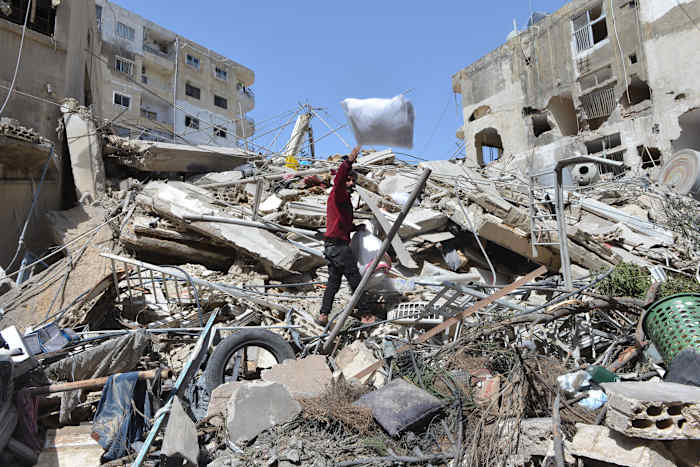
The ministry reported that Israeli airstrikes have claimed 3,020 lives, among them 292 women and 211 children. Hostilities erupted on March 2 when Hezbollah launched attacks on Israel, following U.S. and Israeli military actions against Iran. Despite a tentative ceasefire, the violence persists on both sides.
In response, Israel has advanced into southern Lebanon and conducted aerial bombardments on Beirut and additional regions, asserting that its operations aim to dismantle Hezbollah’s rearmament activities. Hezbollah, which also holds significant political influence in Lebanon, has resisted disarmament despite pressure from the Lebanese government.
Over a million individuals have been displaced within Lebanon due to the conflict, with many seeking refuge in makeshift shelters along roadsides and coastal areas in Beirut. Concurrently, Israel faces challenges in countering recurrent Hezbollah drone assaults targeting their forces in Lebanon and communities near the northern Israeli border.
Despite the initiation of a ceasefire on April 17, following unprecedented negotiations in Washington between Lebanon and Israel, Israeli airstrikes have continued unabated. This ceasefire has been extended into June, yet Israeli forces remain stationed across extensive areas of southern Lebanon.
Hezbollah, however, is not participating in these discussions and has expressed opposition. Instead, the group endorses its principal ally Iran in separate negotiations with the United States, facilitated by Pakistan.
The neighbors have been officially in a state of war since Israel was created in 1948.
Negotiations press on despite fighting
Israeli military Arabic spokesperson Avichay Adaree called on residents in several towns near the southern coastal city of Tyre on Monday to evacuate ahead of airstrikes. Meanwhile, the militant Palestinian Islamic Jihad group said one of its officials was killed in an Israeli strike on his house at midnight alongside his daughter in the city of Baalbek near the Syrian border.
Israeli officials have focused on disarming Hezbollah and described the negotiations as a precursor to a potential normalization of diplomatic relations.
Lebanese officials have said they seek a security agreement or armistice that would stop short of normalization, focusing on Israeli troop withdrawal from Lebanon, while maintaining their commitment to disarming the Iran-backed group.
Despite the ongoing attacks, the two sides agreed Friday to extend the ceasefire by 45 days and announced that military delegations will take part in direct talks of their own on May 29.
U.S. President Donald Trump has publicly called for a meeting between Lebanese President Joseph Aoun and Israeli Prime Minister Benjamin Netanyahu. However, Aoun has declined to go to Washington to meet or speak directly with Netanyahu at this stage — a move that would likely generate blowback in Lebanon, where talks with Israel were met with protests.
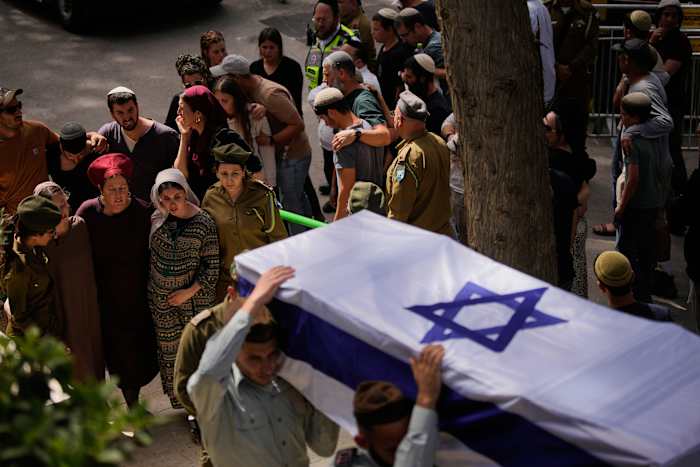
Twenty Israeli soldiers, two Israeli civilians inside Israel and a defense contractor working in southern Lebanon have been killed on the Israeli side since the latest fighting started.
U.N. peacekeeping forces in southern Lebanon have also been caught in the crossfire and six have been killed.