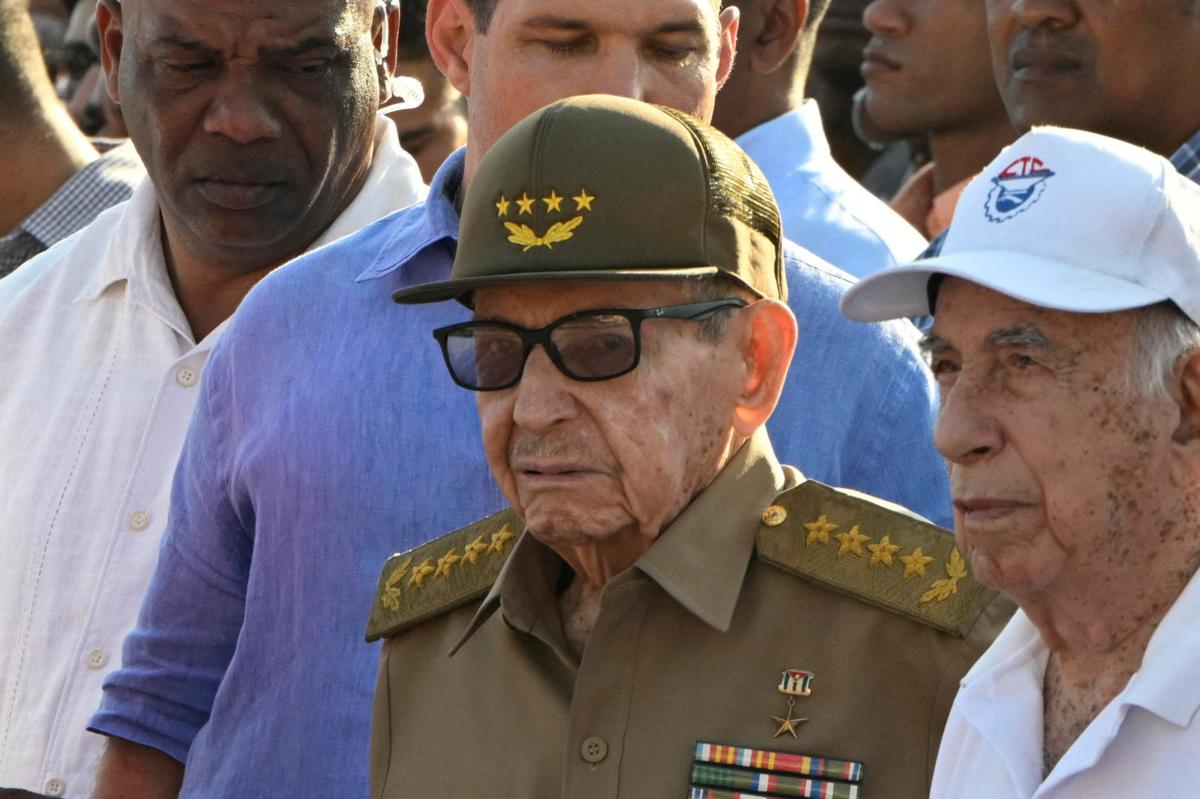


The Trump administration is poised to unveil criminal charges against former Cuban leader Raul Castro, escalating its pressure campaign against Cuba’s communist regime. This development is anticipated to be announced on Wednesday, marking a significant step in the United States’ ongoing efforts to influence the Caribbean nation’s government.
According to a U.S. Justice Department source, who spoke to Reuters last week under the condition of anonymity, the charges are linked to a 1996 incident where Cuban fighter jets downed aircraft operated by Cuban exiles. Raul Castro, now 94 years old, is the focal point of these charges.
The U.S. Attorney’s Office in Miami is scheduled to hold an event at 1 p.m. EDT to honor the victims of the 1996 incident. Concurrently, the Justice Department has indicated they will release an announcement in tandem with this ceremony, although specific details have not yet been disclosed.
President Donald Trump has been vocal about his goal of instigating regime change in Cuba, aiming to dismantle the communist stronghold that has persisted since Fidel Castro’s revolutionary rise in 1959. Raul Castro, Fidel’s brother, has been a key figure in maintaining this regime.
The United States has intensified its economic measures against Cuba, effectively enforcing a blockade by threatening sanctions on nations supplying fuel to the island. This has resulted in power outages and further strained Cuba’s already tenuous economy.
While Cuba has not officially responded to the potential indictment, Foreign Minister Bruno Rodriguez has shown defiance in public statements as recently as May 15, underscoring the island nation’s resilience amid mounting pressures.
“Despite the (US) embargo, sanctions and threats of the use of force, Cuba continues on a path of sovereignty towards its socialist development,” Rodriguez said.
Born in 1931, Raul Castro was a key figure alongside his older brother in the guerrilla war that toppled US-backed dictator Fulgencio Batista.
He helped defeat the US-organized Bay of Pigs invasion in 1961, and served as defense minister for decades. He succeeded his brother as president and remains a powerful behind-the-scenes figure in Cuban politics.
He was defense minister at the time of the 1996 incident.
The two small planes that were shot down were being flown by Brothers to the Rescue, a group of Miami-based Cuban exile pilots. All four men aboard were killed.
The group said its mission was to search the Florida Straits for Cuban rafters fleeing the island, and routinely flew near the Cuban coast.
The Cuban government has argued the strike was a legitimate response to the planes intruding on Cuban airspace. Fidel Castro said Cuba’s military had acted on “standing orders” to down planes entering Cuban airspace. He said Raul Castro did not give a specific order to shoot the planes.
The US condemned the attack and imposed sanctions, but did not pursue criminal charges against either Castro brother. The Justice Department charged three Cuban military officers in 2003 but they were never extradited.
The International Civil Aviation Organization later concluded the shootdown took place over international waters.
The filing of a criminal case against a US adversary like Castro would recall the earlier drug-trafficking indictment of imprisoned former Venezuelan President Nicolas Maduro, an ally of Havana’s.
The Trump administration cited that indictment as a justification for the January 3 raid on Caracas by the US military in which Maduro was captured and brought to New York to face the charges. He has pleaded not guilty.
Trump says Cuba’s communist government is corrupt, and in March threatened that Cuba “is next” after Venezuela.
Cuban President Miguel Diaz-Canel said on Monday that any US military action against Cuba would lead to a “bloodbath” and that the island does not represent a threat.