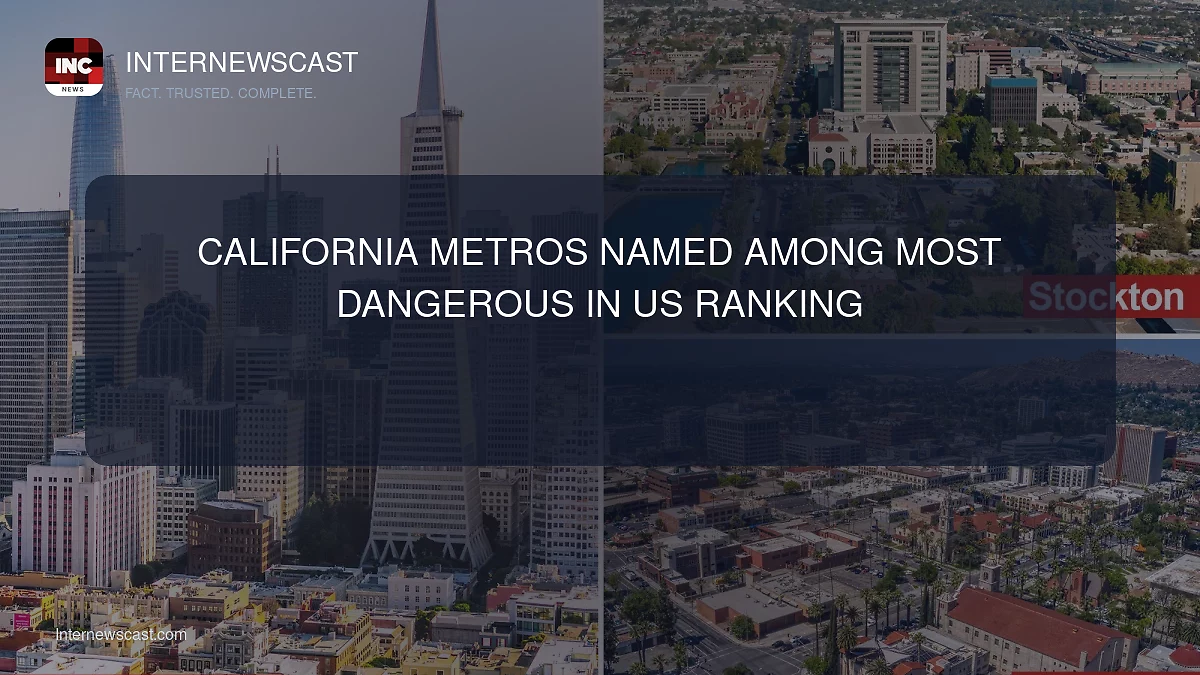

California may be known for some of the country’s most recognizable cities, but several of its largest communities are also being flagged for safety concerns.
A new SmartAsset analysis placed San Francisco, Oakland, Stockton and Riverside among the least-safe large cities in the United States, with San Francisco and Oakland both finishing in the bottom 10.
The personal finance website compared 83 U.S. cities with populations of 250,000 or more, weighing violent crime, property crime, traffic deaths and disaster risk. Twelve California cities appeared in the ranking, but none earned a spot among the 10 safest.
Oakland stood out for having the nation’s second-highest crime rate, at 19.3 incidents per 1,000 residents, behind only Memphis. Stockton’s crime levels were more moderate, but the city faced a relatively high disaster risk, while both Stockton and San Francisco recorded the study’s highest traffic fatality rate at 18.5 deaths per 100,000 residents.
Even cities with comparatively lower crime numbers were held back by environmental hazards. Irvine and Santa Ana, for example, did not make the top 10 safest despite moderate violent and property crime rates because both received the highest possible disaster risk scores, largely tied to wildfire and earthquake threats.
San Francisco and Riverside reported lower crime rates than Oakland, but other risk factors weighed on their overall rankings. Stockton, meanwhile, combined moderate crime with elevated disaster exposure and tied San Francisco for the highest traffic death rate in the country at 18.5 fatalities per 100,000 residents.
| Rank | City | Violent crimes per 1K residents | Property crimes per 1K | Auto fatalities per 100Kⁱ | Disaster riskⁱ |
| 80 | San Francisco | 6.0 | 39.3 | 18.5 | Very High |
| 77 | Oakland | 19.3 | 72.3 | 6.8 | Very High |
| 71 | Stockton | 11.3 | 27.4 | 18.5 | Relatively High |
| 69 | Riverside | 5.9 | 28.3 | 13.4 | Very High |
| 64 | Fresno | 7.4 | 32.7 | 17.8 | Relatively High |
Virginia Beach, Virginia, topped the national list as the safest large city, helped by below-average violent and property crime rates, a traffic fatality rate of about seven deaths per 100,000 residents and a low FEMA disaster risk score, which accounts for expected disaster losses, social vulnerability and community resilience.
Texas showed the widest split among the states represented: of its 12 cities in the study, Plano and Laredo ranked among the 10 safest, while Dallas and Houston landed among the 10 least safe.