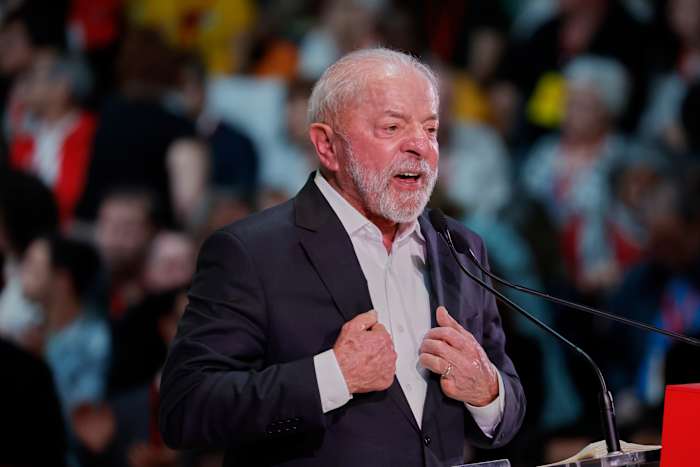


SAO PAULO – In a significant move against major technology firms, Brazil’s President Luiz Inácio Lula da Silva has enacted two decrees aimed at holding these companies accountable for illegal content shared by users. These decrees also empower a government agency to investigate how tech giants respond to such issues.
This regulatory change poses a challenge for industry leaders like Google, Meta, and TikTok, who have historically distanced themselves from user-generated criminal activity on their platforms.
The first decree aligns with a Brazilian Supreme Court ruling, mandating that tech companies bear responsibility if they fail to remove content when ordered by a court. It also grants Brazil’s national data protection agency the authority to look into these cases. The second decree sets forth guidelines to ensure the protection of women in the digital space.
According to a government statement, platforms are now obligated to evaluate any complaints they receive. If the content is found to be illegal, they must promptly remove it and notify the responsible party. Failure to comply could result in penalties such as warnings, fines, or even temporary bans.
So far, major technology firms have not issued public comments regarding the Brazilian government’s recent action.
Patricia Peck, a member of Brazil’s Data Protection Authority and an accomplished author on law and technology, noted that while Congress has shown little progress, the executive and judicial branches are pressing for tech companies to take more proactive measures against online crimes.
“We don’t have specific legislation to hold these platforms responsible, we are taking a side road,” Peck told The Associated Press. “Those who develop these technologies must think about it with perspective of ethics, privacy, and security as a standard.”
Since the Brazilian Supreme Court ruling last year, these companies have had to actively monitor content that involves hate speech, racism and incitation to violence and act to remove it.
Lula’s move also expands the current law’s capacity to address the growth of digital fraud, online scams and new forms of online violence.
Mattheus Puppe, an expert on Brazil’s digital law, says the decrees seek to stop platforms from profiting from illegal publications and reinforce the country’s Supreme Court’s decision. But he has doubts on whether the government’s initiatives will indeed hinder online crime.
“It is not clear how well this will work because the agency that was chosen to investigate cases can barely do its job now,” Puppe said. “But it is true that it shouldn’t be up to companies to know what is lawful and what is not.”
Brazil’s approach to big techs is increasingly similar to that of the European Union, which has sought to rein in the power of social media companies and other digital platforms.
But it has unsettled the relationship between the South American nation and the U.S. government. Critics expressed concern that the move could threaten free speech if platforms preemptively remove content that could be problematic.
Earlier this year, a law that seeks to shield minors from addictive, violent, and pornographic online content took effect. The legislation requires minors under 16 to link their social media accounts to a legal guardian to ensure supervision and prohibits platforms from using addictive features such as infinite scroll and the automatic play of videos.
___