
The Michael J. Fox Foundation lauded Vermont’s recent legislation as a significant stride in safeguarding public health.
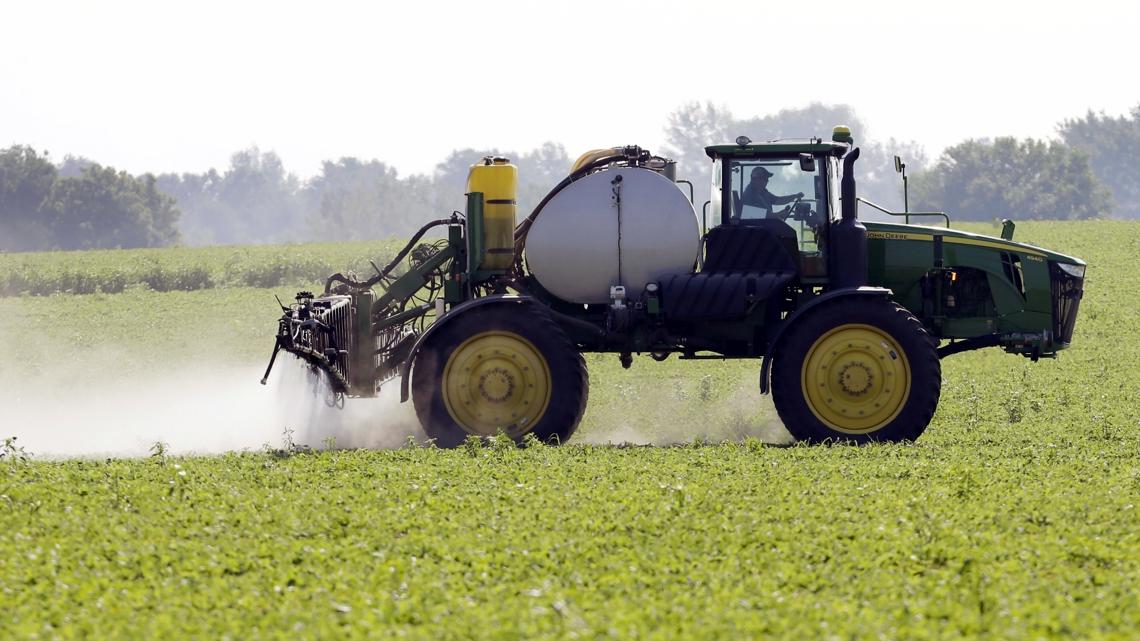
WASHINGTON — This week, Vermont made history by becoming the first U.S. state to prohibit the herbicide paraquat dichloride. State lawmakers pointed to studies indicating a link between the chemical and an elevated risk of Parkinson’s disease, prompting this decisive action.
Governor Phil Scott enacted H. 739, a legislative measure titled “an act prohibiting the use and sale of the herbicide paraquat,” after it garnered strong bipartisan support in Vermont’s General Assembly.
Officials from the Michael J. Fox Foundation, dedicated to Parkinson’s disease awareness and research, hailed the legislation as a “public health milestone.” They emphasized that individuals using paraquat have double the likelihood of developing Parkinson’s compared to those using other types of herbicides and pesticides.
Michael J. Fox, the acclaimed actor and founder of the foundation following his own Parkinson’s battle, expressed his approval of the new law.
“I’m thankful to the patients, advocates, lawmakers, and scientists who came together to shield Vermonters from paraquat,” Fox stated earlier this month. “It’s time for other states—and Washington—to follow suit.”
The Environmental Protection Agency has said since 2021 that it would review its registration of paraquat as an approved pesticide. Although the official website for the federal government agency says it “has not found a clear link between paraquat exposure from labeled uses” and diseases like Parkinson’s and cancer.
Companies like Syngenta, a key manufacturer of paraquat products, have also denied the correlation.
“While we have great sympathy for those suffering from the debilitating effects of Parkinson’s disease … scientific evidence simply does not support a causal link,” the Swiss-based agricultural giant has claimed.
While some cases of Parkinson’s are considered genetic, the vast majority are brought on by environmental factors or a mix of both genetic and environmental factors. The National Institutes of Health, the primary federal government agency responsible for medical research, has listed pesticides broadly as a risk factor for Parkinson’s. A 2025 study published by the NIH linked paraquat to cancer and Parkinson’s.
State Rep. Esme Cole, the Democrat who introduced the bill into the Vermont House of Representatives, said she was overwhelmed by calls from the people with Parkinson’s disease who supported the ban.
“I think the way we approached this, honestly, was so much less about partisanship and so much more about using the information in front of us to make an informed decision and really digging into the weeds,” Cole said. “I so respect the truly bipartisan efforts of the House Committee on Agriculture, which really was willing to do their homework on this issue and invite several diverse voices … ranging from farmers to oncologists to public health advocates.”

Bills to ban paraquat or restrict its use have been introduced in about a dozen other state legislatures in 2026, including New York, Utah, Pennsylvania and Washington. However, outside of H. 739 in Vermont, no votes have been held on the measures as of Thursday.
Other legislatures, including Congress, have looked to hold pesticide manufacturers civilly liable for harm. In April, the United States House of Representatives approved the Farm, Food and National Security Act of 2026, which included an amendment empowering people to sue pesticide manufacturers if their products cause harm or disease.
Internationally, paraquat has been effectively banned from herbicide and pesticide markets in 74 countries since its invention in 1962.
“I’ve started to get a little bit of outreach from other interested stakeholders, in other states, who want to talk more about the process and the barriers and who are the perspectives to hear from on this,” Cole said. “So those conversations have begun, and I really do hope that other states will follow our lead.”