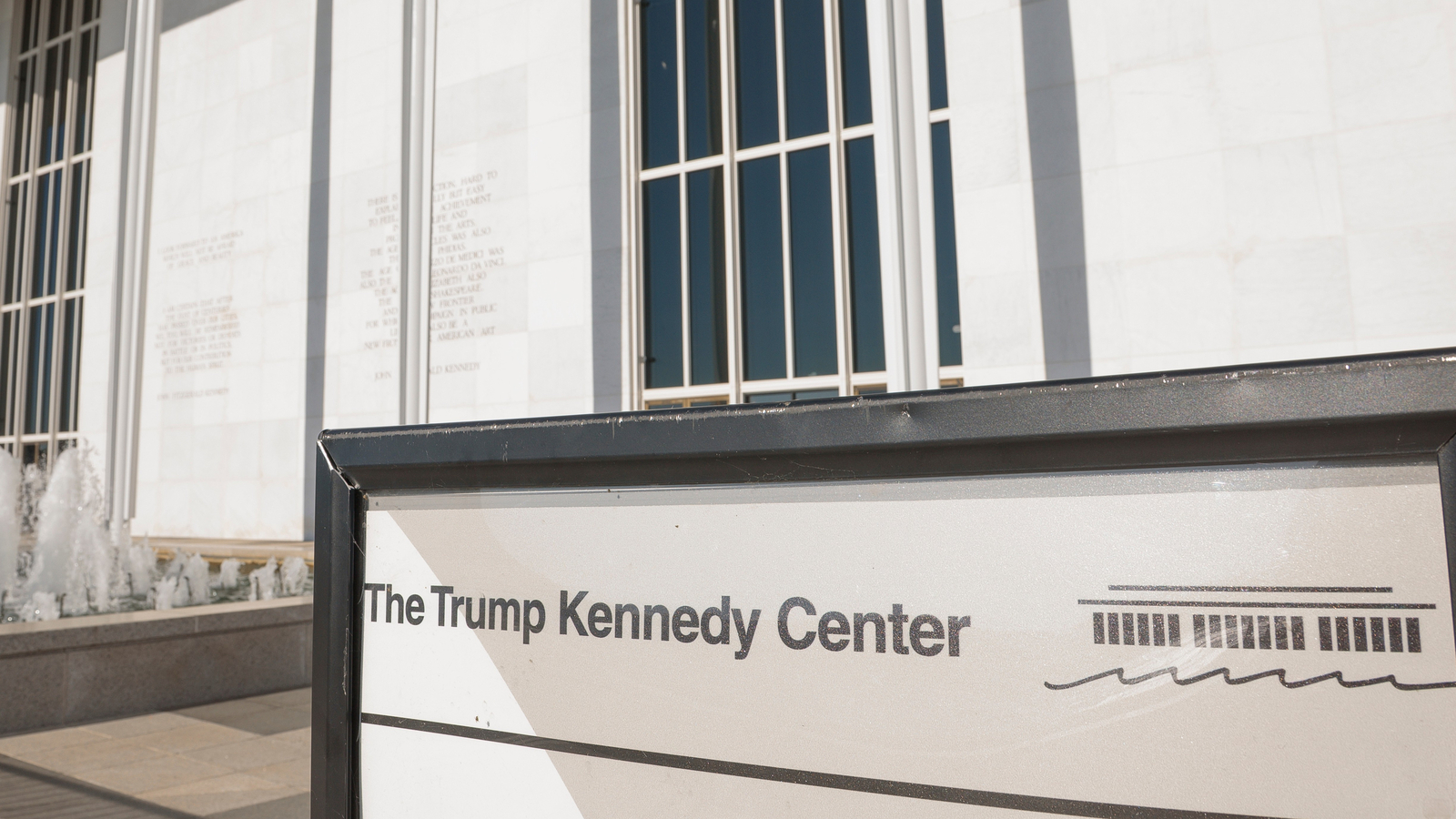

WASHINGTON D.C. — On Saturday, former President Donald Trump lashed out at a federal judge who had halted his proposed renovation of the Kennedy Center, labeling the judge as “an anti-Trump Hater.” Trump went on to predict a grim future for the nation’s leading performing arts center, suggesting it would “soon be closed, probably never to open again.”
Trump took to his Truth Social platform to express his frustration with the ruling from U.S. District Judge Christopher Cooper, who had also mandated the removal of Trump’s name from the center. Angered by this latest legal defeat, Trump claimed that it was “impossible for me to be treated fairly,” linking Cooper’s decision to previous setbacks, including the Supreme Court’s decision in February against his broad tariff policies.
In his post, Trump argued in favor of the renovation project but did not specify if he would continue to pursue the matter in court. Following Cooper’s ruling, Trump announced his decision to withdraw from the renovation efforts and began arrangements to hand over control to Congress of the facility, which was known as the John F. Kennedy Center for the Performing Arts before his tenure.
The White House has yet to comment on Trump’s future involvement with the center or whether he will remain as its board chairman.
Trump’s indication of stepping back from the Kennedy Center has been welcomed by artists who felt marginalized by his management, according to Norm Eisen, a former White House ethics lawyer participating in a lawsuit against Trump’s plans for the center.
“Artists and audience members are already expressing enthusiasm about the prospect of the Kennedy Center returning to its non-partisan roots,” Eisen conveyed to The Associated Press via a text message on Saturday. “While it’s early, I am optimistic that once the court’s order is implemented, including removing Trump’s name and ensuring the Board complies with the law, the Center can begin its journey back to normalcy.”
Trump cites judge’s wife
Without offering evidence, Trump suggested that Cooper’s wife, lawyer Amy Jeffress, was to blame in part for the ruling. The president noted that Jeffress, a partner at the Hecker Fink law firm, is a former federal prosecutor who served as a counselor to Attorney General Eric Holder during the administration of Democratic President Barack Obama. Cooper was nominated for the bench by Obama.
Trump also noted that Hecker Fink is representing former President Joe Biden in a lawsuit against the Department of Justice to block the release of audio recordings and transcripts from the Democrat’s interviews with a ghostwriter that were obtained in an investigation into Biden’s handling of classified documents from his time as a senator and as vice president.
Trump asserted that the Kennedy Center, named for the late Democratic president and opened in 1971, was “rusted, rotted, and rat and bug infested” and that the “new Building would have been incomparable.”
Cooper said in his ruling that the center board’s March 16 vote to close the venue was “ill-informed and seemingly preordained” with no regard for its legal obligations. The administration had announced the work would begin in July and last approximately two years. Cooper’s ruling halts those plans for now.
The judge also found that the board “overstepped its statutory bounds” by adding Trump’s name to the center. Congress gave the Kennedy Center its name, and only Congress can change it, he said. Cooper ordered that Trump’s name be removed within two weeks.
President defends adding name to the center
Trump on Saturday said it was the board, not him, that added the Trump name to the center. “They thought it would be good for this dying Institution,” he wrote.
Shortly after returning to office in January 2025, he ousted the center’s previous leadership and replaced it with a handpicked board of trustees that named him chairman.
Cooper held hearings in late April for parallel lawsuits challenging the project. One lawsuit was filed by a group of cultural and historic preservation organizations. The other was brought by Rep. Joyce Beatty, an Ohio Democrat who serves as an ex officio member of the board through her position in Congress. He ruled in favor of Beatty’s request but rejected the other challenge.
Trump, in his post, also noted that Jeffress’ firm represented E. Jean Carroll, the longtime advice columnist whose claims against Trump won her a $5 million award in 2023 for sexual abuse and defamation after a jury agreed that Trump sexually abused her in a New York department store dressing room in 1996. Another jury in 2024 awarded Carroll an additional $83 million for defamation. Both awards are under appeal.
Jeffress did not immediately respond to a request for comment.
___
Associated Press writer Larry Neumeister in New York contributed to this report.
Copyright © 2026 by The Associated Press. All Rights Reserved.