
Washington — In a significant decision on Monday, a federal appeals court expressed skepticism about the constitutionality of the Trump administration’s policy barring transgender individuals from military service.
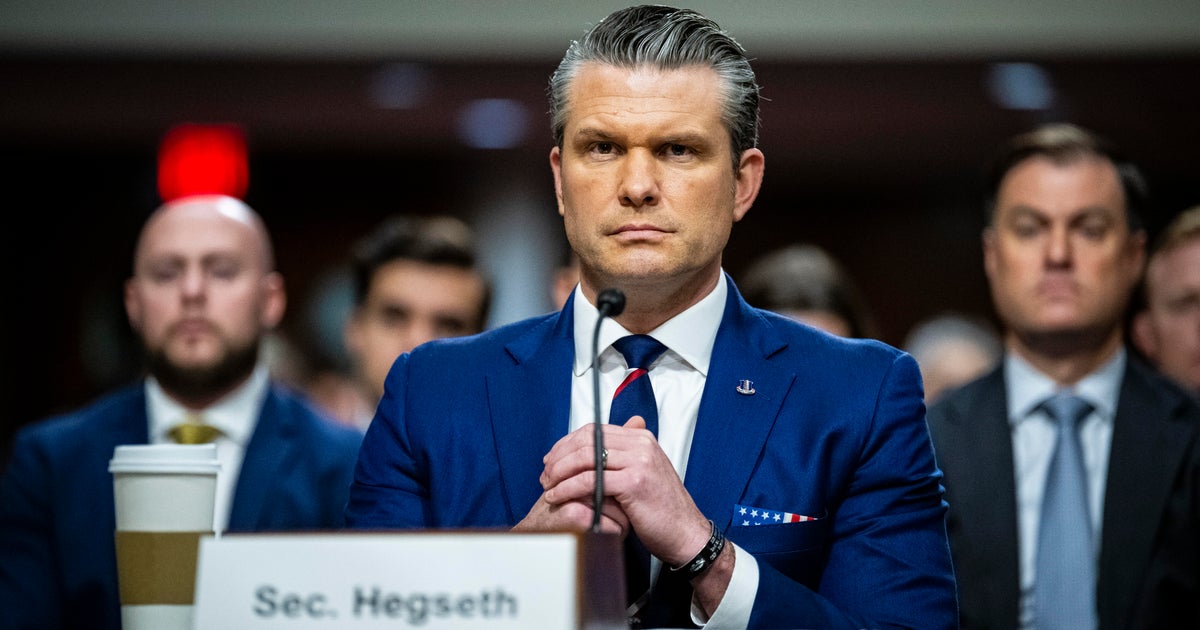
The U.S. Court of Appeals for the D.C. Circuit, in a 2-1 ruling, concluded that the ban, introduced by Secretary of Defense Pete Hegseth the previous year, appeared to be motivated by prejudice against transgender people.
Judges Judith Rogers and Robert Wilkins determined that the policy likely breached the Constitution’s equal protection clause by unfairly targeting transgender service members.
The judges decided to uphold a preliminary injunction, which prevents the Defense Department from discharging transgender troops currently serving. However, this injunction specifically applies only to the active-duty plaintiffs involved in the lawsuit.
In his opinion, Judge Wilkins noted that the reasoning behind the Hegseth Policy, which cited gender dysphoria, was a pretext. He argued that the policy was partly based on an inappropriate intent to discriminate against transgender individuals, a group deemed politically unpopular. He further stated that President Trump had labeled transgender individuals as inherently unsuitable for military service due to their gender identity.
While Judges Wilkins and Justin Walker allowed the administration to impose restrictions on transgender individuals who were seeking to enlist in the military, these restrictions barred them from joining under the new policy.
Later Monday, Hegseth wrote on social media: “See you at SCOTUS.”
Walker, who authored a dissenting opinion, was nominated to the federal bench by Mr. Trump in 2020. Wilkins was appointed to the D.C. Circuit by President Barack Obama, and Rogers was tapped for the appeals court by President Bill Clinton.
Mr. Trump signed an executive order in the opening days of his second term that targeted active-duty and prospective service members with gender dysphoria. The president’s directive said that the military’s “high standards for troop readiness, lethality, cohesion, honesty, humility, uniformity and integrity” are inconsistent with the “medical, surgical and mental health constraints on individuals with gender dysphoria.”
Soon after the president signed his executive order, Hegseth directed the Pentagon to pause new accessions for people with a history of gender dysphoria and halt medical procedures for transgender troops. The Defense Department issued a policy in February 2025 disqualifying people with gender dysphoria from military service unless they obtained a waiver.
Hegseth’s policy drew several legal challenges, including in Washington, D.C., and Tacoma, Washington. In May 2025, in response to proceedings in the case from Tacoma, the Supreme Court allowed the Trump administration to continue enforcing its policy on transgender military service while litigation moved forward.
The D.C. lawsuit was brought by more than a dozen transgender active-duty service members and a group of transgender individuals who were actively pursuing enlistment. They argued that the Defense Department’s policy unlawfully discriminated against them based on their sex and transgender status.
In March 2025, U.S. District Judge Ana Reyes granted the plaintiffs’ request to block enforcement of the policy and issued a blistering decision finding, in part, that the Trump administration’s policy was driven by unconstitutional animus.
The Trump administration appealed and asked the D.C. Circuit to pause Reyes’ decision and allow it to enforce the transgender military ban. A different three-judge panel agreed to do so while the appeals court considered the legal merits.
In his opinion Monday, Wilkins wrote that Hegseth’s policy “does not classify whether persons are eligible to serve in the military in a reasonable and evenhanded manner,” since it disqualifies from service any person who has been diagnosed with gender dysphoria, regardless of when they were diagnosed or if they currently suffer from it.
He noted that the plaintiffs in the case have served a combined 130 years in the military and have collectively earned more than 80 commendations. He said the Trump administration did not contest that they have served honorably and satisfied military standards.
“This is not a case where we are left to speculate why the government drafted such broad, undifferentiated classifications,” Wilkins said. “Unless we are going to fall for the old Groucho Marx line — ‘who are you going to believe, me or your lying eyes?’ — we have direct evidence in this case that animus motivated the classifications in the Hegseth Policy.”
The judge wrote that the Trump administration “conceded” that there was “no evidence to establish that persons with gender dysphoria are not honest, humble, and full of integrity.”
An estimated 4,200 troops had been diagnosed with gender dysphoria as of December 2024, according to a defense official. Roughly 1,900 active-duty members of the military received gender-affirming care from the Defense Department between January 2016 and May 2021, according to a January 2025 report from the Congressional Research Service.