
LAS VEGAS — Over the weekend, sources revealed to News Agency that the FBI is considering the integration of advanced technological resources into the ongoing investigation of Nancy Guthrie’s case.
Details on these potential tools were not disclosed.
Morgan Wright, who heads the National Center for Open and Unsolved Cases, speculated on Monday that these innovations likely target three key areas.
“Resolving this case will likely hinge on technical advancements and innovative data analysis techniques,” he stated to News Agency. “I’m considering possibilities such as video forensics, signal analysis, or even blockchain technology.”
On February 10, 2026, FBI agents conducted a neighborhood sweep around Annie Guthrie’s residence in Tucson, Arizona, as they persist in their efforts to locate her missing mother, Nancy Guthrie. (DWS for News Agency)
Video forensics might involve the use of technology to enhance videos, known or unknown, to identify the suspect or their vehicle. Signal analysis could leverage data from cell sites or advertising technology. Meanwhile, blockchain could potentially unmask the individuals behind ransom and extortion attempts, regardless of their authenticity.
“If I’m going to put it into three buckets, I’d say it’s going to come out of one of those three buckets,” Wright, the editor and host of the “Crime: Reconstructed” Substack and podcast, added.
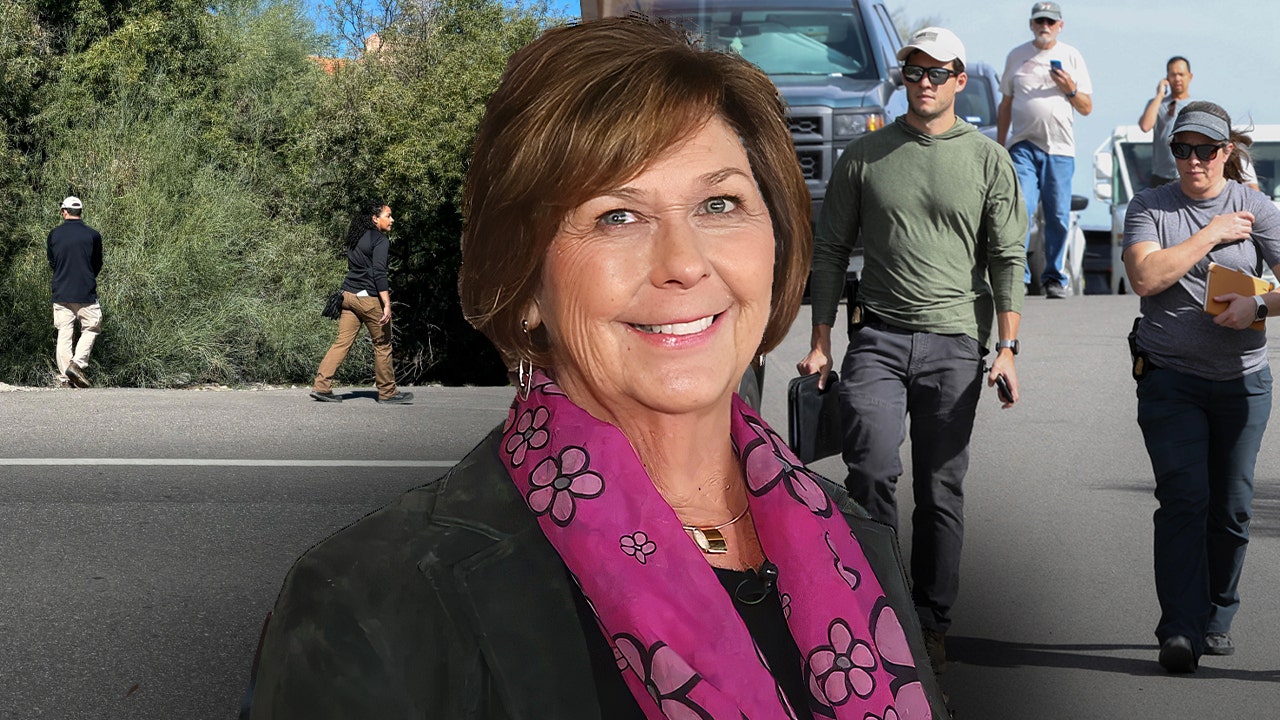
Investigators search brush near Nancy Guthrie’s house in Arizona as her photo is shown in an overlay. The image is courtesy of NBC and News Agency. (News Agency; Courtesy of NBC)
Investigative genetic genealogy could still provide a major breakthrough, he said, but that’s not new tech.
He said he believes the publicly known evidence shows there was only one kidnapper involved, in part because only one person appears on video, and no one has come forward to claim the reward of over $1.2 million.
“I don’t know that there’s anything else to indicate a second person,” he said.
That’s likely why the suspect was seen struggling to obscure the camera and eventually took it with him, he added. Not to hide his face, which was already covered, but to mask the suspect vehicle.
“The blood trail stops at the edge of the driveway,” he said. “So we know there was a car.”
The investigation, which kicked off four months ago Monday after Guthrie’s suspected abduction from her home in Tucson, has already involved the use of state-of-the-art Bluetooth detection deployed over the neighborhood in a helicopter and the groundbreaking recovery of Nest doorbell camera video.
An armed individual appears to tamper with a Google Nest camera at Nancy Guthrie’s front door in Tucson, Ariz., on Feb. 1, 2026, the morning of her disappearance. (FBI)
The Bluetooth “sniffer” was flown around the area in the hope that it could pick up signs from Guthrie’s pacemaker device.
She did not have a cloud subscription for her cameras, and the physical device itself was missing before police arrived to investigate her disappearance. But the FBI and Google teamed up to recover images that show a masked man on her doorstep on the night of her abduction as well as several weeks earlier.
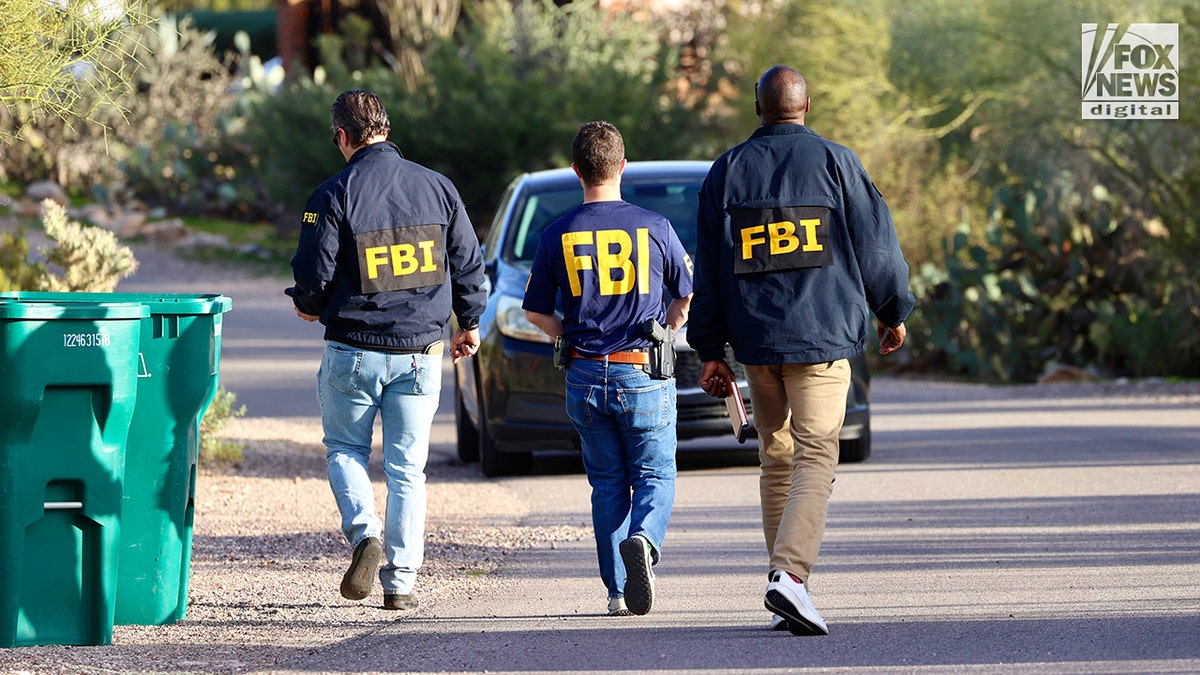
FBI agents canvass homes near Nancy Guthrie’s residence in Tucson, Ariz., on Feb. 6, 2026, as the investigation into her disappearance continues. (Kat Ramirez for News Agency)
The Guthrie family is urging anyone with information to dial 1-800-CALL-FBI. There is a combined reward of more than $1.2 million for information that breaks the case.
Anonymous tips can also be sent to Tucson’s Crime Stoppers affiliate, 88-Crime, at 1-520-882-7463.