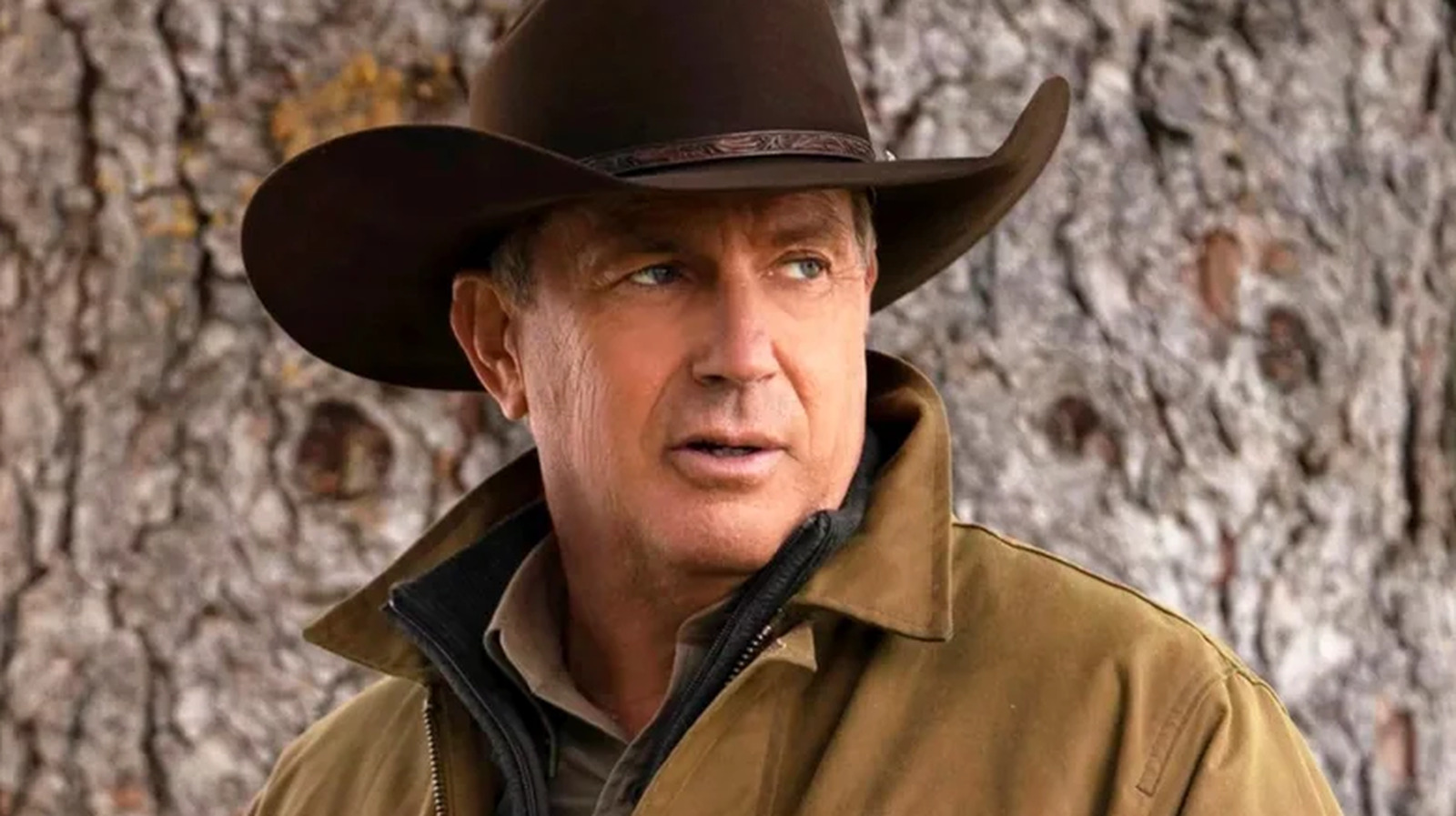

These days, if you find yourself in the midst of a conversation about Western television, it’s almost inevitable that “Yellowstone” will come up, or perhaps something else crafted by Taylor Sheridan. Since its debut on the Paramount Network in 2018, the Dutton family saga has captured audiences and become a streaming powerhouse in record time. However, immense popularity doesn’t necessarily equate to being the cream of the crop. While for many, “Yellowstone” has become the archetype of the contemporary Western, there are numerous shows that surpass it in quality and storytelling.
Spanning from classic TV Westerns to modern streaming miniseries and neo-Westerns that predate Kevin Costner’s return to the genre, we’ve curated a list of five Western series that outshine “Yellowstone.” Truth be told, a list of ten could easily have been compiled, given the rich tapestry of Western television. Nonetheless, in the spirit of selectivity, here are a few standout shows that make the Duttons look like mere dust in the wind.
Before diving into the list, it’s worth giving a nod to “Yellowstone’s” own prequel, “1883.” This series offers a gritty glimpse into the original Duttons’ journey to settle in what would become Montana. Praised for its historical authenticity and compelling character portrayals, “1883” is arguably the finest offering from the entire Paramount franchise. Now, let’s explore five exceptional Western series that stand head and shoulders above the sprawling “Yellowstone” universe.
Arguably the pinnacle of TV Westerns, “Lonesome Dove” is often regarded as an epic Western film, despite its miniseries format. Advertised as “the epic film as big as the West,” this adaptation of Larry McMurtry’s novel stars the late Robert Duvall as Augustus “Gus” McCrae and Tommy Lee Jones as Captain Woodrow F. Call. The story follows their later years as they embark on a cattle drive from Texas to Montana—a feat the Duttons would find hard to match.
First aired over several nights in February 1989, “Lonesome Dove” quickly became a classic, resonating with audiences and critics alike. The miniseries meticulously adapts McMurtry’s expansive novel, offering a portrayal of the American West that is both realistic and mythic. Duvall delivers a career-defining performance, and Jones complements him as the steadfast, no-nonsense former Texas Ranger.
Lonesome Dove
One of the advantages of “Lonesome Dove” compared to other productions is its binge-worthy nature, allowing viewers to consume it over a single weekend. You might even find yourself, like Call’s character, yearning to revisit “Lonesome Dove” once it concludes. Whether you see it as an epic film akin to “The Lord of the Rings” or a classic CBS miniseries, “Lonesome Dove” is essential viewing for any true aficionado of Westerns.
“Lonesome Dove” aired over several nights in February 1989, becoming an instant classic with audiences and critics alike. The miniseries goes to great lengths to adapt as fully as possible the material from McMurtry’s monster of a novel and offers a realistic yet mythic take on the old American West. Duvall, in particular, delivers the performance of a lifetime, and Jones isn’t far behind as the stoic, no-nonsense former Texas Ranger leading the charge.
What’s great about “Lonesome Dove” compared to some of the other productions on this list is that it’s one of those Western shows that you can easily binge in a weekend. Of course, you may find yourself echoing Call’s own ending in hopes of returning to “Lonesome Dove” again as soon as it’s over. Whether you see it as an epic film in the same vein as “The Lord of the Rings” or a classic CBS miniseries, “Lonesome Dove” is one that any self-respecting Western lover ought to watch at least once.
Hatfields & McCoys
If more Kevin Costner as a gruff-and-violent family patriarch fighting over American land is more your speed, then you ought to give “Hatfields & McCoys” a go. Another miniseries, this History Channel project reunited Costner with “Robin Hood: Prince of Thieves” and “Waterworld” director Kevin Reynolds for an intense family feud further enflamed by the American Civil War. While perhaps not your typical Western, “Hatfields & McCoys” still delivers for fans of this famed period in U.S. history.
Aside from Costner, who plays Devil Anse Hatfield, “Hatfields & McCoys” features the late Bill Paxton as Randall McCoy, the opposing patriarch who finds himself at odds with his neighbors. The three-part miniseries event recalls with masterful detail the familial conflicts at play here, with Costner and Paxton standing out as the most notable of the bunch. Of course, they’re joined by other memorable stars too, including Matt Barr, Powers Boothe, Jena Malone, and Tom Berenger.
“Hatfields & McCoys” is another miniseries that has garnered critical and audience acclaim over the years, and is often counted among the best modern TV Westerns. It’s hard to argue with the screen presence of a man like Kevin Costner, and although this was made several years before “Yellowstone,” we can already see some of John Dutton in Devil Anse. Or, rather, we can see some of the Devil in John Dutton…
Longmire
Before “Yellowstone” took the world by storm, thrusting the neo-Western into the forefront of streaming-era interest, “Longmire” did it first. Based on the Wyoming-based mystery novels by author Craig Johnson, the A&E-turned-Netflix series followed Sheriff Walt Longmire (Robert Taylor) as he patrols the busiest small county you’ve ever seen. As the traditional lawman tackles everything from organized crime and bank robbers to drug abuse and Rez-related homicides, he proves that sometimes you need an old-fashioned Western outlook to get the job done.
“Longmire” is incredible. The show intentionally explores contemporary Native American issues (namely regarding modern reservations) and American West culture, all from the vantage point of a widower sheriff who will always do the right thing. For six seasons, “Longmire” captivated audiences and reignited that Western spark that had been missing for some time. The show ended right before “Yellowstone” began after 63 episodes that are far more satisfying than anything the Duttons went through.
Despite taking place in Wyoming, “Longmire” was filmed in New Mexico — but don’t let that small inaccuracy put you off. The show is the perfect neo-Western in that it takes everything folks love about classic Old West programs and updates it to the modern Western culture. Honesty and integrity are the two concepts that Walt runs on, and it’s why we still revisit this series all these years later.
The Son
Another series that began right before “Yellowstone,” this AMC production is everything that the Dutton drama ought to have done, but better and more succinctly. Based on the Philipp Meyer novel of the same name, “The Son” is all about the life and legacy of a “First Son of Texas” who seeks to see his cattle (and later oil) empire carried on to the next generation. Pierce Brosnan shines as patriarch Eli McCullough, who will stop at nothing to see his children and grandchildren take the family business into the 20th century, refusing to let go of the land he bled and killed for.
Of course, part of what’s so compelling about “The Son” is the dualing narratives. The “present” of 1915 is complemented by Eli’s adventures in the past (where he’s played by Jacob Lofland) after his family is killed by Comanches and he’s taken in by the tribe in the mid-1800s. For two seasons and 20 episodes, we follow Eli’s story and that of the McCullough family into the 1980s where his descendants are confronted with the results of his actions and the fracturing of their family.
“The Son,” however, is not for the faint of heart. Like “Yellowstone,” it can be terribly brutal. Yet, it’s a more complete and engaging take on the same ideas of life, legacy, and loss and the ways in which they affect a man in his declining years. Sheridan-lovers won’t be able to stop this addictive binge.
Gunsmoke

Bettmann/Getty Images
When it comes to Western television shows, there are none better nor more influential to the genre than “Gunsmoke.” After the popular radio program of the same name grew immensely popular, CBS aimed to re-imagine the material for television. On the recommendation of John Wayne himself (who opened up the first episode), James Arness starred as U.S. Marshal Matt Dillon, the tough-but-fair lawman who strolls around Dodge City breaking up any conflicts in his sights. Joined by the likes of Miss Kitty Russell (Amanda Blake), Galen “Doc” Adams (Milburn Stone), and a host of others, Dillon never backed down from his duty — even when folks beat him at first.
“Gunsmoke” ran from 1955 until 1975 when it was finally (and unceremoniously) cancelled by the network after 20 straight seasons. From its initial half-hour black-and-white installments to its eventual hour-length color adventures, the show always knew how to entertain its audience. While many of the early episodes (which remain some of the best) were adapted directly from the radio show, the later seasons experimented with a more anthology-inspired format. Whichever era of “Gunsmoke” you prefer, you can’t go wrong.
With 635 episodes under its gunbelt, the CBS series remains just as classic today and continues to find an audience in our streaming world. There’s a reason that Western fans everywhere continue to flock to the adventures of Marshal Dillon, and we can’t blame them. No wonder the show spawned five made-for-TV movies in the ’90s. At the end of the day, “Gunsmoke” is everything that “Yellowstone” isn’t, but it’s a traditional take on the mythic genre that has withstood the test of time.


