
SpaceX, the pioneering aerospace company founded by Elon Musk, is preparing to enter the public market with a highly anticipated Initial Public Offering (IPO) that values the company at an impressive $1.75 trillion, or approximately £1.3 trillion.
In a unique opportunity, small investors in the UK are being invited to participate in what is set to be the largest IPO in history. This rare chance allows them to invest alongside major financial players in SpaceX’s ambitious ventures.
Prospective investors are encouraged to act quickly and submit their applications by next Wednesday. This IPO offers a stake in Musk’s visionary projects, including lunar exploration and other groundbreaking initiatives both on Earth and in space.
SpaceX aims to raise around $75 billion through this offering, attracting interest from both private investors and professional money managers.
Traditionally, private investors are often left out of such high-profile Wall Street events, and it is even less common for British investors to participate in U.S. IPOs due to stringent regulations from the U.S. Securities and Exchange Commission (SEC).
However, SpaceX is breaking the mold. Musk, a proponent of ‘broad access,’ is eager to include small investors in this monumental venture. By integrating them into the retail book-building process, which gathers demand from individual investors, Musk is extending an invitation to join the ride into the future of space exploration.
He is said to be reserving 20 to 30 per cent of the shares for ordinary people. And in an unusual move, it has been reported that as much as $2billion has been set aside for British private investors.
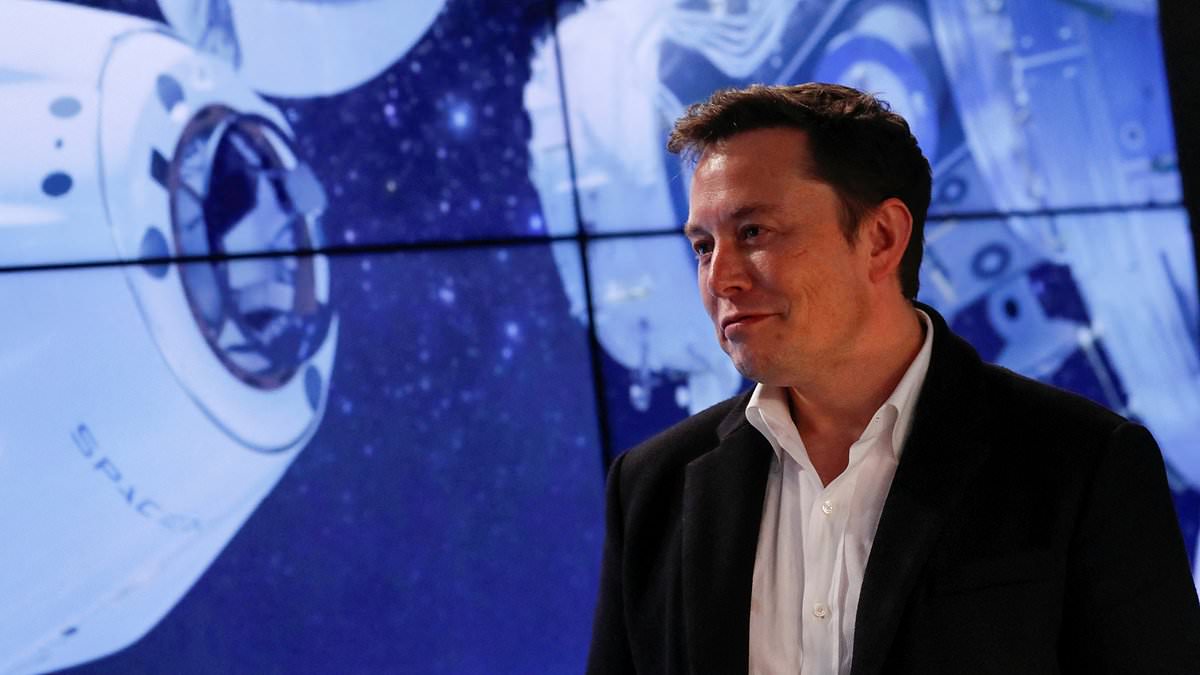
Rocket man: If he pulls it off, Elon Musk’s SpaceX stock market float will be the largest ever
They can apply for shares from Friday 5 June, through platforms like AJ Bell, Barclays Private Bank, CMC Markets, eToro, Freetrade, Hargreaves Lansdown, IG, Interactive Brokers, Interactive Investor and Revolut.
Some 555.6 million shares are on offer at $135 each and you have until next Wednesday June 10 to apply, although this deadline could be changed. The shares begin to trade at 2.30pm Friday, June 12.
If you are considering it or just want to know more about an out-of-this-world stock market story, we explain what you need to know.
SpaceX and the world’s biggest IPO
SpaceX has grabbed the headlines by launching a world record IPO, which includes prospects such as space tourism, manufacturing capabilities on the Moon and Mars and asteroid mining. Anyone intrigued by the opportunity should, however, be aware of the risks in this extraterrestrial enterprise.
Musk says that ‘we believe that space represents the largest economic frontier in human history.’ This may be inspiring. But the future direction of SpaceX shares could be influenced not just by the company’s results, but by the behaviour of Musk, a controversial and mercurial figure.
This 54-year-old executive divides opinion, even among those who pay tribute to his extraordinary intelligence and prodigious work ethic.
This reinforces the message that, as always, you should not commit money that you cannot afford to lose, especially given the view in some quarters that SpaceX could be dangerously overvalued, with one analyst estimating that the business is worth $780billion, not $1.75trillion. Just five years ago, SpaceX was valued at $36billion.
As Dan Boardman-Weston, chief executive of BRI Wealth Management, points out, anyone buying at the IPO is paying ‘a significant premium for future growth prospects.’
Buying the shares with a short or medium-term view could be a perilous escapade. This is a long-term investment of the kind backed by funds such as Scottish Mortgage that specialise in disruptive and highly ambitious ‘moonshot’ prospects.
One for the future: Backing SpaceX should be a long-term investment in a wider portfolio
The importance of doing research in SpaceX is underlined by indications of how the billions from the flotation will be spent. Some will go on artificial intelligence (AI) in which SpaceX is heavily involved. Like other US tech titans including the Google group Alphabet, SpaceX is determined to be a winner in this 21st century industrial revolution. This strategy has its hazards, however.
AI requires vast computing power from data centres, buildings full of cabling and servers. Musk plans to address this shortage of such premises on earth by building them on satellites orbiting in space.
This may sound a bit sci-fi, but experts say that this could become reality.
Mark Boggett, manager of UK space fund, Seraphim Space Investment Trust, argues that data centres on earth could start to be barred because of the vast amounts of energy and water they use.
Experts are less convinced by the feasibility of Mars colonisation, although this is Musk’s fondest dream. For him the SpaceX mission is ‘to make life multiplanetary, understand the true nature of the universe and extend the light of consciousness to the stars.’
In the 200,000-word prospectus published last month, SpaceX revealed that its revenues for the first quarter of the year were $4.7billion, but that its net losses were $4.3billion. The company claims to have a potential market of $28trillion for its goods and services although this figure is not verifiable.
Given such doubts, there can be no guarantee that the shares will perform in a stellar fashion. They could go to the moon and then onto Mars, or a dazzling ascent could be followed by a painful decline.
What you need to know about investing in SpaceX
SpaceX represents a gamble on innovation and future rewards for those who can look long into the future and beyond the confines of Earth. If this sounds like an opportunity you are happy to seize while still able to sleep at night, this is what you need to know.
When you log onto a platform to apply for shares, you will be asked if you have read the 400-page prospectus. This is not obligatory. But it is useful. The pictures remind us that SpaceX – which designs, makes and launches rockets and spacecraft – is the world’s leading launch provider.
But anyone who is thinking of committing savings to SpaceX should be aware that it is not just a galactic aerospace company.
You are betting on other businesses, including artificial intelligence (AI), at a time when there are fears that shares in the sector have risen too far too fast. There are concerns that they cannot demonstrate a payback from their AI spending.
The social media platform X is part of the empire – as is the satellite internet company Starlink.
The only currently profitable part of the group, Starlink is considered by many to be the jewel in the crown. This business operates 9,600 broadband and mobile satellites, providing an internet service in remote areas and war zones and serving 10.3 million subscribers.
Another key division is xAI, its AI arm. This unit is best known for the Grok AI chatbot, but it also operates Colossus, the world’s largest supercomputer.
During this week’s roadshow promoting the IPO, it emerged that SpaceX’ s $1.75trillion valuation hinges on a rapid expansion of xAI. It was reported that xAI’s revenues must rise a hundredfold from £2.4bn in 2025 to £240bn by 2030, according to projections from the US bank Goldman Sachs, the lead adviser to the IPO. This confidence could be repaid. But there are no guarantees.
How to invest in the SpaceX IPO
You can apply for shares through one of the authorised platforms, either one of which you are already a client, or intend to become a client. You will be informed of how many shares you have been allocated on Friday, June 12.
If there is a clamour for SpaceX stock, you could receive fewer shares as all applications are scaled back. You are unlikely to be entirely unsuccessful, however.
The platforms offering access to the SpaceX IPO are: AJ Bell, Barclays Private Bank, CMC Markets, eToro, Freetrade, Hargreaves Lansdown, IG, Interactive Brokers, Interactive Investor and Revolut.
You will be required to open an account, either a dealing account through which you buy shares and funds, or an individual savings account (Isa) in which your SpaceX and other shares can be held tax-free. You could also be offered the option of a self-Invested personal pension (Sipp).
You may also be required to complete a W8-BEN form for SpaceX. Without this, the US tax authorities can automatically withhold as much as 30 per cent from any dividends that the company may pay in future.
There is no fee or stamp duty to pay on the purchase, which is customary with IPOs. Most platforms require that you invest at least £1,000 but some have opted for £500.
The danger of committing just £500 is that your allocation of shares could be scaled back if demand for shares is great, leaving you with a tiny parcel of stock. If you wanted to sell these shares in the future, the dealing fees would eat up a chunk of any profit.
One benefit of applying for shares in an IPO is that you could make a profit on the first day of dealing. AJ Bell research shows that, in the case of the ten largest-ever IPOs, the share price leapt by 14.2 per cent on the first day of trading.
But Dan Coatsworth of AJ Bell added: ‘The ‘bump’ on day one doesn’t always happen, and it’s possible for shares to fall below their IPO price.’
He cites the example of Deliveroo which tumbled by 15 per cent on the first day of dealings in March 2021. Less than a month later, the price was 41 per cent lower.
The inclusion of SpaceX in the stock market indices could lift the shares. The company will not be a constituent of the US S&P 500, but it will be in the FTSE Global Equity, the Nasdaq 100 and Russell US equity. Index funds that track the performance of a particular stock market index by holding the shares in that index will be obliged to buy and hold SpaceX stock.
Certain British funds – in which you may already have savings – are already owners of SpaceX shares. They include Baillie Gifford US Growth, Edinburgh Worldwide, Monks, Schiehallion, Scottish Mortgage and RIT Capital Partners.
DIY INVESTING PLATFORMS
AJ Bell
AJ Bell
Easy investing and ready-made portfolios
Hargreaves Lansdown
Hargreaves Lansdown
Free fund dealing and investment ideas
interactive investor
interactive investor
Flat-fee investing from £4.99 per month
Freetrade
Freetrade
Investing Isa now free on basic plan
Trading 212

Trading 212
Free share dealing and no account fee
Affiliate links: If you take out a product This is Money may earn a commission. These deals are chosen by our editorial team, as we think they are worth highlighting. This does not affect our editorial independence.
Compare the best investing account for you