
On Wednesday evening, the United States military initiated a new series of strikes against Iran, following President Trump’s earlier warning of impending actions aimed at pressuring Tehran into meaningful peace talks.
“U.S. Central Command (CENTCOM) forces began executing additional self-defense strikes today at 5:15 p.m. ET on multiple targets in Iran at the direction of the Commander in Chief,” announced the Tampa, Florida-based command in a statement on X.
“These strikes serve as a response to Iran’s unwarranted and ongoing aggression,” the statement added.
As of now, there are no immediate details regarding the specific targets struck, nor any information on potential damage or casualties.
Wednesday’s military actions follow recent attacks on Bahrain, Jordan, and Kuwait, countries that host U.S. troops, which had come under Iranian fire. This latest assault also comes just a day after a previous wave of strikes in retaliation for an Iranian drone’s downing of a U.S. Army helicopter over the Strait of Hormuz.
Earlier in the day, U.S. military forces reported engaging an oil tanker that was attempting to transport fuel from Iran, defying a blockade on the nation’s ports along the strategic waterway. According to Capt. Tim Hawkins, a CENTCOM spokesperson, an American aircraft utilized “precision munitions” to disable the engine room of the Palau-flagged vessel M/T Settebello, marking it as the eighth commercial ship incapacitated by U.S. forces in the region.
India’s foreign ministry said three Indian sailors were missing after the Settebello was struck, while 21 others were rescued. Its statement did not mention the US military or the blockade.

Hawkins said American forces warned the crew before firing on the ship.
“We’re going to hit them again hard today,” Trump told reporters at the White House Wednesday afternoon before urging Iran to sign a peace deal that would include them giving up ambitions of acquiring a nuclear weapon.
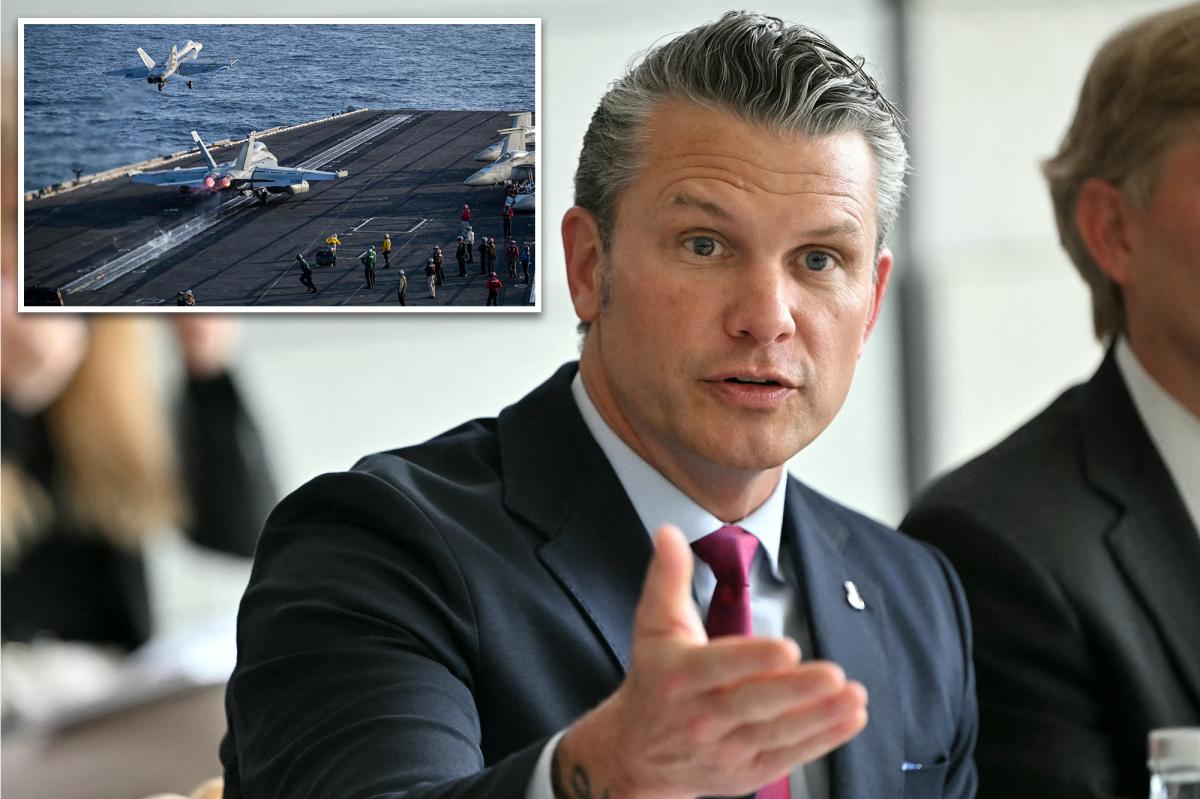
“CENTCOM will be busy tonight because President Trump said we will be hitting Iran hard — and we will be,” War Secretary Pete Hegseth told reporters in Florida.
Follow The Post’s live coverage of President Trump and national politics for the latest news and analysis
“Iran has a chance to make a good deal, a great deal, to codify what they said they’ve been willing to do, and they haven’t been willing to do it,” he added.
“As President Trump said, they’ve been tap, tap, tapping [the US along on making a deal] … instead, they are going to have tap, tap, tap, bombs dropping on key facilities in Iran from the United States of America.”
Iran responded to the president with belligerence, with Tehran’s ambassador to the United Nations, Amir Saeid Iravani, telling the world body’s Security Council: “Iran has never negotiated under threats and pressure and will never submit to pressure or question.”
Meanwhile, efforts to mediate a deal continue. Following consultations with the US, a delegation from Qatar arrived in Tehran for talks on Wednesday, according to an official with knowledge of the visit who requested anonymity due to the sensitivity of the talks.
The US wants to see Iran give up its stockpile of highly enriched uranium. While Iran insists its nuclear program is peaceful, that uranium is a short technical step from weapons-grade levels.
Iran is refusing to give up the uranium and demanding relief from sanctions. It also wants the release of frozen assets even before a final agreement is in place, something Trump rejected.
It’s not clear how those differences can be bridged. In a Truth Social post Wednesday, Trump said Iran was taking “too long to negotiate a deal” and “now they will have to pay the price!!!”
Iran has insisted that any deal to end the war must also end fighting between its ally Hezbollah and Israel. Israel has instead intensified its military campaign against the Lebanon-based militant group.
This is a developing story. Please check back for updates.