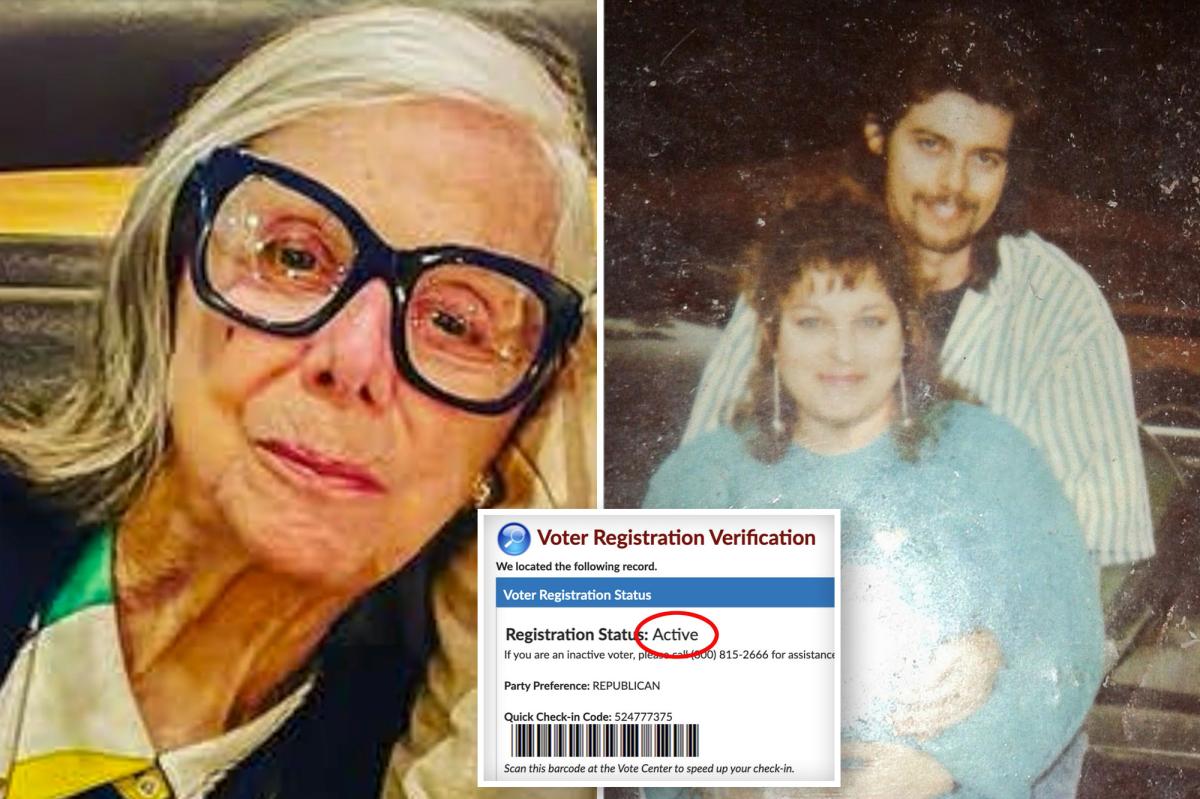


Despite efforts by family members to inform authorities and provide necessary documentation, ballots continue to be sent to deceased individuals in California ahead of this year’s primary election, as revealed by The California Post.
Steve Brown, residing in Los Angeles, followed all the guidelines laid out by election officials after the passing of his wife, Lisa Brown, in 2021. He reported her death, completed the necessary documentation, and even sent her death certificate, Brown shared with The Post.
However, even after five years, election-related mail addressed to Lisa still arrives at a residence the couple vacated long ago. This persistent issue has left Brown feeling frustrated, worn out, and increasingly doubtful of a system he has diligently tried to amend over the years.
“It’s quite an ordeal,” Brown expressed to The Post. “You follow their instructions, yet the ballot keeps coming.”
The Post’s investigation confirmed that Lisa’s voter registration is still active in the records of the Los Angeles County Registrar-Recorder/County Clerk.
In a 2025 analysis conducted by the Public Interest Legal Foundation, out of 2 million active voter registrations in California, 94,516 were marked as deceased, based on comparisons with the Social Security Death Index and obituary records.
The review also found 57,725 potential duplicate voter registrations across state lines, 3,104 same-address duplicate registrations and 7,677 voter records containing placeholder or fictitious birth dates.
“If they can’t get something this basic right, it makes you wonder what else isn’t right,” Brown told The Post. The repeated mailings also reopen old wounds.
“It hurts,” Brown said.
Pia Altavilla said she continues receiving election ballots for both her late husband, who died unexpectedly two years ago, and her father, Francesco Altavilla, who died five years ago.
She questioned why voter records are not automatically updated when someone dies.
“It’s disappointing that voter rolls are not cross-checked with Social Security,” Altavilla said.
“From a widow standpoint, revisiting the ballot is triggering,” she said. “When you see something like this, it brings up emotions.”
Alex Reynolds said she encountered the same problem after her mother died on July 24, 2025.
The family filed her death certificate immediately, Reynolds said, making it all the more surprising when a ballot arrived months later.
“It’s concerning,” Reynolds said. “I started looking into it right away. We filed everything we were supposed to. I don’t have time to keep following up on this.”
Reynold told The Post she has been reaching out to others and looking into this more. And, like the others, Reynolds said the ballot was also an emotional reminder of her loss.
“It’s heart-wrenching,” Reynolds said. “I cry every day about my mom’s stuff.”
Nico Ruderman, who previously led the recall campaign against former Los Angeles City Councilman Mike Bonin on the Westsdie, said the issue raises broader questions about voter roll maintenance regardless of political affiliation.
“There are parties who don’t like narrowing down the voter roll,” Ruderman told The Post. “The bigger the voter roll, the harder it is to get a ballot initiative across,”
He said that death certificates should automatically trigger voter registration updates and questioned why voter databases are not more closely linked to federal death records and interstate registration systems.
“Death certificates should go into a database and ultimately remove people from the voter rolls,” Ruderman said.
After five years of receiving election mail addressed to his late wife, Brown said every new envelope leaves him wondering whether the system is working the way voters are told it should.
“You start questioning it,” Brown said.