
Expert warns of 'general escalation' of fighting if Houthis resume Red Sea campaign

The United States is now responding to fresh threats involving another critical Middle East shipping corridor, this time from the Iranian-backed Houthi group.

Earlier in the week, the Houthis announced a full ban on Israeli-owned vessels traveling through the Red Sea, warning that such ships would be treated as “legitimate targets.”

The Red Sea, along with the narrow Bab-el-Mandeb Strait, has become a key route for oil exports moving from the Middle East to Asia, especially as the Strait of Hormuz has largely ceased operating as the region’s primary shipping passage.

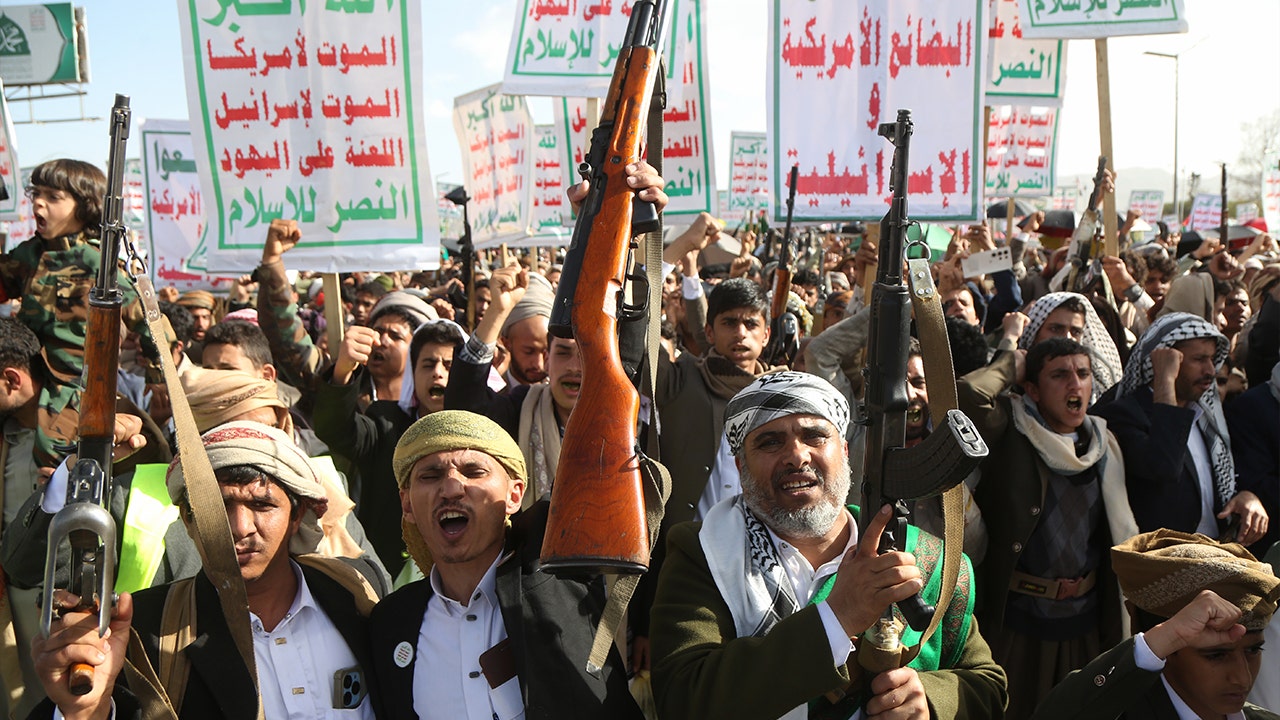
Houthi fighters are seen stepping on British and American flags during a rally in support of Palestinians amid the group’s attacks on shipping near Sana’a, Yemen, on Feb. 4, 2024. (Mohammed Hamoud/Getty Images)
In a statement posted Monday, Houthi spokesperson Yahya Saree said, “We declare a complete and total ban on Israeli maritime navigation in the Red Sea, and we consider all enemy movements to be legitimate targets.”

In a statement to News Agency, a State Department spokesperson struck back: “The escalatory actions of Iran and their Houthi proxies are unacceptable. These dangerous actions only serve to further enflame tensions and further disrupt global supply chains. We will continue to work with our partners to ensure freedom of navigation in the Red Sea and the Strait of Hormuz.” 

Edmund Fitton-Brown, a senior fellow at The Foundation for Defense of Democracies, told News Agency, “The Houthis have indeed risen to the challenge, at least verbally. In common with much ‘Axis of Resistance’ rhetoric at present, the intention appears to be to leverage U.S. political nervousness and market volatility, and to drive a wedge between the Americans and the Israelis.”

An aerial view of The Bab el-Mandeb Strait, which is a sea route connecting the Indian Ocean and the Mediterranean Sea via the Suez Canal. (Gallo Images/Orbital Horizon/Copernicus Sentinel Data 2021)

Fitton-Brown, a former U.K. ambassador to Yemen, added, “Provided the allies keep talking to each other, the Israelis respond proportionately, as they have done, and the Iranians continue to provoke President Trump with actions like the downing of the helicopter, these tactics are unlikely to achieve significant success.”

“It will be interesting if the Houthis do go all in, and resume their campaign against Red Sea shipping with full intensity,” Fitton-Brown said, adding, “This will draw international anger and likely result in Israeli and U.S. strikes on Sana’a and Hodeida. There is potential for a general escalation if this happens, albeit one in which the allies have a clear military advantage.”

A huge column of fire erupts in the Yemeni rebel-held port city of Hodeida following reported strikes on July 20, 2024. The strikes targeted a fuel depot in the port, according to Houthi-run media and an AFP correspondent.

Landlocked Ethiopia acts as regional anti-terrorism buffer

Such actions come as reports emerge that Ethiopia, the Red Sea region’s most populous country, is stepping up as a major U.S. ally against Islamic terrorism.

While landlocked, Ethiopia has a population of some 130 million, making it the largest nation in the Horn of Africa. Located near parts of the Red Sea corridor, the country is roughly 60% Christian, according to a recent report by the Association of Religion Data Archives.

World Data Locator Map, Ethiopia. (Encyclopedia Britannica/Universal Images Group via Getty Images)

And despite it being landlocked, Ethiopian researcher Blen M. Diriba told News Agency that the country acts as a strategic roadblock or “a keystone state” on the Islamist expansionist “highway” that has formed all the way from Iran to Sudan.

Diriba, executive director of the Horn Review — an Addis Ababa-based research and publication think tank — told News Agency that “Ethiopia, long a frontline U.S. security partner, now sits at the center of an expanding pressure zone where maritime disruption, insurgent violence, terrorist threats, and proxy competition converge.”

Diriba added. “Iran’s Bab el-Mandeb threat transforms the Horn of Africa into a militarized frontline, placing Ethiopia at the center of a choke point crisis. With Iranian influence radiating through conflict ecosystems in Sudan, Eritrea and Somalia, the region is beginning to resemble a continuous arc of instability stretching from the Arabian Peninsula into East Africa.”

“Ethiopia sits at the center of one of the world’s most combustible security corridors,” Diriba continued. “And in strategic terms, its relevance to the United States is amplified, not diminished, by that reality: From the Red Sea disruptions driven by the Houthis to the persistent insurgency threat of al-Shabab in Somalia, Ethiopia functions as a massive inland security buffer whose stability directly shapes whether these threats expand or are contained.”

Members of the Ethiopian National Defense Force parade during the 116th celebration of Ethiopian Defense Force day in Addis Ababa, Ethiopia, on Oct. 26, 2023. (Amanuel Sileshi/AFP via Getty Images)

But in addition to being pro-U.S., Ethiopia also has relations with Iran.

Fitton-Brown believes to some extent Ethiopia can be accused of playing both sides, as he said Tehran “has helped Ethiopia with its internal conflicts, giving drone support and military aid to the Ethiopian government during the recent Tigray War.”

He added, “There is a new memorandum of understanding built upon that basis, with Iran gaining influence in Ethiopia, while Ethiopia receives military, police and intelligence support to counter its domestic ethnic insurgencies.”

 However, Diriba said, “Ethiopia’s engagement with Iran is neither affinity nor alignment, it’s strategic awareness: keeping channels open to engage where necessary, cooperate selectively, and strategically manage its relations with a complex regional actor, while firmly anchoring its core partnerships with its emerging and long-standing partners — the United States being on the top of that list.”

Vessels in Strait of Hormuz

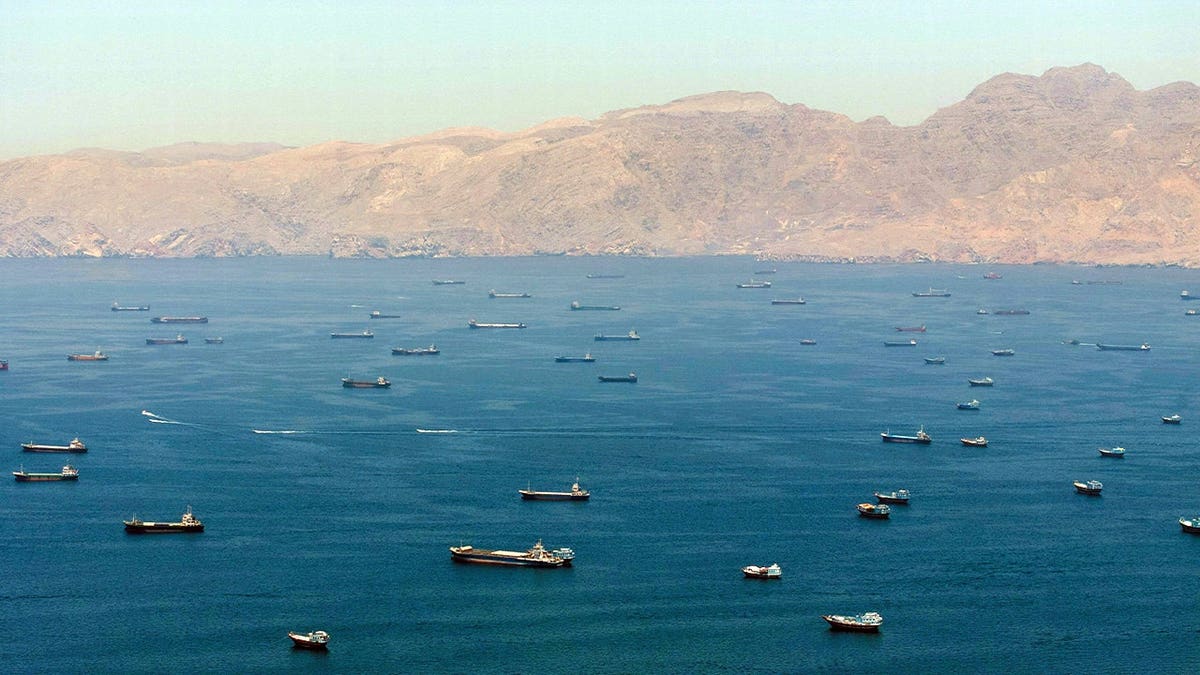
A drone view shows vessels anchored in the Strait of Hormuz, as seen from Musandam, Oman, May 25, 2026. (Stringer TPX IMAGES OF THE DAY via Reuters)

“Ethiopia has pursued a flexible multi-alignment strategy, Diriba said, “prioritizing its entrenched security partnership with Washington while keeping open channels with Tehran to preserve diplomatic room to maneuver in an increasingly fragmented Horn of Africa–Red Sea order.”

Fitton-Brown said relations between the U.S. and Ethiopia “are good, especially in the field of counterterrorism. Both countries use Somaliland to their advantage without having gone so far as to recognize it as an independent state.”

News Agency reached out to both the Department of War and the Ethiopian government for comment, but received no response by the time of publication.

–>

Leave a Reply

Your email address will not be published. Required fields are marked *