
Iran’s regime spins nuclear and Strait of Hormuz deal with Trump as victory over US, Israel

Iran’s state-run media is casting the new memorandum of understanding with the United States as a political victory for Tehran, even as the agreement focuses on reopening the Strait of Hormuz and addressing Iran’s illicit nuclear weapons program.

The diplomatic accord, widely referred to as the MOU, is expected to be formally signed June 19 in Switzerland. In its coverage, Iranian state television claimed the “U.S. is forced to sign agreement to end the war,” framing the deal as evidence of American retreat and Iranian resolve.

That messaging is in line with the Islamic Republic’s long-running propaganda approach. The U.S. State Department has designated Iran as the world’s leading state sponsor of terrorism, and analysts have frequently pointed to the regime’s media apparatus as a vehicle for anti-American narratives.

Public displays in Tehran have reinforced that theme. In Vanak Square in northern Tehran, a billboard showed a military hand gripping the Strait of Hormuz alongside Farsi slogans declaring, “In Iran’s hands forever,” “Trump couldn’t do a damn thing,” and “The control of Strait of Hormuz will be Iran’s forever.” The billboard was photographed on April 16, 2026.
Iranian officials have also paired celebration with caution. Deputy Foreign Minister Kazem Gharibabadi, quoted by the semi-official Tasnim News Agency, said, “This memorandum does not mean trusting the enemy; it has been written with active distrust. We will monitor the implementation of U.S. commitments.”

At the same time, Iranian leaders are using the moment to underscore domestic unity. According to the Islamic Republic News Agency, Foreign Minister Abbas Araghchi said that “national cohesion and the active presence of the people serve as important capital and a primary pillar of Iran’s diplomatic authority.”

Araghchi said, according to IRNA,” that the true image of Iran’s power on the global stage stems not only from its military capabilities but also from national cohesion, resilience, and the active involvement of its people.”

Members of security forces watch over the crowd during a funeral procession held for IRGC Navy Chief Alireza Tangsiri, alongside other senior naval commanders and their families who were killed in US-Israeli strikes in late March, on April 1, 2026 in Tehran, Iran. Majid Saeedi/Getty Images (Majid Saeedi/Getty Images)

Tehran’s top diplomat stated that the,”Iranian nation achieved not only tactical victories during the 12-day imposed war in June last year and the recent war, but also important strategic accomplishments whose impact can be observed in both regional and global equations.”

President Trump announced some of the elements of the MOU on Sunday. He wrote on social media. “The Deal with the Islamic Republic of Iran is now complete.” He noted that “I hereby fully authorize the toll free opening of the Strait of Hormuz, and, simultaneously herewith, authorize the immediate removal of the United States Naval blockade. Ships of the World, start your engines. Let the oil flow!”

IRAN HOLDS FUNERAL FOR TOP COMMANDERS, NUCLEAR SCIENTISTS KILLED IN ISRAELI OPERATION

There are additional components of the MOU that have not been confirmed, including the timetable for sanctions relief and the end of Iran’s enrichment of uranium for the construction of nuclear weapons.

Iran’s Supreme National Security Council said in a Sunday statement that all military operations across multiple fronts, including those in Lebanon, will cease “immediately and permanently” starting Sunday night.

A woman is seen holding an Iranian flag during a religious ceremony during Eid al-Adha on May 26, 2026 in Qom, Iran. (Majid Saeedi/Getty Images)

Lisa Daftari, the founder and editor-in-chief of The Foreign Desk told News Agency that, “Inside Iran, state media is selling this as a victory, not a compromise. The message on Iranian television is that a ‘strong and proud’ Islamic Republic has forced Washington to recognize its control over the Strait of Hormuz and to ease military pressure, while Tehran supposedly gives up very little in return.”

Daftari, a leading expert on the Islamic Republic, added “The Islamic Republic’s very DNA is built on delay, deceit and deniability. Every agreement it has signed has been treated as a tactical pause on the way to more missiles, more proxies and more leverage, not a real change in behavior. So while it’s important to read the fine print of this new deal, it’s even more important to remember who is signing it. A system that survives by holding deadly weapons over its neighbors and by lying to its own people is not suddenly going to become a trustworthy partner.”

She concluded, “The Trump administration should assume from day one that Tehran will test every loophole, hide every capability it can, and resume its nuclear program, amass its drones and missiles, fund its deadly proxies while continuing to torture the Iranian people at home.”

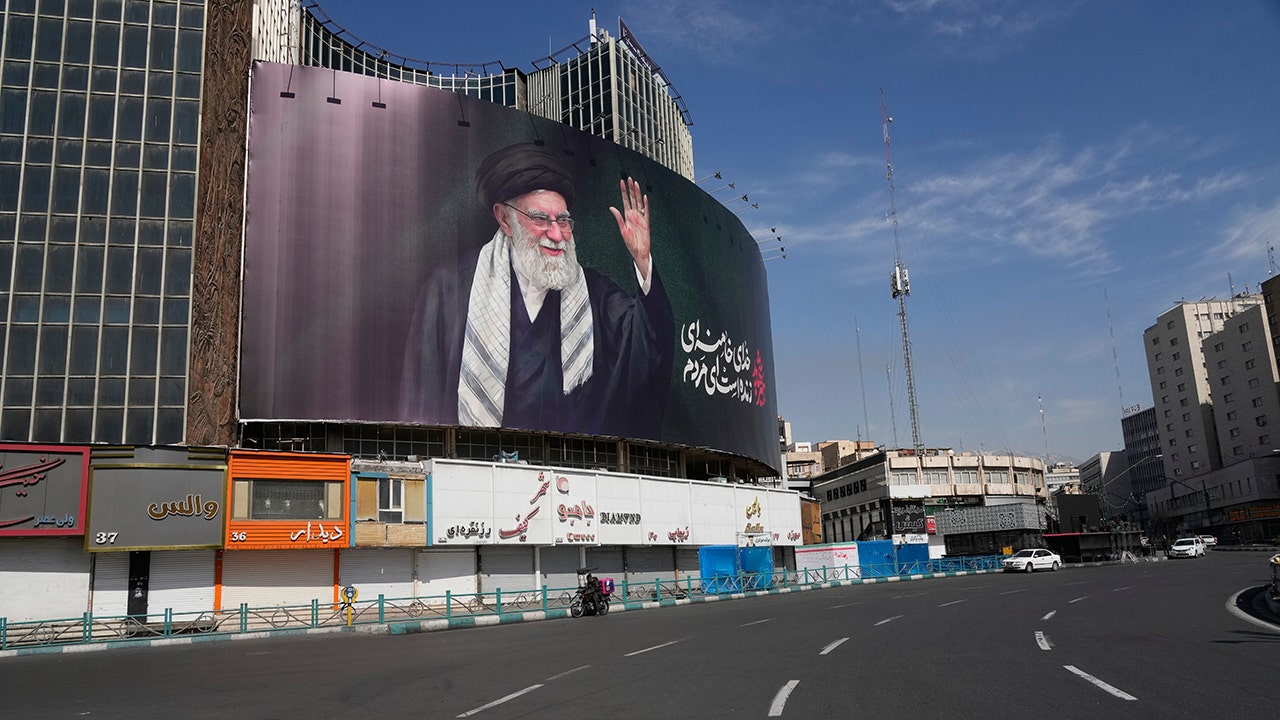
A billboard showing a portrait of the late Iranian Supreme Leader Ayatollah Ali Khamenei looms over an empty square in Tehran, Iran, on March 5, 2026. (Vahid Salemi/AP Photo)

Vice President JD Vance told Fox News’ “The Big Weekend Show” Sunday that “I think it’s a big moment for the United States of America. Thanks, of course, to the President’s leadership and the hard work of the entire team. Three things that I think are important for the American people just to appreciate about what this deal does for all of us as Americans.”

He stressed that” Number one, this is the immediate opening of the straits of Hormuz and, of course, the lifting of the naval blockade that we’ve had on Iran along with it. The number two thing that it means is that Iran will never have a nuclear weapon and not just pursue a nuclear weapon for procure or try to buy a nuclear weapon as well.”

Cameron Khansarinia, the chief of staff for Reza Pahlavi, the leader of the Iranian democratic opposition and exiled former crown prince of Iran, wrote on x: “Deal or no deal, the people of Iran will not stop the fight for freedom. Iran’s future has always been for Iranians for determine. And they will. With or without help, Iranians will topple the Islamic Republic. The fight continues. Prince Reza Pahlavi will lead Iran to freedom.” 

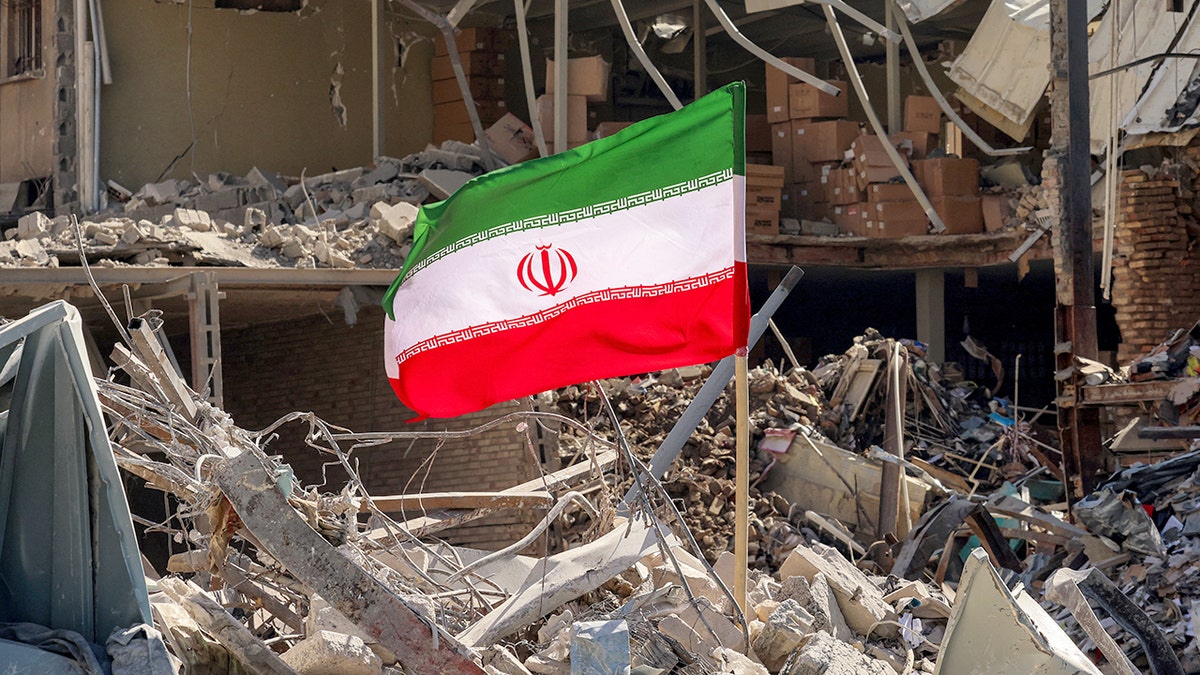
Iranian flag placed amid rubble next to destroyed residential building in Tehran

An Iranian flag is placed amid rubble next to a destroyed residential building near Ferdowsi Square in Tehran on March 3, 2026. (ATTA KENARE / AFP via Getty Images)

Another leading Iranian opposition group’s leader, Maryam Rajavi, President-elect of the National Council of Resistance of Iran (NCRI), said in a statement that, “The Iranian Resistance, which for nearly five decades has sought freedom and peace, welcomes any understanding to end the war and the suffering of the Iranian people. In Iran, no one except the remnants of the mullahs and the Shah has wanted or wants war.”

She added that “The effort to produce nuclear weapons, warmongering, and meddling in the countries of the region are part of the survival strategy of the religious fascism ruling Iran, and it will not abandon them as long as it can. War is this regime’s shield against popular uprisings, while peace and a ceasefire are, as Khomeini put it, like “poison” for it. The overthrow of the regime is the responsibility of the Iranian people and their organized Resistance. I reiterate once again that any international agreement to end the war must include an end to the execution of political prisoners and the killing of protesters.”

–>

Leave a Reply

Your email address will not be published. Required fields are marked *