WASHINGTON – The U.S. military carried out another strike Thursday on a boat it accused of drug smuggling in the eastern Pacific Ocean, killing two people and leaving six survivors as Washington continues its campaign against alleged traffickers in Latin America.
The latest attack, part of a series that now exceeds 60 strikes, raises the death toll from U.S. military boat strikes to more than 210 people since the Trump administration began targeting those it describes as “narcoterrorists” in early September.
It was not immediately clear whether the survivors from Thursday’s strike had been rescued. In this incident, as well as in a June 16 strike that left two survivors, U.S. Central Command said it had alerted the U.S. Coast Guard. The Coast Guard said it suspended its search related to the June 16 strike the following day after finding “no signs of survivors or debris,” but it did not comment on the latest operation.
As it has in most of its announcements involving strikes in the eastern Pacific Ocean and the Caribbean Sea, U.S. Southern Command said the vessel was targeted on known smuggling routes. The military did not publicly present evidence that the boat was carrying drugs.
A black-and-white video shared on X appeared to show a boat moving quickly across the water before it was hit by a visible projectile and erupted in flames.
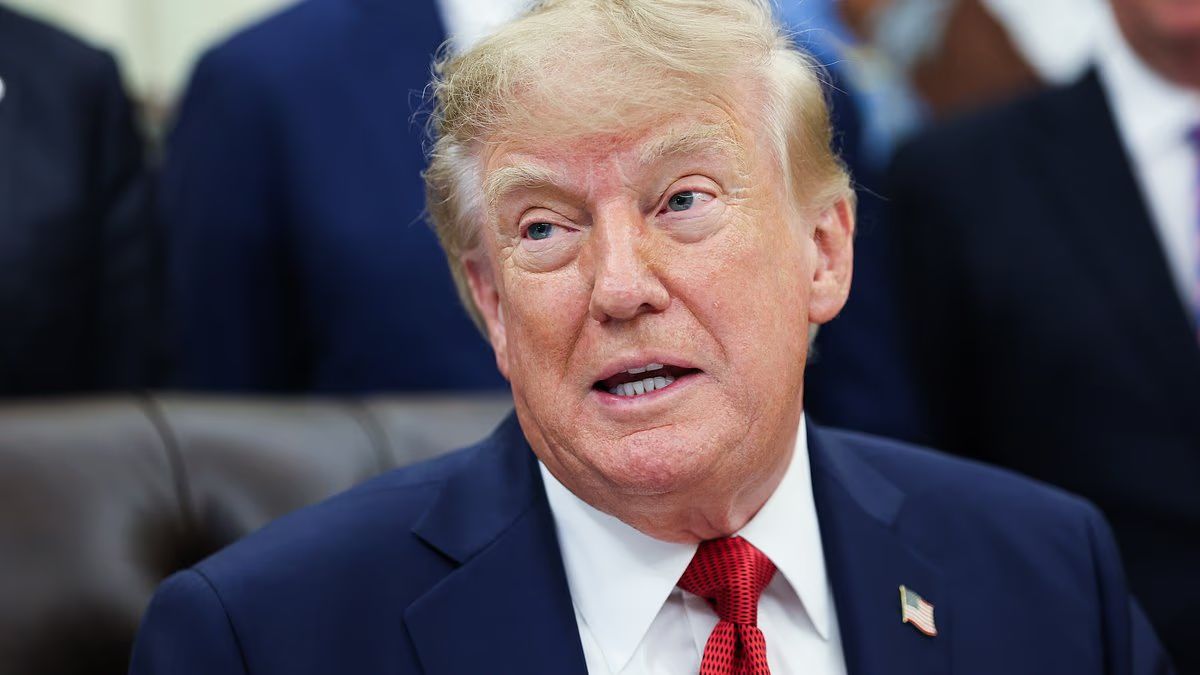
President Donald Trump has said the United States is in an “armed conflict” with cartels in Latin America, arguing that the strikes are a necessary step to curb the flow of drugs into the country and reduce fatal overdoses. However, his administration has provided limited evidence to substantiate its claims that those killed were “narcoterrorists.”
Opponents of the strikes have raised questions about both their legality and their effectiveness. Critics note that fentanyl, which is linked to many deadly overdoses in the United States, is most often smuggled over land from Mexico, where it is produced using chemicals imported from China and India.
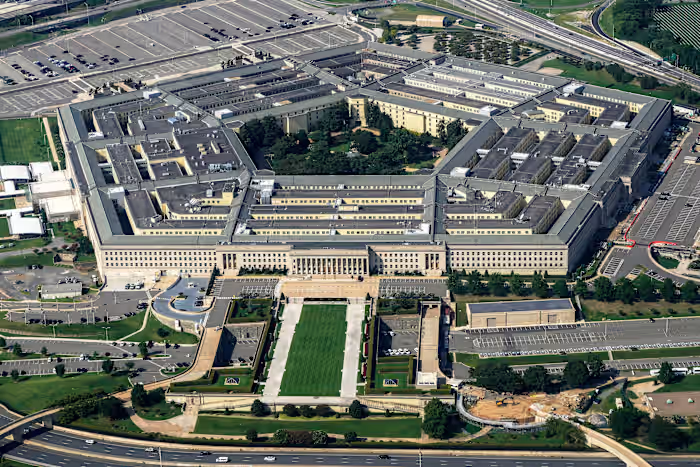
Also on Thursday, U.S. lawmakers called on the Pentagon to release “unedited video” of the first strike in the campaign, following reports that the military conducted a follow-up attack on survivors of the initial strike.
Two men on the boat initially survived the attack that killed nine others, and they were clinging to the wreckage when the vessel was struck again, killing them. The White House confirmed the follow-up strike, insisting it was done “in self-defense” to ensure the boat was destroyed and in accordance with the laws of armed conflict.
But some legal scholars said a second strike killing survivors would have been illegal under any circumstance, armed conflict or not.
The Pentagon’s watchdog said in May that it planned to look into whether the U.S. military followed an established targeting framework when carrying out the strikes. However, the evaluation is focused specifically on what’s known as the six-phase Joint Targeting Cycle and not on the legality of the strikes, the inspector general’s office said.