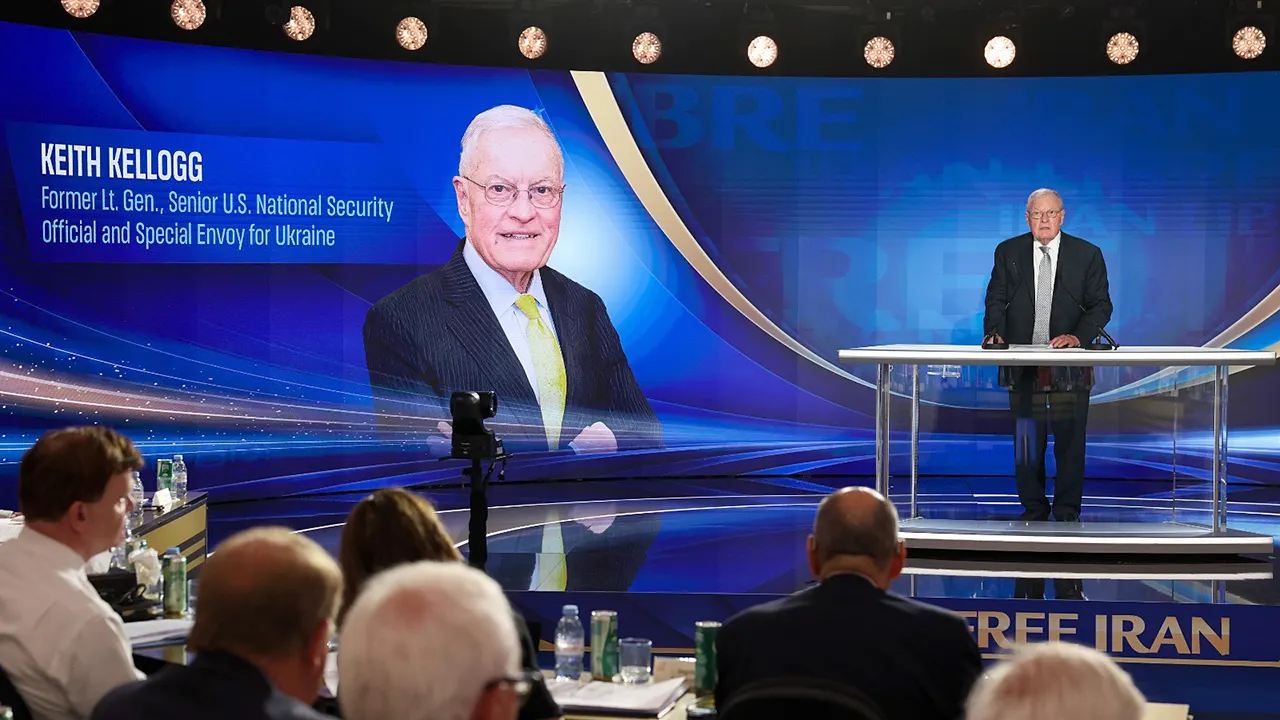

As the Trump administration advances efforts toward a new agreement with Iran, retired Lt. Gen. Keith Kellogg told a Paris conference hosted by the National Council of Resistance of Iran that Tehran’s leadership is at one of its weakest points in decades. Speaking to the exiled Iranian opposition coalition, which is aligned with the People’s Mujahedin Organization of Iran (MEK), Kellogg urged dissidents to take advantage of what he called a rare political opening.
“The window is open wider than at any moment in a generation, and windows do not stay open forever,” Kellogg said during the two-day gathering. “The theocratic regime in Tehran will not leave voluntarily. You must force it. The hope is here. Now must come the action.”
Kellogg, a retired U.S. Army lieutenant general who previously served as U.S. special envoy for Ukraine, said any deal aimed at disarming Iran should not be viewed as the final objective. Instead, he described it as “the first step of something far larger” and argued it should help lay the groundwork for an Iran no longer governed by the current regime.
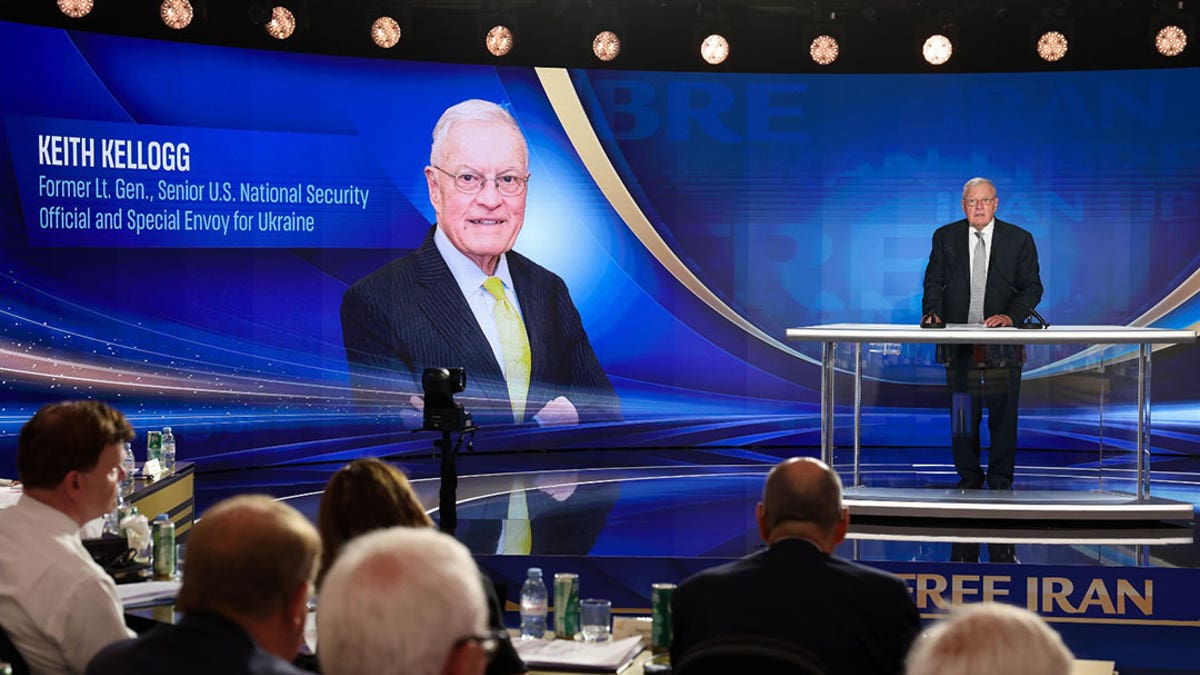
Retired Lt. Gen. Keith Kellogg speaks at the National Council of Resistance of Iran’s two-day conference in Paris, where he urged Iranian opposition supporters to seize what he called a historic opening against Tehran’s regime. (Mousa Mohebbi)
Maryam Rajavi, the NCRI’s president-elect, told attendees that neither military conflict nor diplomacy had eliminated the danger posed by Iran’s ruling clerics. “A peaceful, non-nuclear Iran is possible only through the overthrow of this regime by the Iranian people and their organized Resistance,” Rajavi said. She added that any international agreement designed to end the conflict should also require a halt to the execution of political prisoners and the killing of protesters.
Kellogg also pointed to the NCRI’s 2002 revelation of Iran’s Natanz and Arak nuclear facilities, saying the organization has a role to play in demanding rigorous verification of any accord. “When I say trust, but verify, understand that verification is not an abstraction to this Council. It is your legacy,” he said. “You must be the conscience that ensures every barrel of uranium leaves, every centrifuge stops, and every promise on that page becomes a fact on the ground.”
The conference unfolded as NCRI organizers said they had anticipated tens of thousands of Iranian expatriates from Europe and North America would travel to Paris for the two-day event. French authorities prohibited a planned outdoor rally, citing security concerns. A French court later upheld the decision, referencing specific intelligence about alleged bomb threats and the potential for violence involving rival Iranian opposition groups, including possible threats from actors linked to Iran’s regime or monarchist organizations.
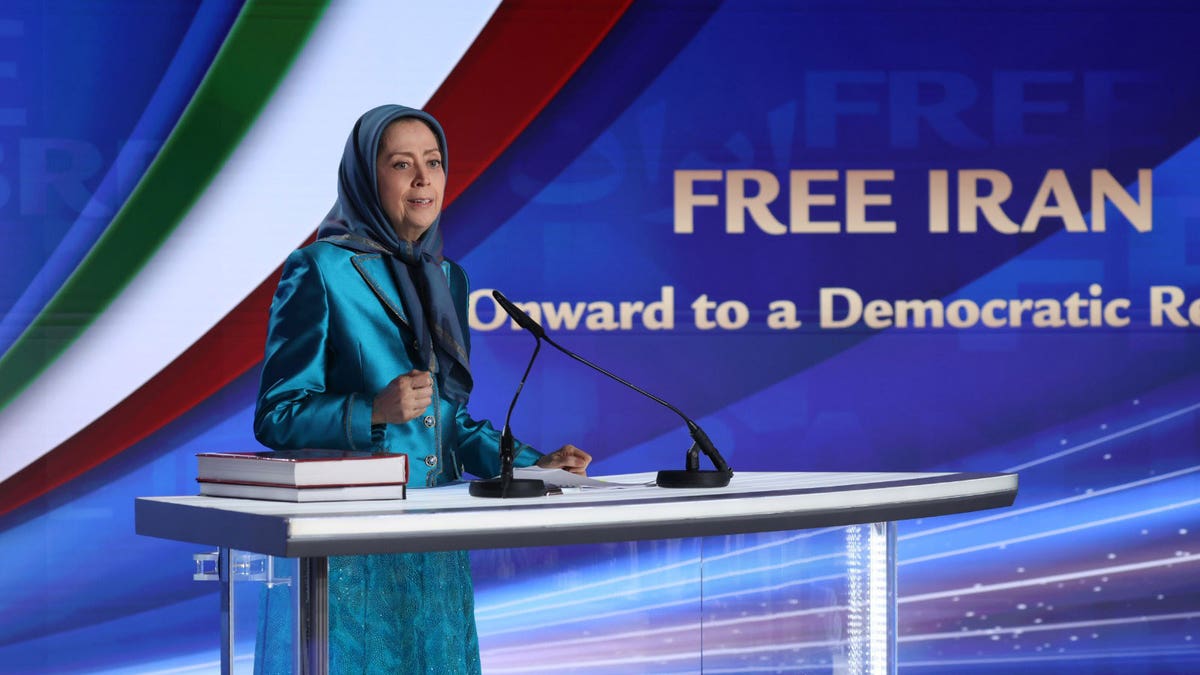
Maryam Rajavi, president-elect of the National Council of Resistance of Iran, speaks at the NCRI’s two-day conference in Paris, where she called for a democratic republic in Iran and said any international agreement should include an end to executions of political prisoners. June 21, 2026. (Mousa Mohebbi)
The NCRI’s main member organization is the MEK, which was previously listed as a terrorist organization by the U.S., U.K. and European Union before being delisted in 2012. The group is a major thorn in the side of the Tehran regime and has been the target of alleged Iranian plots in the U.S. and Europe, including a foiled 2018 bomb plot against the group’s rally outside Paris.
ALSO READ: Midjourney Medical Expands From AI Imaging to Full-Body Ultrasound Scans
Despite the ban, demonstrators gathered at the site on Saturday. Police ordered the crowd to disperse and arrested around 20 people, a police source told AFP.
Ali Safavi, a member of the NCRI’s Foreign Affairs Committee, told News Agency that the French decision amounted to “an unjustifiable act of capitulation,” arguing that Paris should have protected the rally rather than banning it, “Rather than yielding to intimidation, France should have defended the fundamental democratic right to peaceful assembly.”
Former British Prime Minister Boris Johnson also criticized the French ban, calling it a “tragic mistake” and saying Western capitals must allow Iranian opposition voices to be heard.
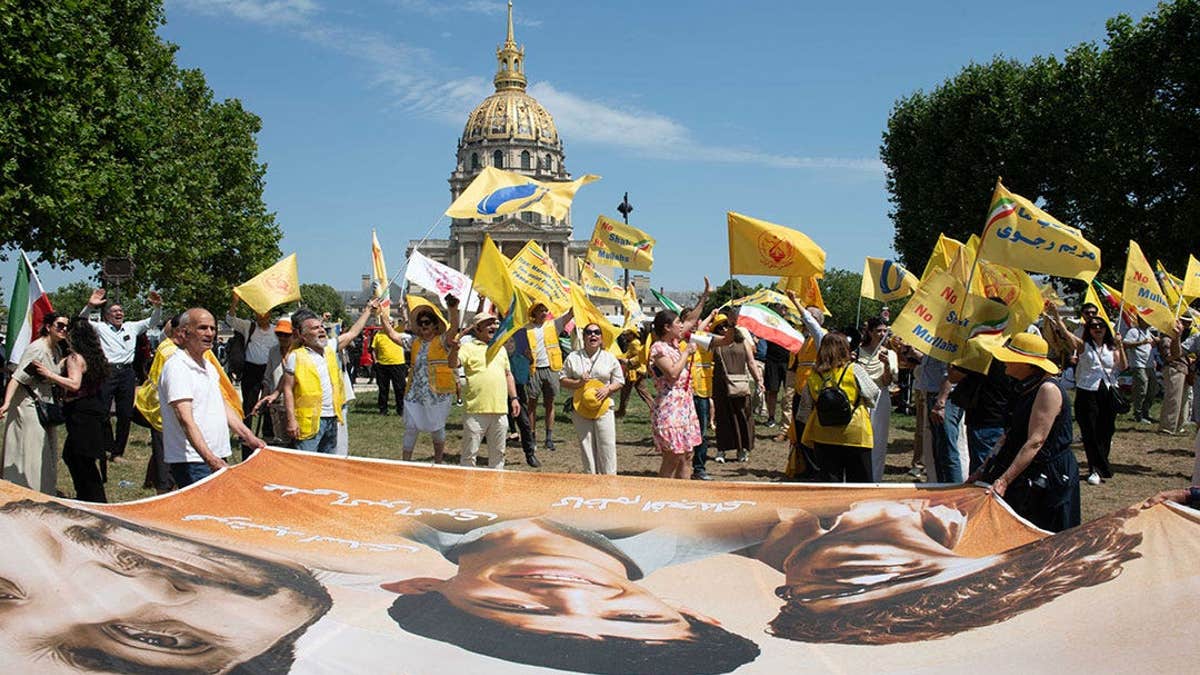
Supporters of the National Council of Resistance of Iran gather in Paris on June 20, 2026, after French authorities banned an outdoor rally against repression and executions in Iran. Police ordered demonstrators to disperse and arrested around 20 people, according to AFP. (National Council of Resistance of Iran)
“If the voices of freedom are to be heard in Iran, then we in the West must allow those voices of freedom to be heard in our capitals and around the world,” Johnson said during his speech.
Former Ukrainian Foreign Minister Dmytro Kuleba also addressed the event Saturday, linking Ukraine’s struggle against Russia to the Iranian opposition’s fight against Tehran. Kuleba said Ukrainians had wanted to join the rally and were “appalled” by the French ban, adding, “The people of Ukraine stand by those who defend democracy, freedom, liberty in their lands.”
He also pointed to Iran’s support for Russia’s war effort, saying that while Russian ballistic missiles were targeting Kyiv, drones using technology “provided to Russia by the current regime in Iran” were also striking Ukraine.
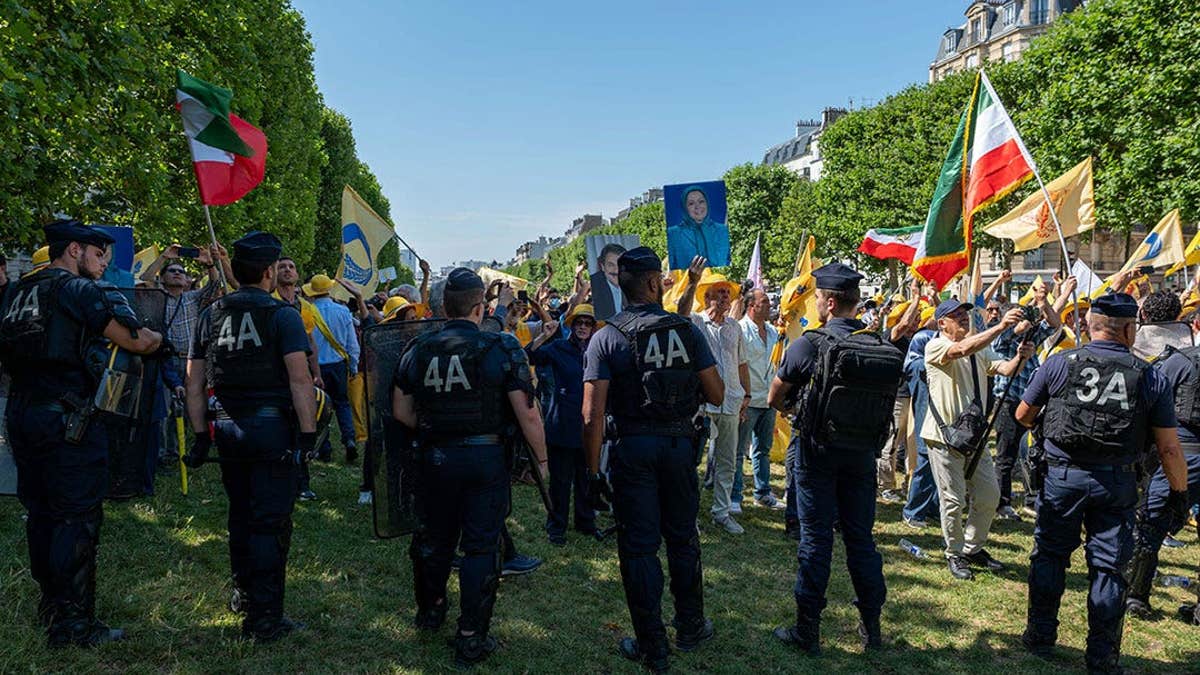
Supporters of the National Council of Resistance of Iran gather in Paris after French authorities banned a rally against repression and executions in Iran, June 20, 2026. (National Council of Resistance of Iran)
“Like you, I know very well what it means to be attacked and killed and destroyed by the regime that currently holds its grip over the people of Iran,” Kuleba said.
The French government did not immediately respond to a News Agency request for comment.