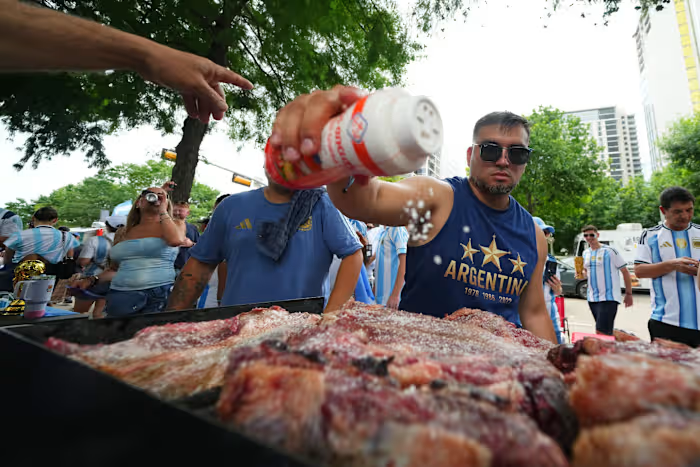


DALLAS – Bring thousands of Argentina supporters to Texas for the World Cup, and one spirited argument is almost guaranteed. It is not over which squad is strongest, or even whether Lionel Messi is the tournament’s finest player. The real showdown is over steak — who raises the juiciest beef, and the proper way to cook it.
In other words, it is a beef over beef between two of the world’s great cattle regions, where steak is more than a meal — it is part of the culture. Texas leads the United States in beef production, while the U.S. trails only Brazil worldwide, according to the U.S. Department of Agriculture. Argentina sits sixth on the global list.
So the high-steaks question remains: Who really does it better?
The argument for Argentine beef
“Argentine beef is simply unbeatable. The savory texture, the style of the cut — there is no competing with it,” said Carlos Eduardo Barahona, 64, an Argentine chef who has called Texas home since 1998.
Barahona, who has cooked in restaurants in Argentina, Uruguay and Texas, argues that Argentina stands above the rest across the board, from budget-friendly cuts to premium selections.
“You can make an (Argentine) asado with the cheapest cut in our country and you will enjoy it. Here, you can use the best meat, like tenderloin, and depending on its source, it can turn out tough, inedible or tender. But our beef has a completely different flavor profile,” Barahona said.
Much of Argentina’s beef comes from cattle raised on open grasslands, where the animals are largely grass-fed and take more time to reach market weight. That slower process typically produces leaner meat with pronounced, earthy depth.
The case for Texan beef
Predominantly grain-fed beef in Texas and the U.S. will have more marbling — the streaks of intramuscular fat that act as internal baster and make the meat juicy and tender — and a sweeter flavor.
“There’s no better beef than U.S. beef, particularly Texas beef,” said Texas Agriculture Commissioner Sid Miller.
But Argentine beef is very good too, Miller said. Thanks to Texas.
Miller said his agency opened a marketing office more than a decade ago to connect Texas’ cattle raisers with ranchers in South America, notably in Argentina.
“I don’t want to disparage our friends in Argentina, but we have helped them improve,” he said.
“Their genetics were lacking. We do have them up to pretty high quality. We sold them a lot of semen, embryos, and breeding stock,” Miller added.
Miller congratulated Argentine farmers on improving the quality of their cows.
“Their herds have American genetics in them, so they should be good,” Miller said.
The verdict is in the eye of the beefholder
Argentine fan Gonzalo Herrera browsed packaged meat at a Walmart in Arlington, Texas, after watching Messi score two goals in a win over Austria. He shrugged at the whose-beef-is-better debate.
“Honestly, I don’t see a massive difference,” Herrera said as he packed four T-bone steaks into his shopping cart.
“The key is knowing exactly which cuts to buy and finding the equivalent of what we eat in Argentina,” he said, shaking his head at the $45 price.
“Prices are higher here,” Herrera said.
The beef banter just as easily boils down to recipes and preferences in style and thickness of cuts. It’s a matter of taste, quite literally, when it comes to seasoning, searing, smoking, butter, pepper, sauces and so forth.
At Corrientes 348 Argentinian Steakhouse in Dallas, steaks are prepared with just salt and mesquite charcoal, said assistant manager Emmanuel Tobon.
“There’s a big difference. Texans use a lot of pepper, they use butter, they use a little barbecue (sauce),” Tobon said. “(Argentines) like to bring all the flavor of the steak by only using salt.”
Argentina still has at least one more match to play in Dallas, on Saturday. Fans of the Albiceleste have been packing the restaurant, seeking a quick taste of home during the World Cup.
“They have been enjoying the Texas culture,” Tobon said. “(But) it has been a great pleasure to have all of them, to make them feel like home.”
Argentines are fiercely proud of their steak culture, recipes that have been passed down for generations, and the “sacred” work of the grill master at large family meals, he said.
For Fernando Garcia Morillo, an Argentine from Buenos Aires who now lives near Miami, the meat from both countries is great. But he longs for the traditions of home whenever he orders steak in the U.S.
“I order just salt, no pepper, just plain,” Morillo said. “Sometimes they use a lot of sauce.”
He dismissed any notion of a beef between the U.S and Argentina.
“Maybe there’s a rivalry as usual against Brazil, our neighbor,” he said. “I love the U.S. meat.”
___
Vertuno reported from Austin, Texas.
___
See more of AP’s World Cup coverage here