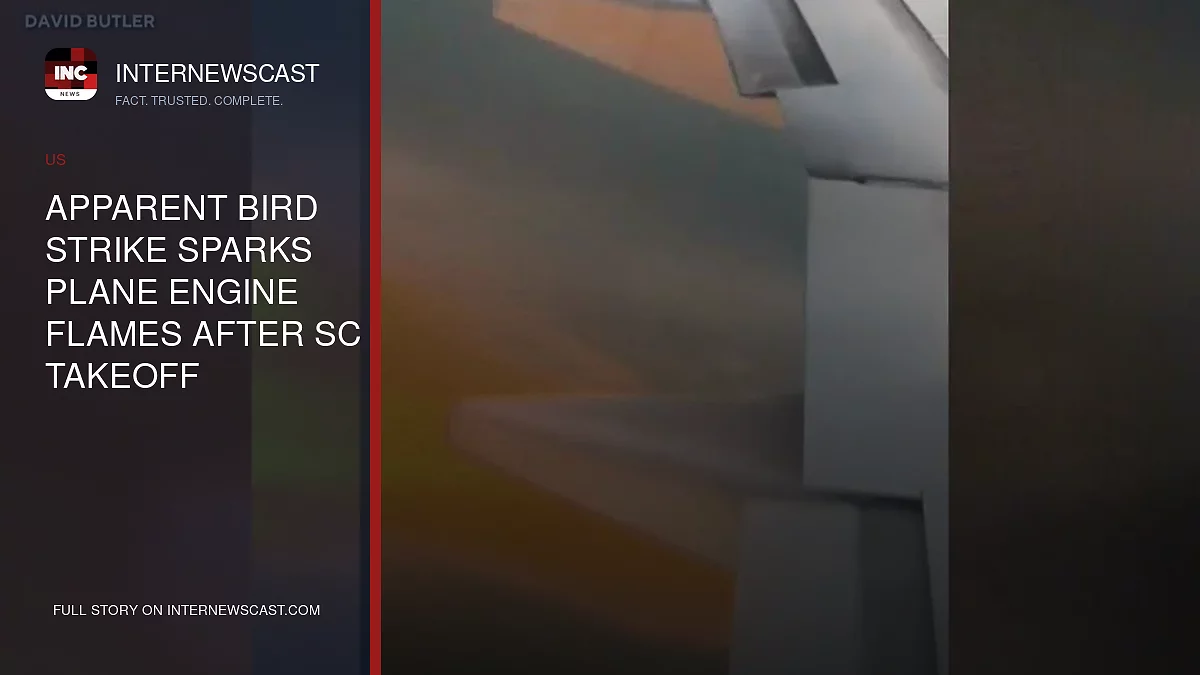

An American Airlines flight departing Myrtle Beach, South Carolina, was forced to return to the airport Monday after flames were seen coming from the aircraft’s left engine shortly after takeoff.
Passenger John Richter, one of 172 people on board, described a frightening start to the flight. “In the middle of the runway, everybody heard a big bang, and then the next thing that we know, was making a lot of noise,” he said.
Authorities said the Charlotte, North Carolina-bound aircraft appeared to have struck birds during takeoff.
“Mayday, mayday, mayday. We’ve got a engine problem here,” the pilot was heard telling air traffic controllers as the crew worked to bring the plane back.
The Boeing 737 returned safely to Myrtle Beach, and officials said no injuries were reported.
American Airlines said the aircraft was removed from service for inspection. The passengers were placed on another plane and continued on to Charlotte.
Thousands of animal strikes reported so far this year
Wildlife strikes, including bird strikes, are a known hazard in aviation and occur with some regularity.
READ MORE: Wyoming Restaurant Takes Action After Family Skips $130 Tab
One of the most well-known examples came in January 2009, when a US Airways jet leaving New York City lost power in both engines after a bird strike soon after takeoff from LaGuardia Airport. The plane landed in the Hudson River, and all 155 people aboard survived.
Nearly 8,300 animal strikes have been reported so far this year, according to the Federal Aviation Administration, which also said that historically birds account for approximately 97% of them.
“Bird strikes can be extremely serious,” said Capt. Laura Einsetler, an airline pilot. “We would not continue flying the jet if we knew that there was any type of significant impact to the engine and its capabilities at that point.”