Ceasefire between US and Iran being tested
Fox News anchor Shannon Bream reported on the widening Middle East conflict, with Trey Yingst delivering coverage from Tel Aviv. The United States launched strikes on Iranian missile and drone storage sites after Iran targeted shipping in the Strait of Hormuz. Iran also sent drones toward Kuwait and Bahrain, while Israel carried out attacks on Hezbollah positions in Lebanon. The developments unfolded as Israel and Lebanon reached a diplomatic framework agreement.
German shipping company Hapag-Lloyd warned Sunday that a “new normal” of elevated risk and regulatory uncertainty is taking hold around the Strait of Hormuz, as intensifying military action and conflicting navigation guidance created fresh disruption along the vital waterway.
The company’s warning came as Iran appeared to resume moving millions of barrels of crude from Kharg Island for the first time in several days, according to maritime intelligence firm Windward AI.
“At Kharg, the T-Jetty and Western Terminal loaded simultaneously for the first time in days; the East Waiting Area holds 28 tankers, 27 dark, signaling the Iranian crude export cycle restarting,” Windward AI said in a post on X.
The departing shipments are estimated to contain 4.12 million barrels of wet cargo, including crude and other liquid hydrocarbons. Roughly 3.91 million barrels of that total is crude oil, according to analytics firm Vortexa.
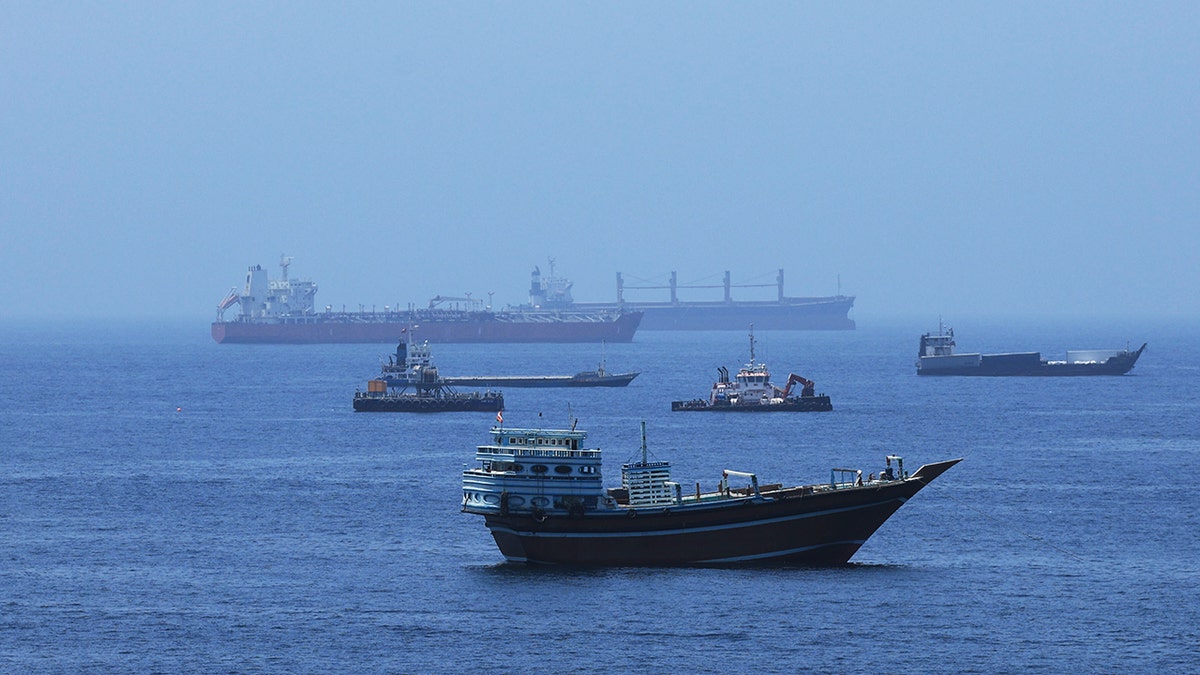
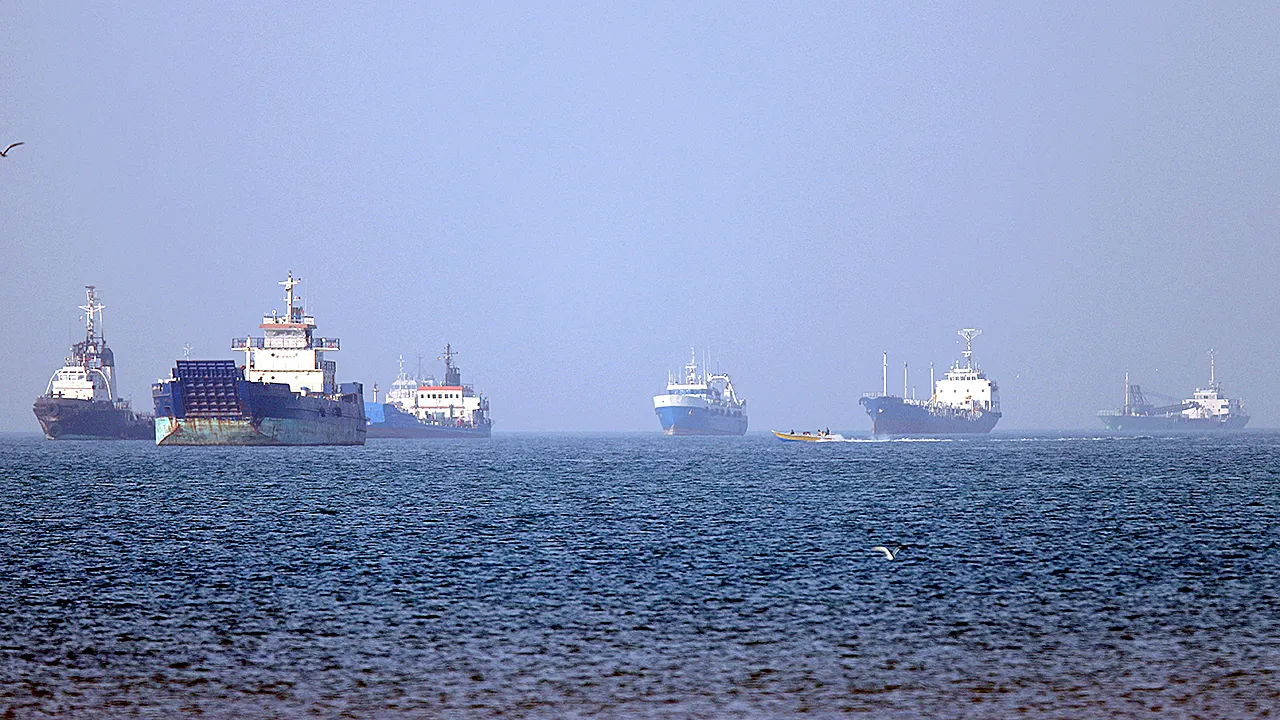
Commercial cargo ships and crude oil tankers sit anchored in the Gulf of Oman off Muscat, Oman, ahead of passage through the Strait of Hormuz, one of the world’s most important trade corridors. (Shady Alassar/Anadolu)
“We have to acknowledge that this is for some months the new normal in the Persian Gulf region,” Hapag-Lloyd AG spokesperson Hanja Maria Richter told News Agency.
Richter said the situation has remained highly unpredictable since the conflict began, adding that shipping operators now need to maintain constant vigilance while working in the region.
“We have been making and still make regular risk and situation assessments with our security partners, all relevant authorities and our people on shore and, of course, on the vessels,” Richter said.
“It is a region in conflict, so we consider this with every single ship we move in the region and assess the risks for every vessel and its crew individually.”
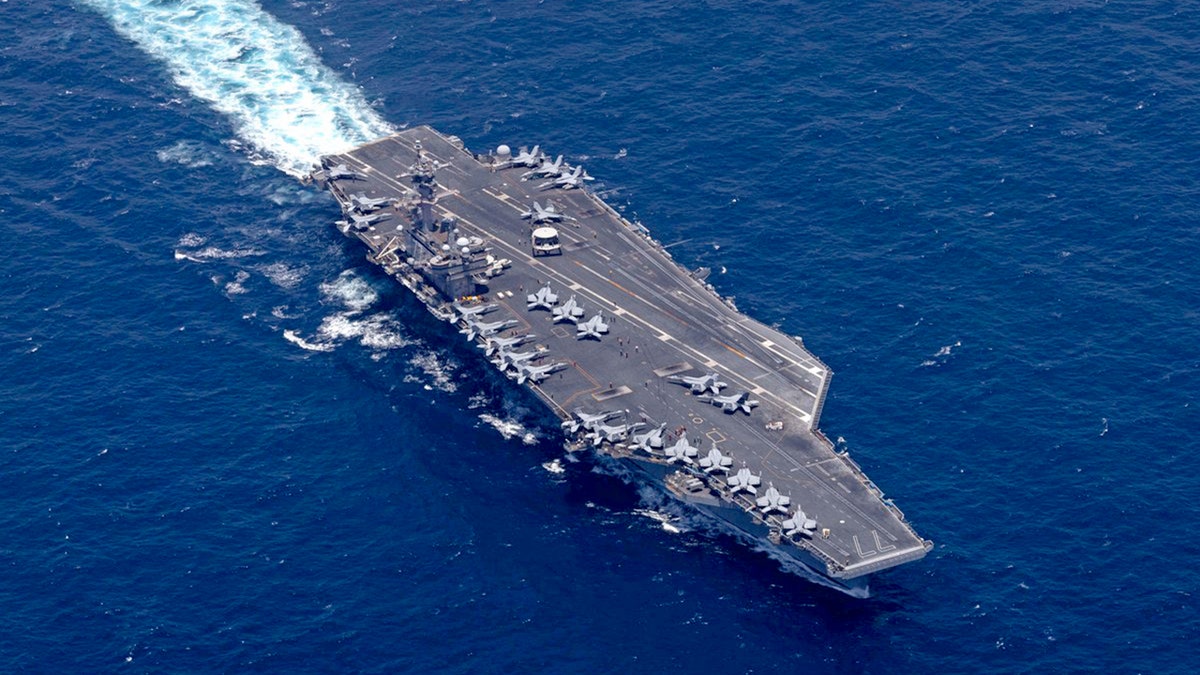
USS George H.W. Bush transits the Arabian Sea as U.S. forces enforce a naval blockade against Iran and support Project Freedom in the Strait of Hormuz, according to U.S. Central Command. (CENTCOM)
Richter’s remarks came as U.S. Central Command (CENTCOM) launched airstrikes against Iranian targets, including Qeshm Island on June 26 after a vessel was struck in the strait.
This prompted Iran’s Islamic Revolutionary Guard Corps (IRGC) to retaliate by targeting U.S. military sites in Kuwait and Bahrain.
Adding to the strike risk is a tug-of-war over control of the transit lanes.
Lloyd’s List described the fracturing of the waterway as a “confused, two-tier system now operating in the strait, which remains split between the Iran-controlled northern route and a U.S.-protected southern ‘highway,’ with the pre-war routes rendered unusable because of the risk of mines, separating them.”
Iran is responsible for managing and fully reopening maritime traffic through the Strait of Hormuz under recent understandings, Iranian Foreign Minister Abbas Araghchi said Sunday, according to Iran International.
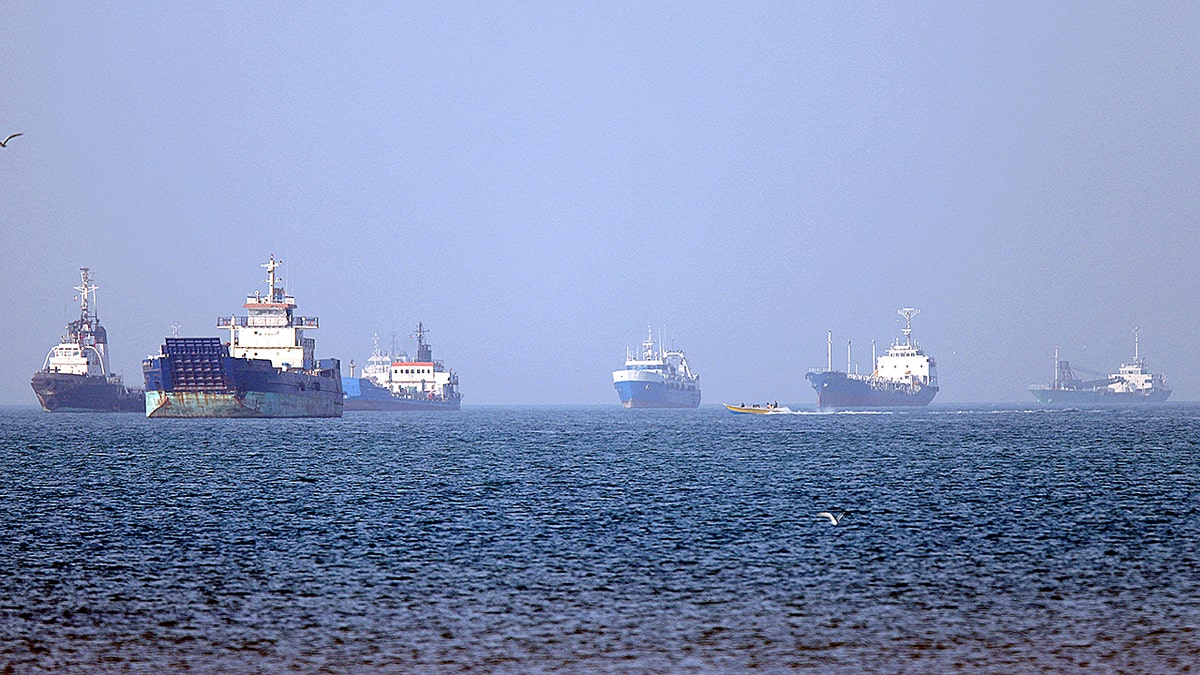
Ships are anchored in the Strait of Hormuz off Bandar Abbas in southern Iran on May 4. A report on May 15 said a ship was seized off the coast of the United Arab Emirates and is being brought to Iranian waters. (Amirhossein Khorgooei/ISNA/AFP via Getty Images)
Iranian state television said that passage through the Strait of Hormuz demands coordination with the IRGC.
Hapag-Lloyd pushed back against any future attempts to weaponize or monetize passage through the critical global chokepoint.
“It would be fundamentally wrong to impose fees for passage through international waters,” Richter said.
“Fees for infrastructure such as the Suez Canal or the Panama Canal are a different matter, as they reflect major infrastructure investments. That is not the case with the Strait of Hormuz.”
While thousands of crew members remain caught by conflicting naval directives, Hapag-Lloyd said it had successfully navigated the initial bottleneck.
“Good news is that we were able to have all Hapag-Lloyd vessels that were affected by the temporary closure of the Strait of Hormuz and had been waiting in the Persian Gulf depart safely from the Gulf,” Richter noted before adding that “the safety of our crews is our highest priority.”