
A rarely seen assortment of original letters, family Bibles and artifacts from the founding era is shedding fresh light on the place Scripture held in America’s early development.
The collection is now on view at the Museum of the Bible in Washington, DC, as part of a new exhibit tied to America’s 250th anniversary. Through historic objects and original documents, the display looks at how the Bible helped shape the ideas and public conversations of the nation’s first years.
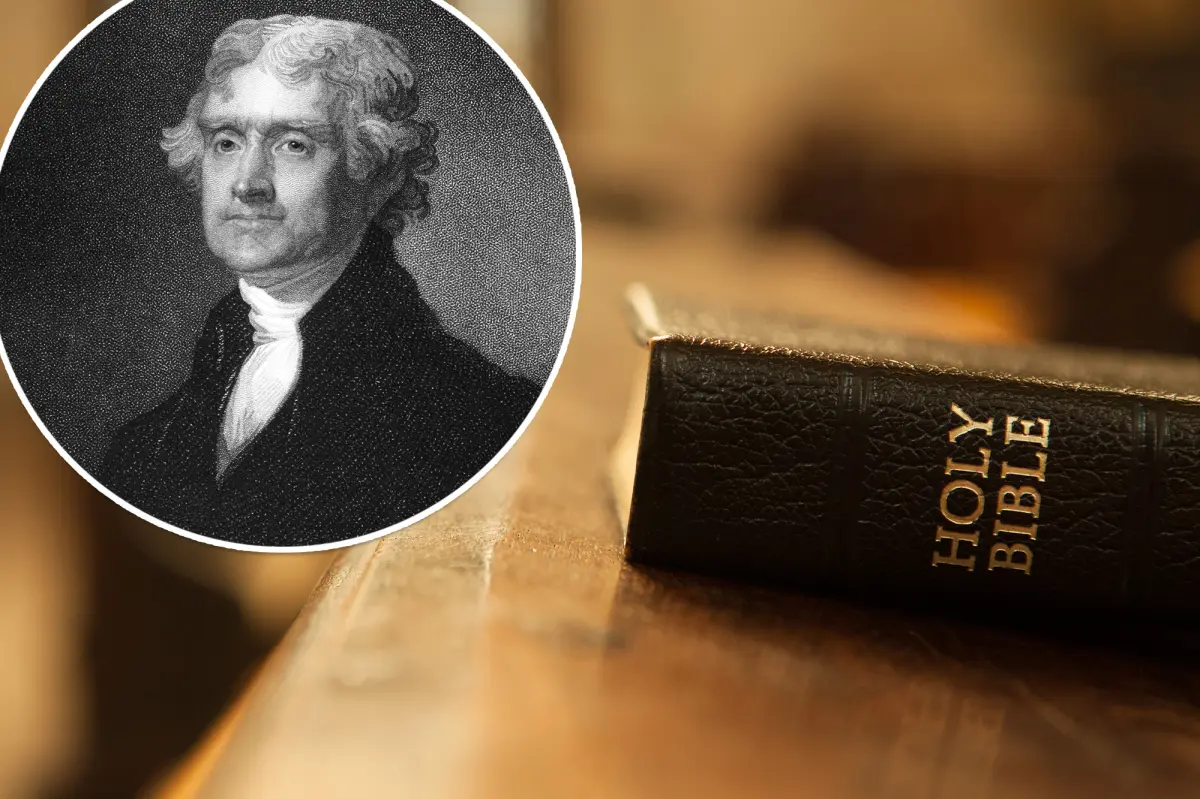
Highlights include the first Bible printed in English in America, family Bibles connected to several founding fathers and other notable Americans, and an original letter from Thomas Jefferson addressing religious freedom.
Taken together, the materials show how biblical references and language surfaced across the founding period, informing debates over liberty, education and civic life.
Anthony Schmidt, the museum’s director of collections and curatorial, told Fox News Digital that the exhibit relies on primary sources to explore the Bible’s influence in early American history.
“The Bible has been an integral part of this nation’s founding and history,” Schmidt said.
“That’s not a theological claim; it’s what the documents show. The founding fathers referenced Scripture, argued from it, and built political frameworks on its language about human dignity and liberty.”
READ MORE: Final Photo Shows Swimmer Before Being Swept Away by Powerful Waterfall
Another portion of the exhibit focuses on Scripture’s role in daily life during the country’s formative years, pairing the first English-language Bible printed in America with family Bibles once owned by founding fathers and other major historical figures.
Schmidt said the objects were intentionally selected to tell what he described as th
“These objects show the Bible’s impact not only on religious life, but on early American art, education and politics.”

Another section examines the relationship between faith and government through Jefferson’s writings on religious liberty and one of the nation’s earliest published arguments for resisting tyranny.
Visitors can also view Revolutionary-era printed materials that helped unify the colonies, documents tracing early Jewish civic life in America, portraits of George Washington and other colonial-era figures, a hand-colored lithograph memorializing Abraham Lincoln, and busts of George Washington and Benjamin Franklin.
Schmidt said one of the collection’s central goals is to encourage visitors to engage directly with original historical documents.
“We want visitors to encounter the history of this country and see, in the primary documents, what impact the Bible actually had on the people who built it,” he said.
He noted that while the founding fathers often disagreed on matters of religion, the historical record shows many were still influenced by the Bible’s language and ideas.
“Many of the founders disagreed about religion, and disagreed sharply, but they were still shaped by the Bible’s language and arguments,” Schmidt said. “We want people to engage with that evidence and come to their own conclusions.”