
Washington — The Supreme Court ruled Monday that legal protections limiting the president’s ability to remove members of the Federal Trade Commission violate the Constitution, overturning a 90-year-old precedent that had permitted Congress to protect certain independent agency officials from being fired at will.
The high court’s decision broadens presidential authority over numerous independent boards and commissions that Congress had sought to insulate from direct political pressure by allowing removal of their members only for cause.
That protection stemmed from the Supreme Court’s 1935 ruling in Humphrey’s Executor v. United States, a case involving the FTC, in which the justices held that Congress could place limits on a president’s power to dismiss officials serving on multi-member agencies.
Monday’s ruling by the court’s conservative majority in Trump v. Slaughter wipes away that New Deal-era precedent, capping years of judicial erosion of the doctrine that had helped define the independence of regulatory agencies.
The court’s ruling
The decision split the court 6 to 3. Chief Justice John Roberts authored the majority opinion and was joined by the court’s other conservative justices. The three liberal justices dissented, with Justice Sonia Sotomayor taking the unusual step of reading a summary of her dissent from the bench, a sign of deep disagreement. Roberts wrote that restrictions on the president’s power to remove officials who exercise executive authority on his behalf improperly interfere with his constitutional role.
According to the majority, the modern FTC “unquestionably” carries out executive functions and therefore must remain subject to presidential control.
“Although it is up to the Senate to decide whether to confirm those with whom the President would prefer to work, neither Congress nor the courts may saddle him with those with whom he cannot work,” Roberts wrote. “Subordinates who exercise the President’s power are subject to removal by him. Then, and only then, can they remain accountable to the President, and the President to the people.”
The ruling is expected to reach well beyond the FTC. Congress has established more than two dozen multi-member agencies whose leaders may be removed by the president only for cause, generally defined as inefficiency, neglect of duty or misconduct in office. Agencies that could be affected include the Federal Energy Regulatory Commission, the Nuclear Regulatory Commission and the National Labor Relations Board.
In a dissenting opinion joined by Justices Elena Kagan and Ketanji Brown Jackson, Sotomayor warned that while those agencies remain, they now take on a new form that differs from what Congress intended when they were created.
“Put simply, today the majority reshapes our Government. Dozens of independent commissions are now likely to become purely executive agencies, shifting tremendous power over broad swaths of American life into the President’s hands,” she wrote.
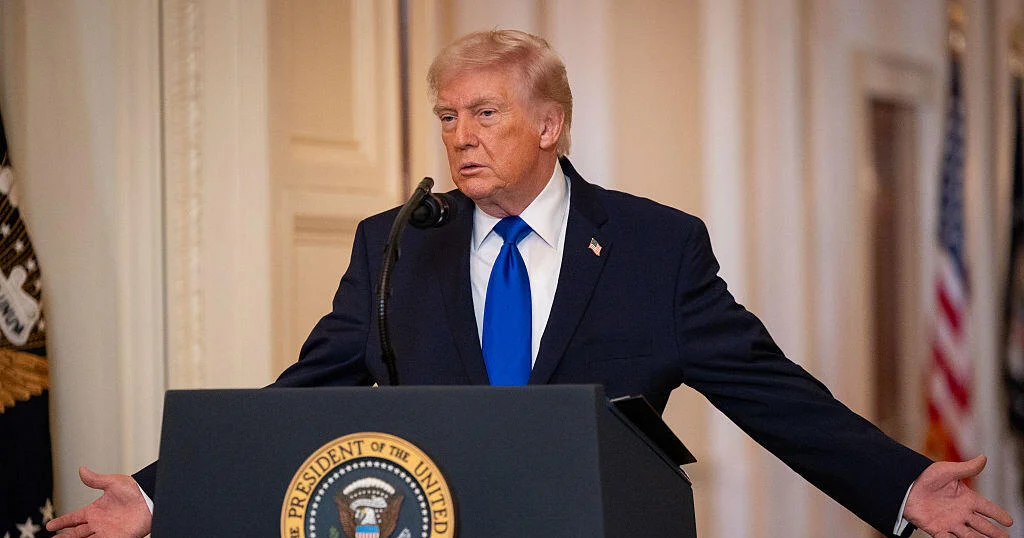
President Trump cheered the decision as the “Greatest Increase in Presidential Power in the last 100 years. Such a Monumental Ruling at such an important time!”
The Slaughter case
Mr. Trump has sought to test the bounds of his executive power since returning to the White House for his second term in January 2025, including by firing a slew of officials appointed by Democratic presidents at multi-member boards and commissions without cause.
Among those was Rebecca Slaughter, whom Mr. Trump appointed to the FTC during his first term. She was reappointed to the trade commission by President Joe Biden.
EXCLUSIVE: Mamdani Surge Fails to Materialize in Contested New York City House Races
Slaughter was informed in March 2025 that her service on the FTC was “inconsistent” with the Trump administration’s priorities and was fired from her post without cause. That clashed with the law that established the FTC in 1914, when Congress said commissioners could only be removed for inefficiency, neglect of duty or malfeasance in office.
Slaughter filed a lawsuit challenging her removal and argued Mr. Trump broke the law when he fired her. A federal district court ruled in her favor and ordered Slaughter to be reinstated to her post. The U.S. appeals court in Washington, D.C., eventually agreed that she could continue in her job at the trade commission, but last September, the Supreme Court allowed Mr. Trump to fire her while it considered the legality of removal protections for FTC members.
Before agreeing to decide Slaughter’s case, the Supreme Court had also cleared the way for Mr. Trump to oust members of the National Labor Relations Board, Merit Systems Protection Board and Consumer Product Safety Commission. But the high court has so far spared two other officials from removal while litigation continues: Lisa Cook, a member of the Federal Reserve’s Board of Governors, and Shira Perlmutter, the register of copyrights.
The justices heard arguments in January over whether to allow Mr. Trump to fire Cook from the Fed Board. The Supreme Court has indicated before that it views the Fed differently than other independent agencies, calling it a “uniquely structured, quasi-private entity that follows in the distinct historical tradition of the First and Second Banks.”
In an opinion also authored by Roberts, the high court rejected Mr. Trump’s attempt to fire Cook while the challenge to her removal moved forward.
The Supreme Court reiterated in its ruling involving the FTC that it does not implicate the constitutionality of the Fed’s removal restrictions. It also stressed that the decision does not address tenure protections for judges on the U.S. Tax Court or the Court of Federal Claims, with Roberts writing that the justices are leaving “those questions for another day.”
“All we do today is recognize what has been clear for a century — that those who fall within the President’s ‘general administrative control’ must be removable by the President at will,” he wrote.
The high court’s decision in Slaughter’s case is the latest in a line of recent decisions that chipped away at Humphrey’s Executor and expanded the president’s power over independent agencies. The Supreme Court invalidated removal protections for the director of the Consumer Financial Protection Bureau in 2020 and the head of the Federal Housing Finance Agency in 2021.