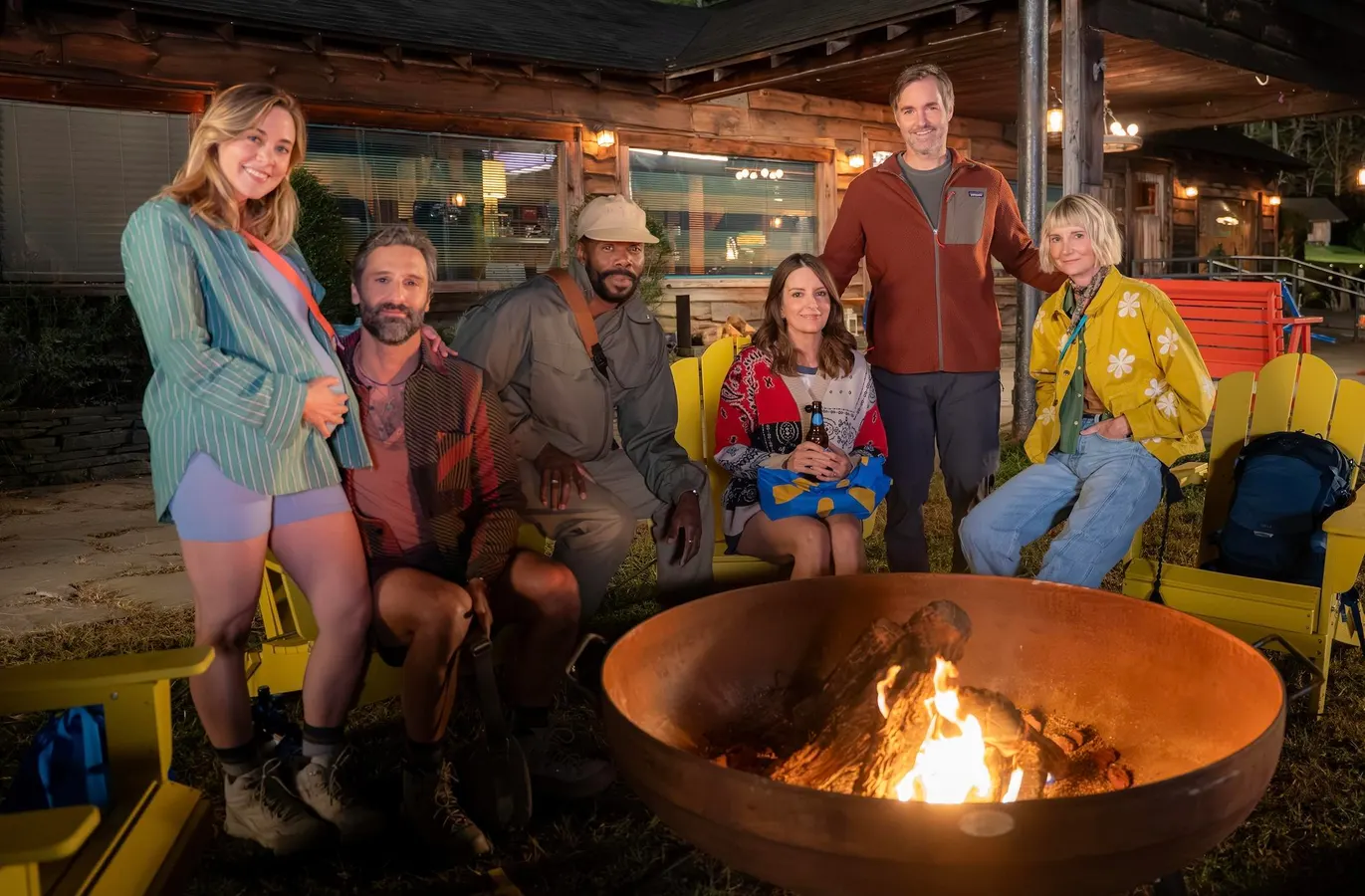


Netflix’s hit comedy series The Four Seasons has earned another pickup, with the streamer renewing the show for an eight-episode third season following its Season 2 return on May 28. The latest season reunites the show’s central circle — Kate (Tina Fey), Jack (Will Forte), Anne (Kerri Kenney-Silver), Danny (Colman Domingo), Claude (Marco Calvani) and Ginny (Erika Henningsen) — as their travels take them from the familiar ease of the Jersey Shore and upstate New York to the picturesque scenery of Italy.
After a difficult year, the six longtime friends keep their vacation tradition alive, this time with a baby along for the ride. Blending sharp humor with genuine emotion, the season finds the group confronting personal blind spots while mourning the loss of a beloved friend and stepping into unfamiliar new chapters. The Four Seasons continues to balance heart and comedy as it examines the complications, comforts and enduring bonds of friendship and love.
Before the renewal announcement, we spoke with The Four Seasons co-creators, co-showrunners, writers and directors Tina Fey, Lang Fisher and Tracey Wigfield about how the series came together and the creative choices behind it.
The three first crossed paths while working on Fey’s Emmy-winning comedy 30 Rock. Fisher later co-created and executive produced Netflix’s acclaimed Never Have I Ever with Mindy Kaling, and also worked as a writer and producer on Brooklyn Nine-Nine, The Mindy Project and the Emmy-nominated final season of 30 Rock. Wigfield, an Emmy-winning writer, producer and creator, is known for Saved by the Bell, Great News and her multiple-season collaboration with Fey on 30 Rock.
TINA FEY
Why did this feel like the right time to tell a story about long-standing friendships being tested?
Fey said she was drawn to writing about the stage of life she currently finds herself in — partly as a way to better understand it. She joked that it would feel far stranger for her to be writing about “sexy vampires” or “men in space.”
She added that the themes reflect real life, noting that she does not know many people her age who have not faced some kind of loss while continuing to push forward.
The series spans decades of friendship—what were you most interested in exploring about how people remain in each other’s lives over time?
I really like exploring how friends can help you keep perspective and a sense of humor about marriage. Because people who only hang out with their spouse are weird.
What do you hope viewers take away about the idea of “lifelong friends” after watching this season?
I hope they feel like these characters are their friends and that they leave us money in their wills.
LANG FISHER
How did you balance comedy with grief and emotional honesty throughout this season?
In my experience, grief and comedy go hand in hand. We try to balance it on this show by making even our craziest comedic moments anchored in real emotion. For instance, when Jack kicks a turkey and falls down the stairs, it’s coming from a wealth of rage that he has been suppressing.
The series spans decades of friendship; what were you most interested in exploring about how people remain in each other’s lives over time?
When you are close friends for decades, there’s a forced level of authenticity between you. You kind of can’t pretend to be anyone other than who you are, because your old friends will call you on your bullshit. And that kind of deep honesty lends itself to good storytelling, because any secrets our characters have won’t stay secret for long.
What was the biggest tonal challenge in writing characters who are both deeply flawed and deeply lovable?
We wanted to make sure that our characters’ flaws and virtues are relatable. We draw a lot of story energy from our writers’ lives as well as our own, so that everything feels human-scale. When our characters have conflict, we hope viewers recognize these fights as ones they have had themselves. No one is an angel or a supervillain. Just normal people who sometimes don’t put their best foot forward.
This season introduces a major shift in the group dynamic after a loss—how did you decide how present that absence would be in shaping the story on screen?
Because of the premise of our show, we knew we would be picking up the spring after Nick’s death. So, we wanted to use his passing as a jumping-off point for our characters’ drives for the rest of the season. None of us wanted to make 8 episodes solely about grief, but we did want to use the loss as a catalyst for our characters to reevaluate their lives and figure out how to move forward.
How do friendships survive when one person in the group fundamentally changes—or exits the dynamic entirely?
That’s really the question of the season. Nick was the nucleus of the group. He was the main connector who brought everyone together. What happens when that person is gone? Does the group dissolve? In this case, it didn’t, but it did change the dynamic, and you had interesting new relationships form, like Ginny and Anne as well as Jack and Claude.
What do you hope viewers take away about the idea of “lifelong friends” after watching this season?
Lifelong friends are your most precious resource. They are the witnesses of your life and the ones who have seen you evolve through all of your various phases. They know you down to your core. There’s a scene where Kate says to Danny that when she’s around him, she’s not “Mom,” “wife,” or “scary boss.” She’s back to being the nineteen-year-old girl she was when they met. Old friends anchor you to your true self, which feels especially crucial these days when everyone is living manufactured fake lives online.
TRACEY WIGFIELD
Why did now feel like the right moment to revisit a story about long-term friendships under strain?
The original movie was all about middle-aged people dealing with real adult problems. It was cozy and warm, but it was also very much a movie for adults. The reason we wanted to revisit this story now is that it didn’t seem like there were a ton of shows, especially comedies, really diving into what it feels like to be middle-aged, or into all the wonderful/terrible/weird parts of being married to someone for a really long time.
How did you balance comedy with grief and emotional honesty throughout this season?
It’s really important to us to make sure the show feels grounded and true, both in the emotional moments and, just as importantly, in the comic moments. I think one of the reasons the show has resonated so much is because people see their own marriages in these characters — not just in the fights, but in the jokes too. When Jack complains that Kate wears “big mama underwear” and Kate complains that Jack always wants to “order meatball subs from that place where I saw a rat once,” husbands and wives everywhere feel seen.
The series spans decades of friendship—what were you most interested in exploring about how people remain in each other’s lives over time?
One of the most interesting parts of the show is getting to see these people who’ve known each other forever and how their friendships change and evolve over time. People tend to think of middle age as a time when life is set—your job, your relationships, everything is pretty stable. But the reality that we see with these characters is that relationships are always evolving. As life happens to them — a friend dies, someone has a baby, someone moves away — these relationships are still changing, always shifting and growing. No matter how old you are or how long you’ve known someone.
What was the biggest tonal challenge in writing characters who are both deeply flawed and deeply lovable?
This show is different from other comedies I’ve written on, where the target is usually just what’s funniest and who cares about anything else. On this show, we try to keep the tone really grounded. Sometimes characters will do outrageous funny things, but it is always emotionally motivated. We care about these characters and want to be really true to them even in their darkest, weirdest moments.
This season introduces a major shift in the group dynamic after a loss—how did you decide how present that absence would be in shaping the story on screen?
Dealing with Nick’s death set each of our characters off on different stories at the start of season two. Jack is deeply grieving the loss of his friend, and Kate, who is also grieving, is trying to show up for her husband at a time when she doesn’t really know how best to support him. For Danny and Claude, Nick’s death really drove home the point that life is short. In season two, we find them asking, “Have we done everything that we wanted to do? Because if not, the time to do it is right now.” And we see Anne and Ginny finding an unlikely friendship in this moment — Ginny is caring for a newborn alone and is really desperate for help, and at the same time Anne is really desperate for purpose, and they form this beautiful relationship that never would’ve happened had Nick not died.
How do friendships survive when one person in the group fundamentally changes—or exits the dynamic entirely?
Relationships are always evolving and changing. There are moments when longtime friends are in each other’s lives on a daily basis and seasons when you only see a person once in a while. This year Kate struggles when Danny announces that he is moving to Italy, but what they realize at the end of the season is that distance doesn’t matter; whenever they do see one another, it will always feel like it used to. Kate loves Danny because he holds a piece of every version of herself throughout her life.
What do you hope viewers take away about the idea of “lifelong friends” after watching this season?
We wanted to make a show about lifelong friends and decades-long marriage — relationships that people tend to take for granted. But old friends, the people who have seen you through the brightest and darkest parts of life, the people who have known all the different versions of you, are such a blessing. They are the witnesses to your life.