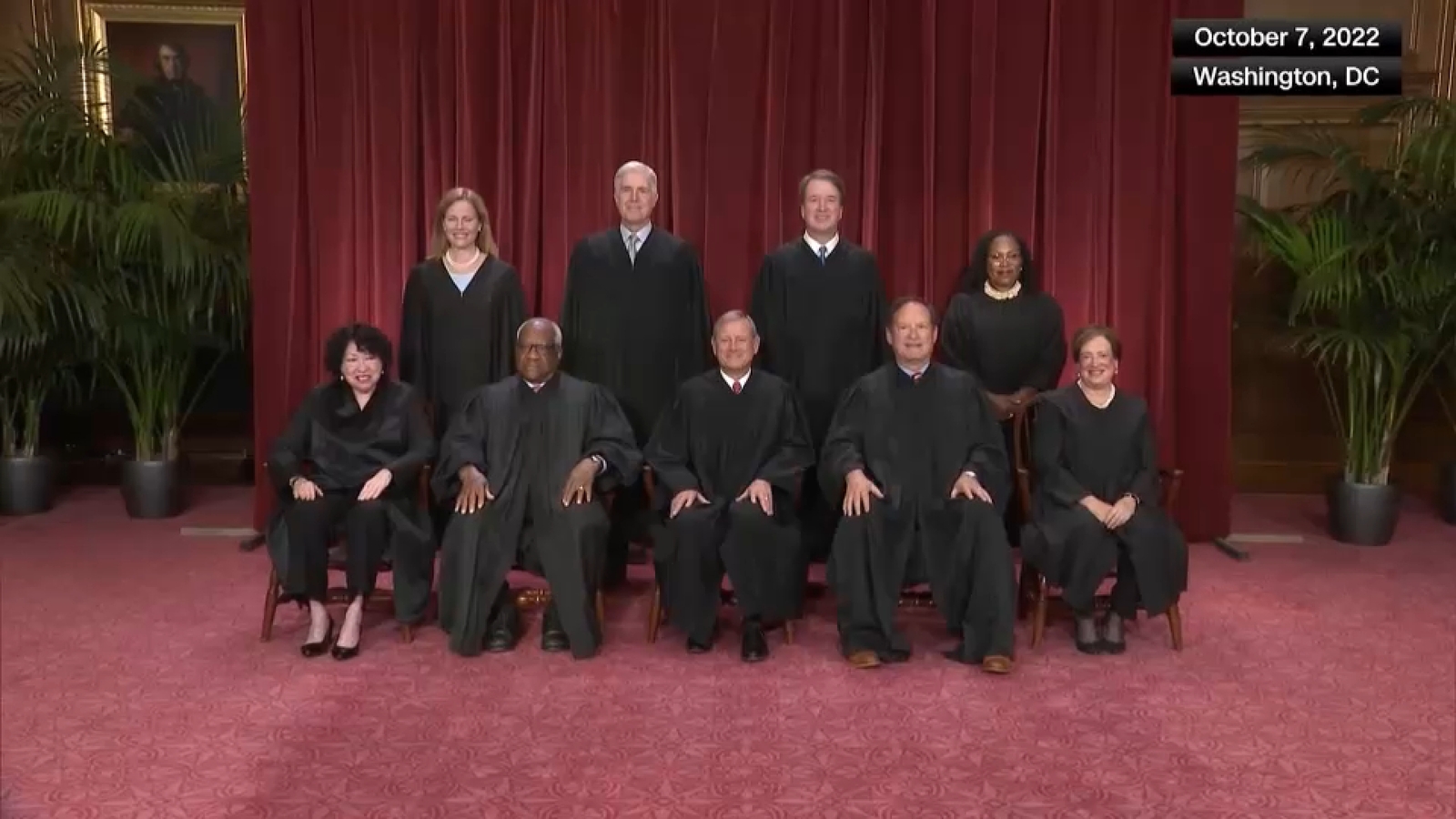

WASHINGTON — The Supreme Court on Tuesday affirmed a sweeping view of birthright citizenship, turning aside President Donald Trump’s executive order that sought to deny U.S. citizenship to children born to parents who are in the country illegally or only temporarily.
In its decision, the court leaned on the long-established interpretation of the 14th Amendment, enacted in the aftermath of the Civil War, as well as more recent federal statutes, concluding that nearly everyone born on American soil is a citizen, aside from narrow exceptions.
The Republican president’s proposed limits had already been halted by multiple lower courts and never went into effect in any part of the United States.
At oral arguments in April, justices across the ideological spectrum raised doubts about the legality of the order, in a high-profile case made even more striking by Trump’s unprecedented presence in the courtroom.
The dispute became another major measure of Trump’s expansive claims of executive authority, placing them before a conservative-majority court that has often endorsed broad presidential power and frequently sided with him. When the court has ruled against him in notable cases, Trump has answered with sharply personal attacks on the justices.
The ruling came in response to Trump’s appeal of a New Hampshire lower-court decision that invalidated the citizenship restrictions.
Trump signed the birthright citizenship directive on the opening day of his second term, making it a central piece of his administration’s wider effort to tighten immigration policy.
The birthright citizenship dispute was the first Trump immigration policy to reach the Supreme Court for a final decision. Earlier, the justices had rejected worldwide tariffs Trump imposed under an emergency powers law that had not previously been used in that manner.
MORE STORY: Unmasking the Church: Hugh Jackman's Faith and Emily Watson's Chilling Accusations
Trump reacted furiously to the late February tariffs decision, saying he was ashamed of the justices who ruled against him and calling them unpatriotic.
He also seemed to recognize the court was likely to rule against him on birthright citizenship, too, using his Truth Social platform to criticize “dumb judges and justices” and wealthy pregnant women from China and elsewhere who come to the U.S. to give birth so their newborns will have American citizenship.
Trump’s order would have upended widely held views that the 14th Amendment confers citizenship on everyone born in the U.S., excluding only the children of foreign diplomats and those born to a foreign occupying force.
The amendment was intended to ensure that Black people, including former slaves, had citizenship, though the Citizenship Clause is written more broadly. “All persons born or naturalized in the United States, and subject to the jurisdiction thereof, are citizens of the United States and of the State wherein they reside,” it reads.
In a series of decisions, lower courts have struck down Trump’s executive order as illegal. The decisions have invoked the high court’s 1898 ruling in Wong Kim Ark, which held that the U.S.-born child of Chinese nationals was a citizen.
The Trump administration argued that the common view of citizenship is wrong, asserting that children of noncitizens are not “subject to the jurisdiction” of the United States and therefore are not entitled to citizenship.
More than one-quarter of a million babies born in the U.S. each year would have been affected by the executive order, according to research by the Migration Policy Institute and Pennsylvania State University’s Population Research Institute.
While Trump has largely focused on illegal immigration in his rhetoric and actions, the birthright citizenship restrictions also would have applied to people who are legally in the United States, including students and applicants for green cards, or permanent resident status.
Copyright © 2026 KABC Television, LLC. All rights reserved.