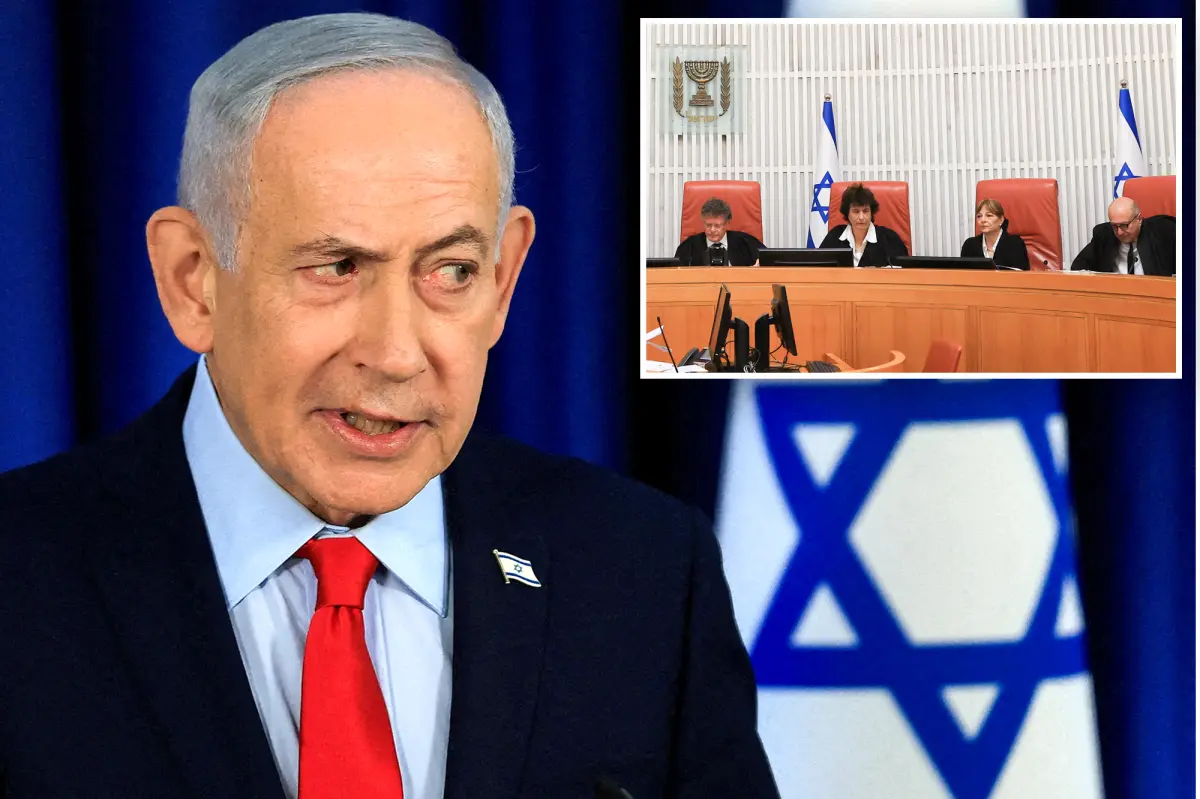

WASHINGTON — Israeli Prime Minister Benjamin Netanyahu’s cabinet on Sunday approved a resolution pledging not to comply with a Supreme Court order that prevents the country’s media regulator from meeting.
The move represents the first time an Israeli government has formally vowed to defy the nation’s top court, raising the prospect of a constitutional showdown in the Jewish state.
“You have no power to trample the law. A ruling that contradicts the law will not be recognized, and decisions made under it are void,” the Netanyahu government said in its declaration.
The dispute centers on the Supreme Court’s June 17 decision blocking new appointments to Israel’s Second Authority for Television and Radio, a regulatory body comparable to the U.S. Federal Communications Commission.
The court also moved to reinstate the previous Second Authority for Television and Radio, even amid questions over whether the body had fallen below the legally required number of members needed to function.
Israel’s Supreme Court attributed the resignations that left the agency short of a quorum to the government’s “deliberate obstruction and paralysis.” It also noted what it called a “puzzling proximity in time” among the panel members’ departures.
Communications Minister Shlomo Karhi and Justice Minister Yariv Levin introduced the cabinet measure to reject the ruling, doing so with Netanyahu’s support.
The ministers contended that the court had exceeded its authority and strayed from the plain meaning of the law in issuing the decision.
“High Court judges are not the Knesset, and a fit of power does not grant authority to erase an explicit threshold condition from the law, even if it is inconvenient for them,” Karhi contended.
“The rule of law is not the rule of the judges. Today, the government has clearly stated: when the High Court tramples the law, the state will not lend a hand to it. Two-thirds is a legal requirement, not a recommendation, and a council that does not meet the threshold conditions set by the legislature does not exist.”
Looming over the standoff is the pending approval of the sale of Reshet 13, one of Israel’s top commercial TV networks, to tech entrepreneurs.
Israel’s opposition quickly denounced the move by Netanyahu’s government and Israeli President Isaac Herzog warned against defying the country’s highest court.
“Statements of noncompliance with Supreme Court rulings harm the core of unity in the people,” Herzog warned in response to the Netanyahu cabinet’s move, per a translation.
“I have already clarified this, and I will repeat it again and again – noncompliance with a court ruling is a red line that must not be crossed under any circumstances.”
In Israel, the presidency is a largely ceremonial role, though it does have some key powers, while the prime minister has most of the executive authority. Herzog once led the Labor Party, which opposes Netanyahu.
For years, Netanyahu and his government have butted heads with the judiciary in Israel. Prior to the Oct. 7, 2023, Hamas attacks, he sparked mass protests by seeking to push through a judicial reform package.
Elections in Israel are poised to take place in October.