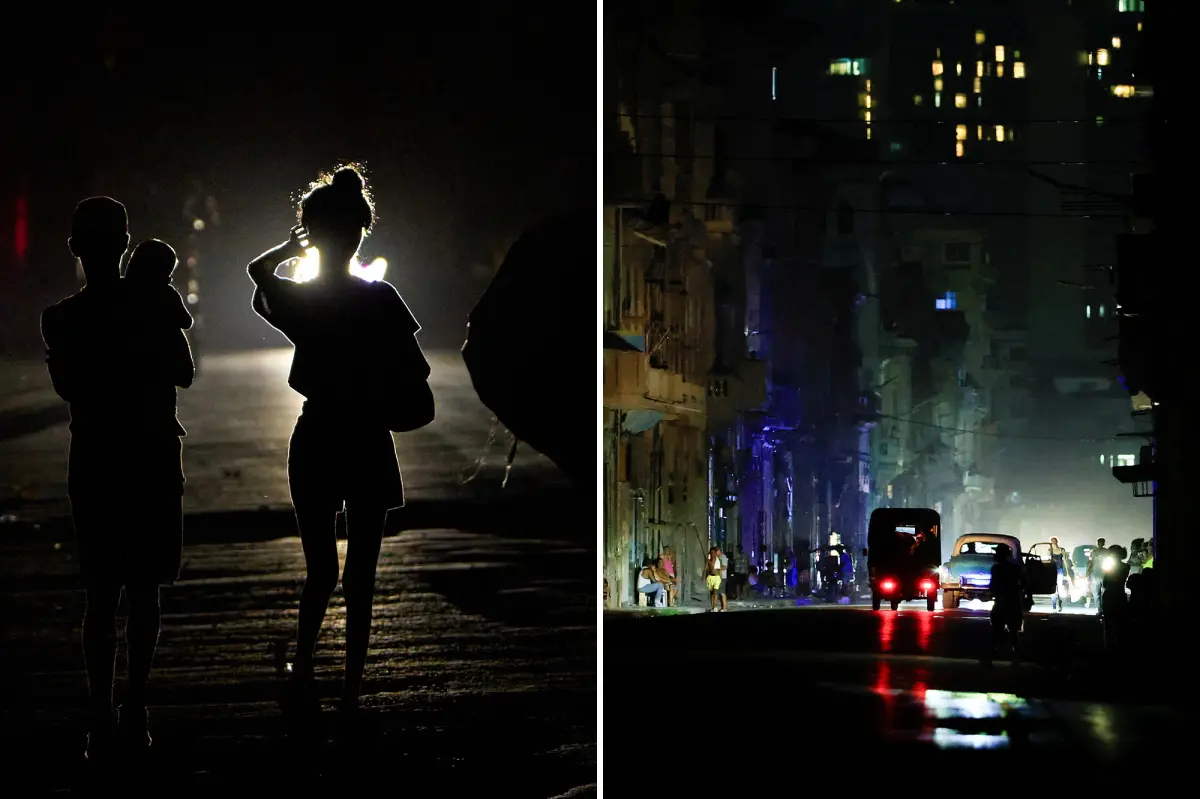
HAVANA, Cuba — Cuba was plunged into a nationwide blackout on Monday, the latest blow to an island already struggling with shrinking fuel supplies and a deteriorating power grid.
The outage, affecting a country of nearly 10 million people, was confirmed by the state-run Electric Union, which said in a post on X that authorities were still investigating the cause.
Cuba’s Ministry of Energy and Mines also said on X that emergency procedures had been activated as crews worked to bring electricity back online.
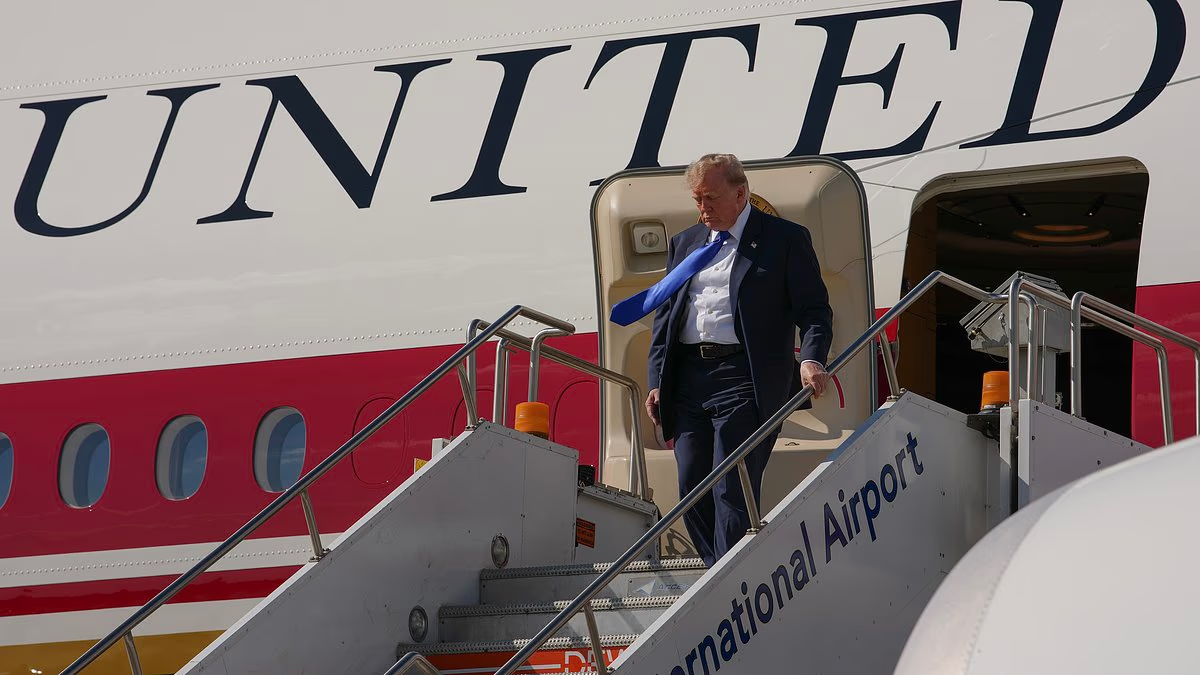
The blackout comes as fuel shortages have worsened across Cuba since January, when President Trump threatened tariffs against any nation that sells or supplies oil to the island, adding further pressure to Cuba’s long-running economic and financial crisis.
The effects have already been severe. Public transportation has been largely suspended, while officials have canceled tens of thousands of surgeries amid the shortages.
Energy Minister Vicente de la O Levy said that, within a couple of hours of the outage, smaller electrical “microsystems” were already operating in parts of the country. “Vital services continue to be protected, amidst this complex situation exacerbated by the energy blockade we face,” he said.
Cuban President Miguel Díaz-Canel, meanwhile, blamed the United States, accusing it of attempting to “incite social unrest by strangling Cuba’s fuel supply.”
READ MORE: Judge Jeanine Pirro Religion: Family And Ethnicity
“The actions of electrical workers in the midst of a genocidal energy blockade are heroic,” Díaz-Canel wrote on X.
The outage sparked concern across Havana, with 36-year-old Lina May wondering when the power would come back on so she could cook some rice.
“I just told my dad that we have to buy charcoal because otherwise we won’t eat and we’ll starve,” she said.
Richard Valdés, 40, said the outage is just the latest hit of many. “We’re without power again,” he said. “Now we have no water, no gas, nothing until they restore it.”
Cuba produces only 40% of the fuel it needs, while the 730,000 barrels of oil delivered by a Russian tanker in late March ran out by the end of April.
The government also has been rationing power with intentional outages that can stretch to more than 24 consecutive hours.
A blackout in mid-May affected the island’s eastern provinces, while a blackout in mid-March struck the entire island.
Like many Cubans, Mario Pedroso, a 33-year-old Havana resident, was resigned about Monday’s total blackout.
“Oil hasn’t come in here for a while, and we have no way to solve the problem,” he said. “We have to resist, as we Cubans say. That’s all.”