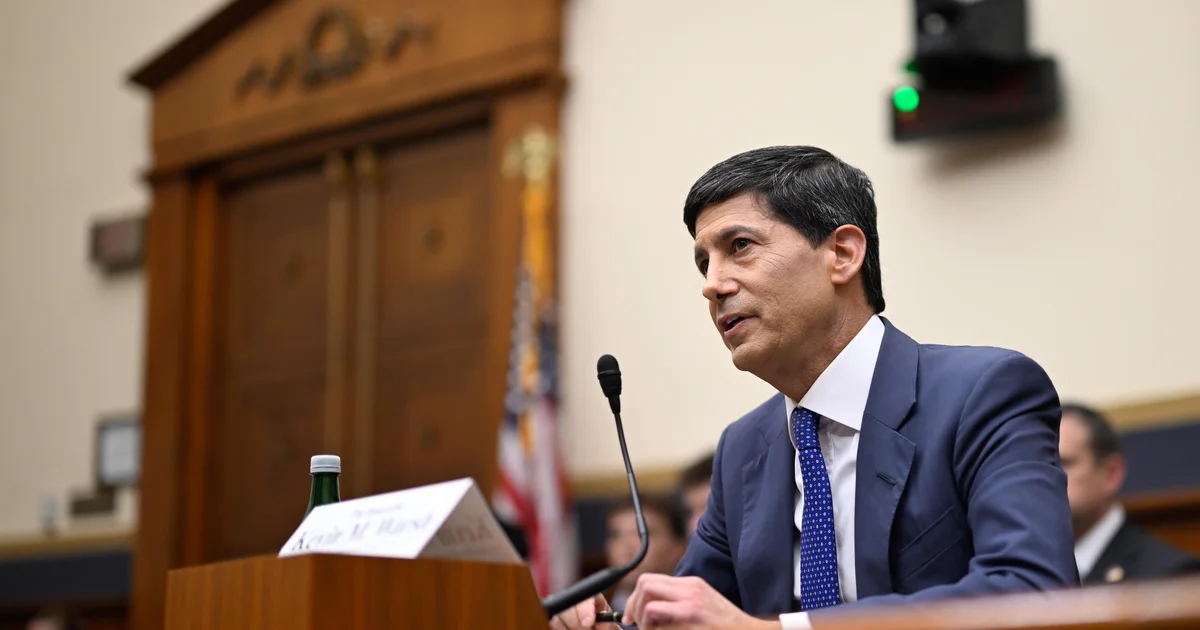

Federal Reserve Chairman Kevin Warsh used his first appearance before Congress as head of the central bank on Tuesday to put inflation squarely at the top of his agenda, warning that higher prices are creating an “undue burden” for American families and businesses.
“The members of our [Federal Open Market Committee] have no tolerance for persistently elevated inflation. And we share a resolute commitment to restoring price stability,” Warsh told lawmakers Tuesday morning during a House Financial Services Committee hearing.
Pressed by Rep. French Hill, an Arkansas Republican, on how the Fed intends to return the economy to price stability, Warsh said he remains committed to bringing inflation back to the central bank’s 2% annual target. He pointed to the Fed’s ability to use interest rate policy and its balance sheet as key tools, though he stopped short of offering any clear signal on the path of future rate decisions.
“Inflation’s a choice. We monetary policymakers need to choose lower prices, and that’s the commitment my colleagues have made,” he said.
Warsh’s remarks followed fresh government data released Tuesday showing inflation rose 3.5% from a year earlier in June. While that marked a slowdown from the prior month, it remained well above the Federal Reserve’s 2% inflation target. Prices had accelerated sharply in May, reaching the highest inflation level in more than three years, after a global energy shortage triggered by the war in Iran pushed costs higher.
Ahead of Tuesday’s inflation report, the Fed had appeared to be leaning in a more hawkish direction. At last month’s Federal Open Market Committee meeting, nearly half of policymakers indicated they could support raising interest rates later this year.
The cooler-than-expected June consumer price index reading, however, may give Fed officials room to keep rates on hold at their next meeting. After the CPI data was released Tuesday morning, CME Group’s FedWatch tool showed an 86% probability that the central bank would leave interest rates unchanged.
Warsh has also made clear that he believes the Federal Reserve should say less about its thinking on future interest rate moves. In line with that view, he has proposed changes to the Fed’s communications strategy, including scaling back forward guidance on the central bank’s monetary policy plans.
“We want to get policy right, and I think being somewhat more circumspect in our communications, at least for me, is a better way of calling balls and strikes,” he said on Tuesday.
During Tuesday’s hearing, which is focused on the Federal Reserve’s Semiannual Monetary Policy Report, Warsh also faced questions about his commitment to maintaining independence at the Federal Reserve.
In response to questioning from Rep. Nydia Velázquez, a Democrat from New York, about how Warsh would respond if President Trump or his administration targeted Fed officials because of interest rate disagreements, Warsh said he would “continue to do my job.” He also affirmed that he remains committed to the Fed’s independence.
Aimee Picchi