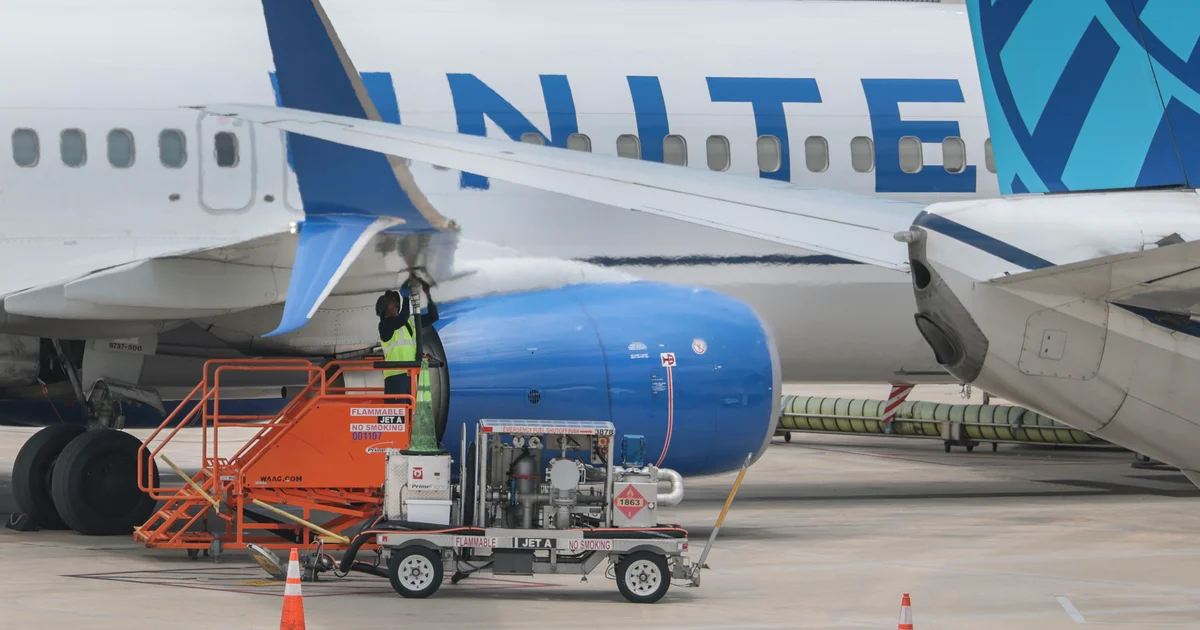

United Airlines warned Wednesday that its fuel bill is set to climb sharply this year, projecting roughly $6 billion in additional spending on jet fuel based on crude oil prices from Tuesday. Fuel remains one of the airline industry’s biggest expenses, second only to labor.
In its second-quarter earnings report, United said it had already absorbed an extra $2.3 billion in fuel costs during the quarter, an 84% jump from the same period last year. Strong travel demand and higher airfares have helped United and other carriers cushion part of the blow from elevated jet fuel prices.
Delta Air Lines delivered a similar message last week alongside its own second-quarter results, saying passenger demand remains resilient even after fare increases aimed at covering steeper fuel expenses. For now, the carrier doesn’t expect to cut ticket prices anytime soon.
“Airfares are a function of supply and demand. The demand set is really strong and the supply is in balance,” Delta CEO Ed Bastian told CNBC. During the same interview, Bastian said Delta’s customer base generally skews toward the higher-income side of the K-shaped economy.
Delta has also felt the strain from rising jet fuel prices. The airline reported $4.4 billion in fuel spending for the second quarter, up 77% compared with the year-earlier period.
Jet fuel prices surged to a record of nearly $5 per gallon in April amid the continuing war between the U.S. and Iran, according to the Argus U.S. Jet Fuel Index. As of Tuesday, the index showed the price had eased to $3.64 per gallon.
More major U.S. airlines are scheduled to release their earnings results later this month.
Beyond increasing fares, airlines have been looking for other ways to manage higher fuel costs, including temporarily trimming less efficient routes, adding fuel surcharges to ticket prices and, in some cases, raising checked baggage fees.
Faris Tanyos