
Dire warnings followed the Trump administration’s sharp reduction in USAID funding to parts of Africa. But rather than the economic collapse some predicted, several countries on the continent have posted striking gains, a trend supporters link to the Commercial Diplomacy Strategy launched at the start of President Trump’s second term.
Assistant Secretary for the Bureau of African Affairs Frank Garcia told INC News that Africa is now home to “nine of the 20 fastest-growing economies” in the world.
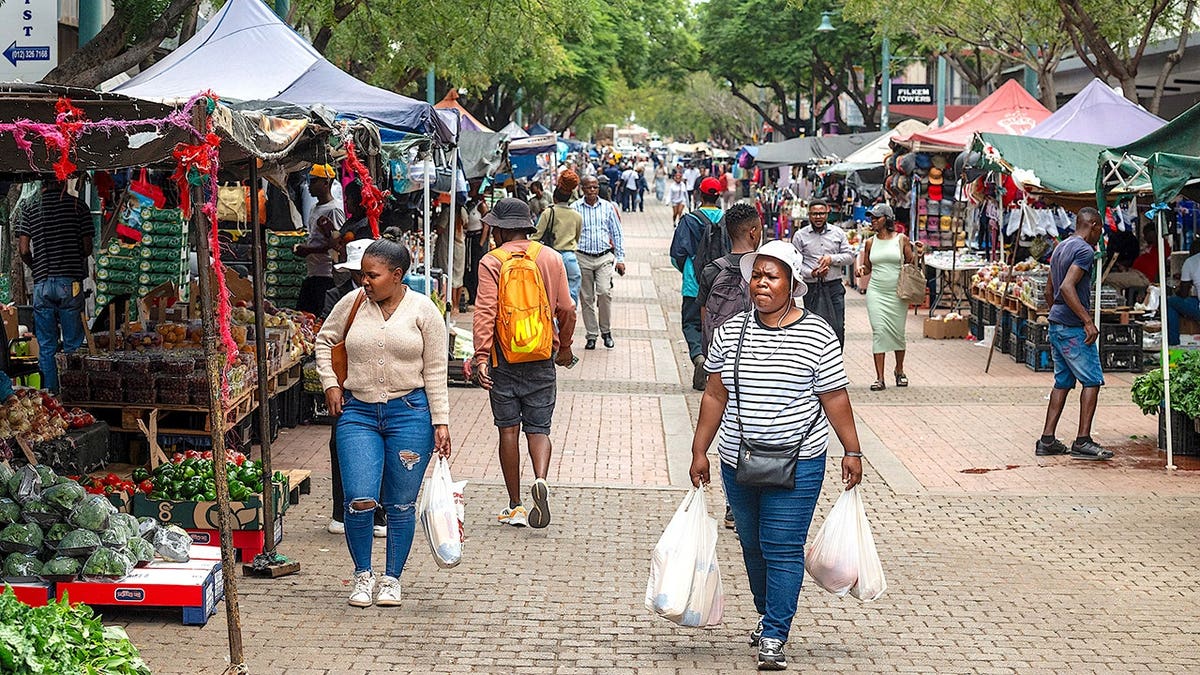
Shoppers in Pretoria’s Central Business District in South Africa. (Leon Sadiki/Bloomberg via Getty Images)
Garcia said the shift in U.S. policy from traditional aid toward trade has been met with momentum across African markets. In 2025, he noted, U.S. exports to sub-Saharan Africa climbed 23% to $22.6 billion, with growth continuing this year.
After the administration cut USAID by 83% early last year, many analysts warned of severe consequences for donor-dependent economies, including Ethiopia, South Sudan and Malawi. “The predictions were catastrophic,” Anna Mahjar-Barducci, project director at the Middle East Media Research Institute (MEMRI), told INC News. “Instead, something quite different happened.”
Mahjar-Barducci said Africa has shown far greater resilience than many expected, pointing to Ethiopia’s decision to raise its 2026 growth outlook despite the loss of funding. International Monetary Fund projections show sub-Saharan Africa expanding between 4.3% and 4.6% in 2026, ahead of Asia’s overall forecast of roughly 4.1%. The region’s growth is being driven by large-scale hydroelectric projects, construction, mining and rising coffee exports.

Oil refinery in the Ibeju Lekki district of Nigeria (Toyin Adedokun/AFP via Getty Images)
“This is no minor detail,” Mahjar-Barducci said, arguing that decades of assumptions about Africa’s dependence on foreign aid are being challenged. As assistance dries up, she said, much of the continent is not merely avoiding crisis but gaining speed. The development, she added, reinforces a long-running argument in African economic policy circles: aid is not always the answer, and in some cases may be part of the problem.
Assistant Secretary Garcia explained how the strategy works:” We see this economic acceleration in Africa. In order to best capitalize on it, the United States is focused on driving private investment, sustainable growth in terms of partnership and treating African nations not as aid recipients, but as capable commercial partners.”
He added “Our embassies (in Africa) work directly with the private sector to identify the policies, laws, and regulations constraining U.S. trade and investment. We then work with partner governments to develop practical reforms, identify the officials responsible for implementing them and determine where technical assistance may support implementation.”
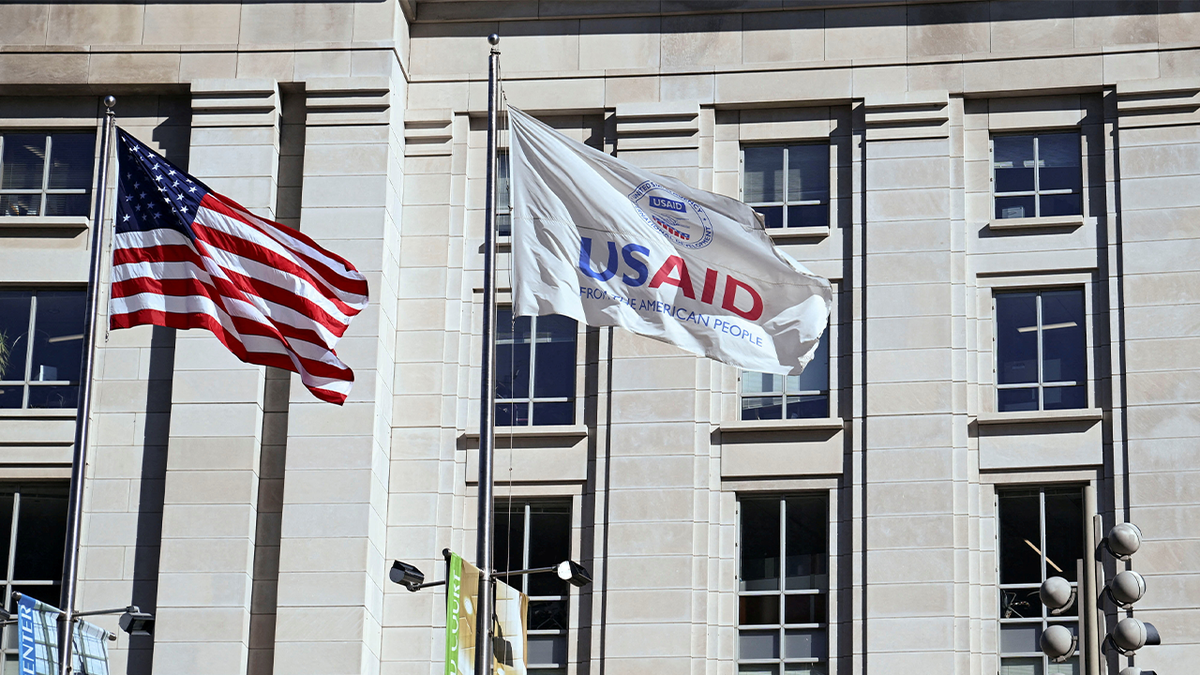
An American flag and USAID flag fly outside the USAID building in Washington, D.C., U.S., February 1, 2025. (REUTERS/Annabelle Gordon)
It’s a strategy that appears to be working, with Garcia adding, “The Bureau of African Affairs has worked on 37 commercial transactions that have closed since the beginning of the (current) Trump Administration, representing $25.67 billion in total value, with more still being reported. Embassies across the continent are actively working to close hundreds more. Top sectors include Energy 24%, ICT 19%, Critical Minerals and Mining 11%, Aerospace 8%, Agriculture 8%, Infrastructure 8%.”
Mahjar-Barducci criticized the way USAID worked, telling INC News,” When aid flows to governments rather than markets, it tends to finance projects designed in Brussels, Rome, or Washington which are not responding to the actual needs of local economies. Poverty cannot be overcome by treating people as permanent recipients of charity. Poverty can be reduced by recognizing people as entrepreneurs, workers and economic partners capable of building their own prosperity.”
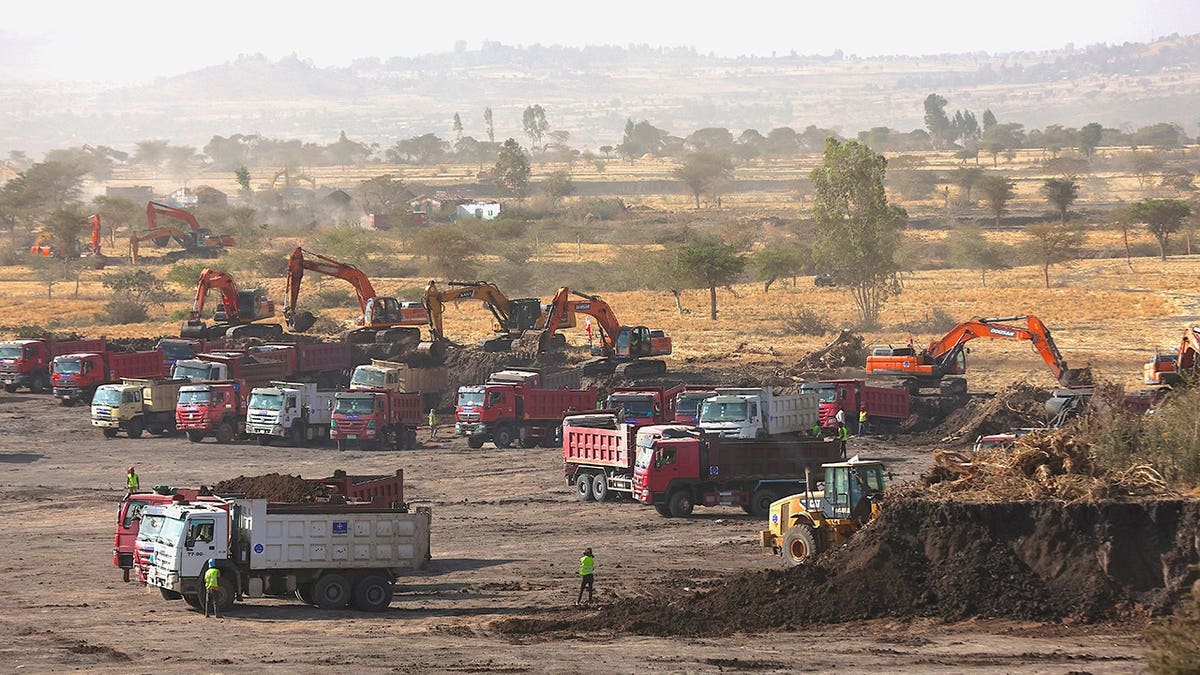
The Bishoftu International Airport in Ethiopia is expected to become Africa’s largest aviation hub upon completion. (Geng Xinning/Xinhua via Getty Images)
Trade, rather than aid works, Mahjar-Barducci claimed. “The Trump administration’s more transactional approach to aid — access to critical minerals, or to citizens’ health data, in exchange for funding — should not be dismissed as merely cynical. Unconditional transfers have long been the deeper flaw in the traditional aid model: money with no strings attached removes any incentive for a recipient government to reform and often entrenches the same officials responsible for the underlying poverty.”
Enter the America First Global Health Strategy. A senior State Department official told INC News this week that the administration “has signed 34 bilateral global health Memoranda of Understanding(MOU) representing more than $24 billion in new health funding, including more than $14.3 billion in U.S. assistance, alongside more than $9.6 billion in co-investment from recipient countries.”
“24 of these MOUs were signed with sub-Saharan African countries,” the official continued. “These new bilateral MOUs are designed to continue life-saving care, build resilient healthcare systems, reduce dependency on American taxpayers and strengthen country ownership.”
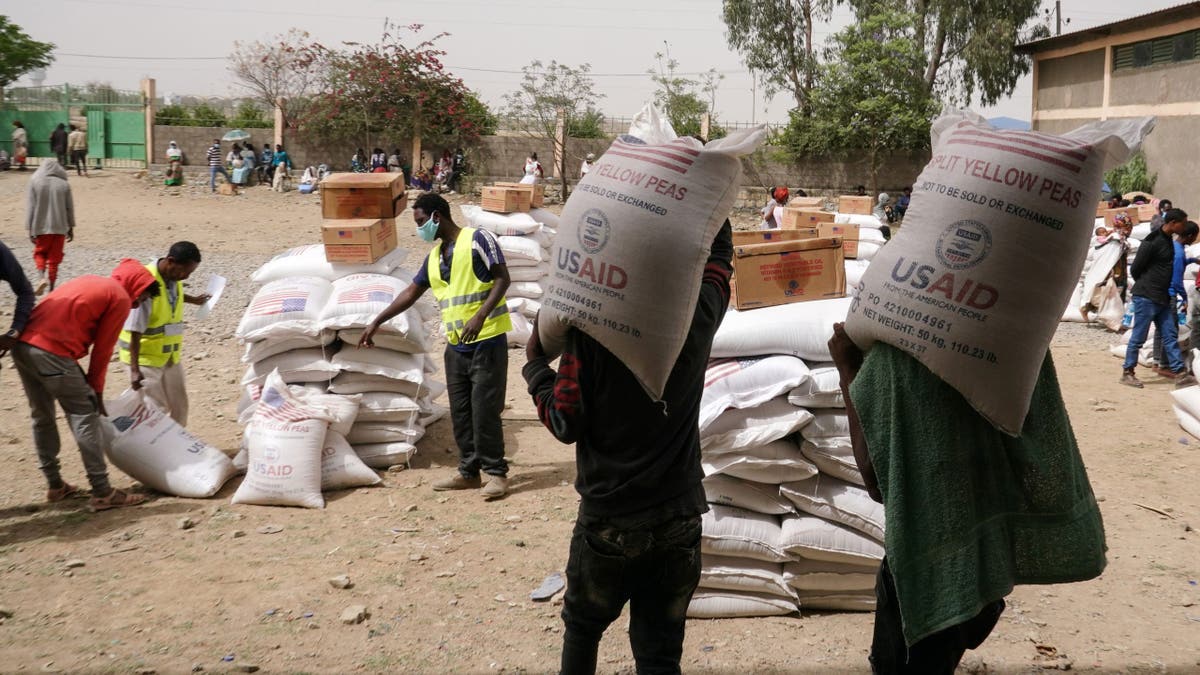
MEKELE, ETHIOPIA – JUNE 16: Aid workers move bags of yellow lentils that are part of athree-piece “Full Package” to be distributed to residents of Geha subcity at an aid operation run by USAID, Catholic Relief Services and the Relief Society of Tigray on June 16, 2021 in Mekele, Ethiopia. (emal Countess/Getty Images)
The administration has also decided to cut funding for a U.S. anti-AIDS program known as PEPFAR. Africa has been hit hard by the HIV/AIDS pandemic. UNAIDS, the United Nations program that deals with the virus, reports that South Africa has the highest infection rate in the world.
But the State Department official INC News spoke with says South Africa must take some of the blame for cutting help to its own people. “The United States has decided to initiate a phased drawdown of PEPFAR programming in South Africa, following South Africa’s failure to make demonstrable progress on policy requests by the administration. The United States communicated to [the] South African government multiple times at many levels that PEPFAR funding would be terminated if they failed to address President Trump’s concerns.”
“PEPFAR was never intended to be permanent,” the official added. “Its success is measured by countries’ ability to sustain and build upon these gains. South Africa is a middle-income country and is more than capable of supporting its own health programs.”
INC News reached out to the South African government, but received no response.