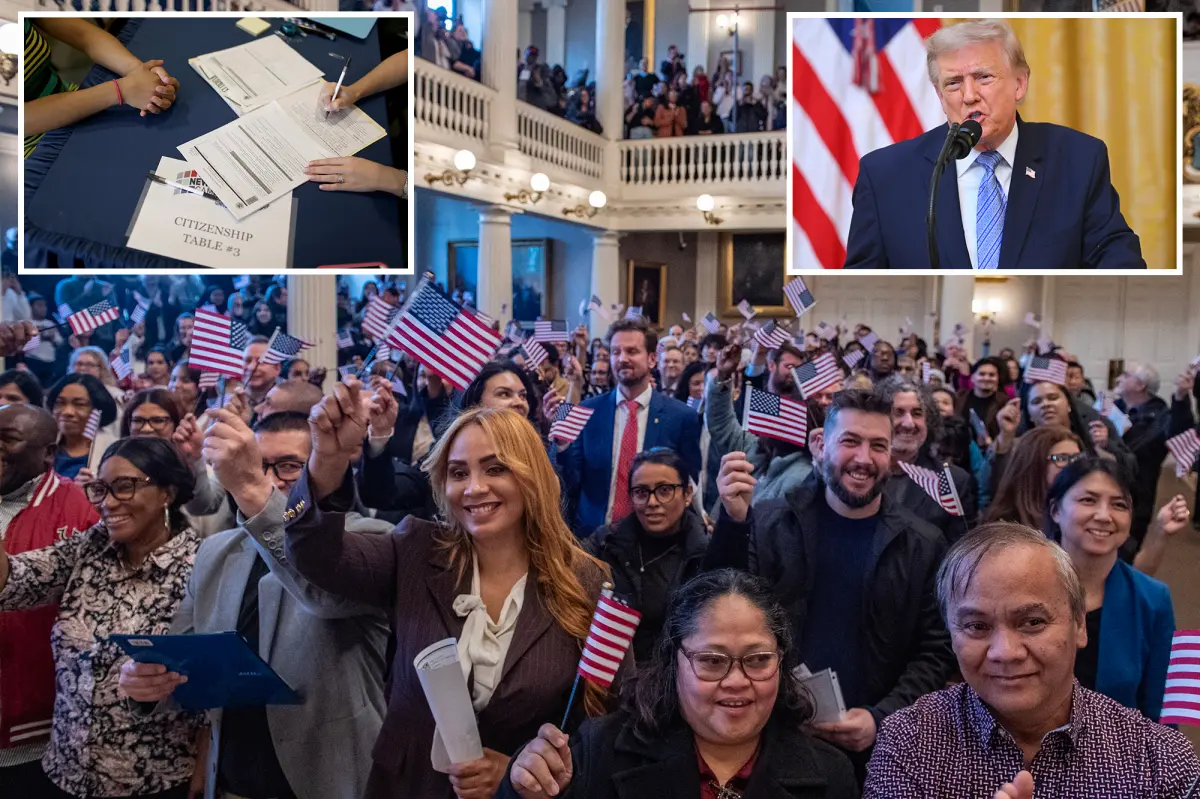

The State Department is weighing a new requirement that could force certain green card applicants to put up significant sums of money, marking the Trump administration’s latest effort to prove that immigrants coming to the United States can support themselves financially.
According to a Thursday report from the Wall Street Journal, some officials have discussed requiring applicants seeking lawful permanent residency through U.S. consulates abroad to post a bond of as much as $100,000.
Other officials have suggested the amount may not be fixed and could instead vary based on the circumstances of each applicant’s case.
Those who receive green cards would likely get the money back once they become U.S. citizens, a pathway that generally takes a minimum of five years.
“President Trump has made clear that those who wish to immigrate to the United States must be financially self-sufficient,” State Department spokesman Tommy Pigott told the Journal. He confirmed that the administration is reviewing options under existing law to impose such a bond, which could also be paid by relatives of the applicant.
News of the proposal came just hours after the Trump administration brought back the so-called “public charge” rule, a policy that can be used to deny green cards to immigrants who rely on government assistance programs including food stamps, Medicaid and housing vouchers.
The rule requires green card applicants to demonstrate that they are not likely to become a burden on taxpayers, a category known in immigration law as a “public charge.”
“We are reaffirming the requirement of self-reliance, protecting public resources, and ending policies that encouraged dependency on hard-working American taxpayers,” the Department of Homeland Security wrote Thursday morning in a post on X.
The public charge rule was first implemented in February 2020, during Trump’s first term, but was scrapped by former President Joe Biden.