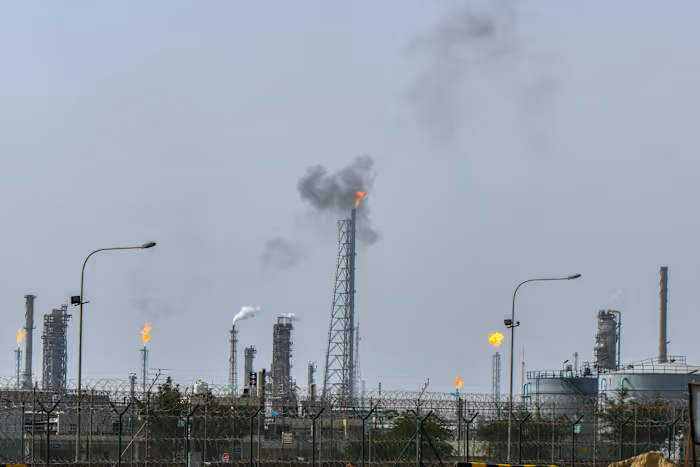


Iranian strikes on Friday hit a Kuwaiti power and water desalination plant, damaging one of the country’s most important sources of drinking water in the small, arid Gulf state.
The attack is the latest blow to critical infrastructure across the Middle East, underscoring the severe vulnerabilities facing one of the driest regions on Earth. Much of the Gulf depends almost entirely on advanced technology to produce the freshwater that keeps cities, hotels, industry and limited agriculture running.
Kuwaiti officials said the strikes damaged a large number of power generation units and triggered a fire. Authorities said the blaze was brought under control and emergency contingency plans were put into effect.
Desalination is central to daily life in Kuwait, where about 90% of drinking water comes from the process. The figure is roughly 86% in Oman and about 70% in Saudi Arabia. Desalination removes salt from seawater, most often by forcing it through ultra-fine membranes in a method known as reverse osmosis.
Hundreds of desalination plants line the Persian Gulf coast, placing water systems that serve millions of people within reach of Iranian missiles or drone attacks. Without those facilities, many of the region’s major cities would be unable to support their current populations.
Outside the Middle East, much of the focus on the Iran war has centered on energy prices. Fighting and attacks on vessels in the Strait of Hormuz have rattled global markets and driven oil prices to record highs.
Yet the systems that keep Gulf cities supplied with safe drinking water are just as exposed.
In recent months, Iran has launched strikes near several desalination plants in the Gulf. Kuwait had previously reported damage at the Doha West desalination plant early in the war, caused either by debris from intercepted drones or by attacks targeting the nearby port.
Iran accused the U.S. of striking Iranian desalination plants on Qeshm Island on March 8, cutting off water supplies for 30 villages, though Washington did not acknowledged the strike.
Yemen’s Houthi rebels have also targeted Saudi desalination facilities amid regional tensions in the past.
Many Gulf desalination plants are physically integrated with power stations as co‑generation facilities, meaning attacks on electrical infrastructure could also hinder water production. Desalination plants have multiple stages — intake systems, treatment facilities, energy supplies — and damage to any part of that chain can interrupt production.
Gulf governments and U.S. officials have long recognized the risks these systems pose for regional stability: if major desalination plants were knocked offline, some cities could lose most of their drinking water within days.
A 2010 CIA analysis warned attacks on desalination facilities could trigger national crises in several Gulf states, and prolonged outages could last months if critical equipment were destroyed.
More than 90% of the Gulf’s desalinated water comes from just 56 plants, the report stated, and “each of these critical plants is extremely vulnerable to sabotage or military action.”
The desalination plants are also vulnerable to climate change, including storm surges and extreme rainfall that can overwhelm infrastructure, as warming oceans increase the likelihood and intensity of cyclones in the Arabian Sea. __
Associated Press writer Melanie Lidman contributed from Tel Aviv, Israel.


