
A confidential assessment prepared for Iran’s presidency is prompting a high-stakes question in Washington and allied capitals: Has public fury inside the country reached a point where the Islamic Republic should be viewed as more exposed to regime-changing pressure than previously assumed?
The classified report, titled “What Iran Wants,” reportedly concluded that just 9% of respondents wanted the current system to remain as it is. By contrast, 53% backed fundamental or structural reforms, while more than 19% supported replacing the political system altogether.
Combined, the figures suggest that almost three in four people surveyed favored either sweeping reform or a complete change in the existing order — a finding that could bolster claims that Iran’s crisis is no longer limited to frustration with specific officials or policies.
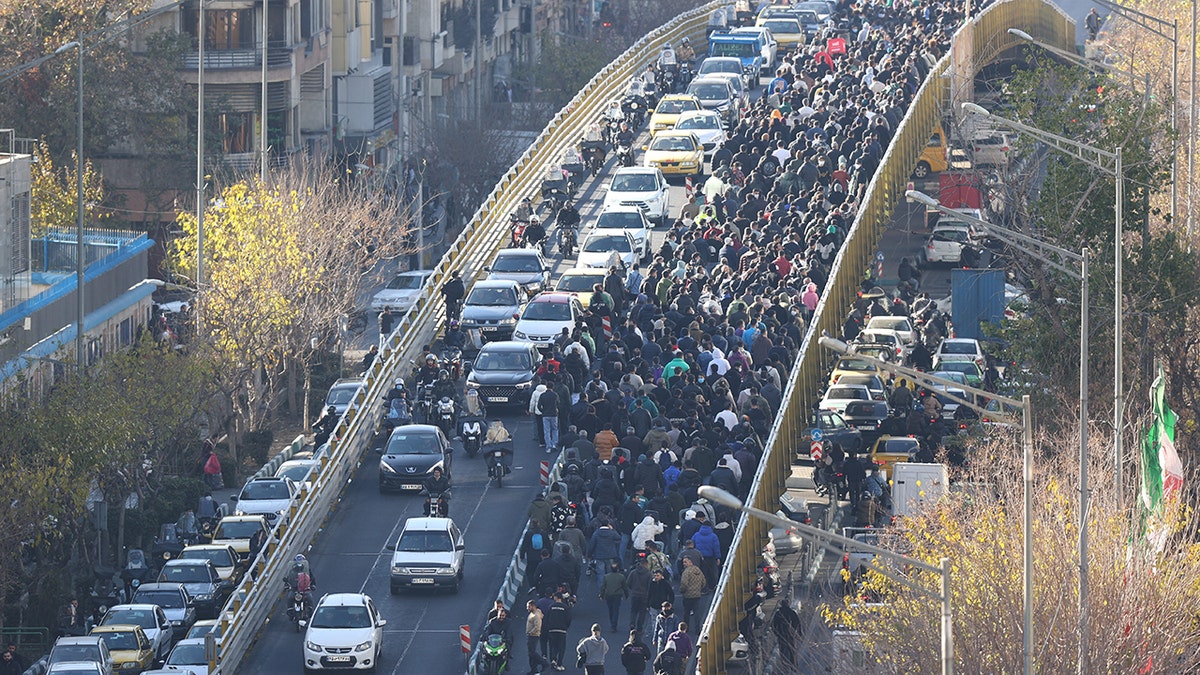
Protesters march in downtown Tehran, Iran, Monday, Dec. 29, 2025. (Fars News Agency via AP)
IranWire said on July 13 that it had obtained the document, which was prepared by Ali Rabiei, social adviser to President Masoud Pezeshkian and a former government spokesman. According to the outlet, the findings were drawn from polling carried out by the Ara Opinion Research Center in May 2026 and distributed in June among institutions within Iran’s ruling establishment.
Miad Maleki, a senior fellow at the Foundation for Defense of Democracies, told INC News the report should force policymakers to take a new look at the possibility of major political unrest in Iran.
“If anything, this research understates the depth of Iranians’ rage,” Maleki said. “And that is what makes it remarkable: even a survey prepared for the regime’s own president, by its own pollsters, records anger levels above 63%, well beyond the highest rate Gallup has ever recorded anywhere in the world, alongside 81% struggling to put food on the table and a majority expressing hopelessness.”
Maleki also warned that polling conducted in an authoritarian state should not be read as exact, since respondents may be reluctant to voice opposition out of fear of repercussions.
“In a police state where expressing the wrong opinion can cost you your job, your freedom, or your life, respondents self-censor, which means these findings are best read as a floor, not a ceiling,” he said.
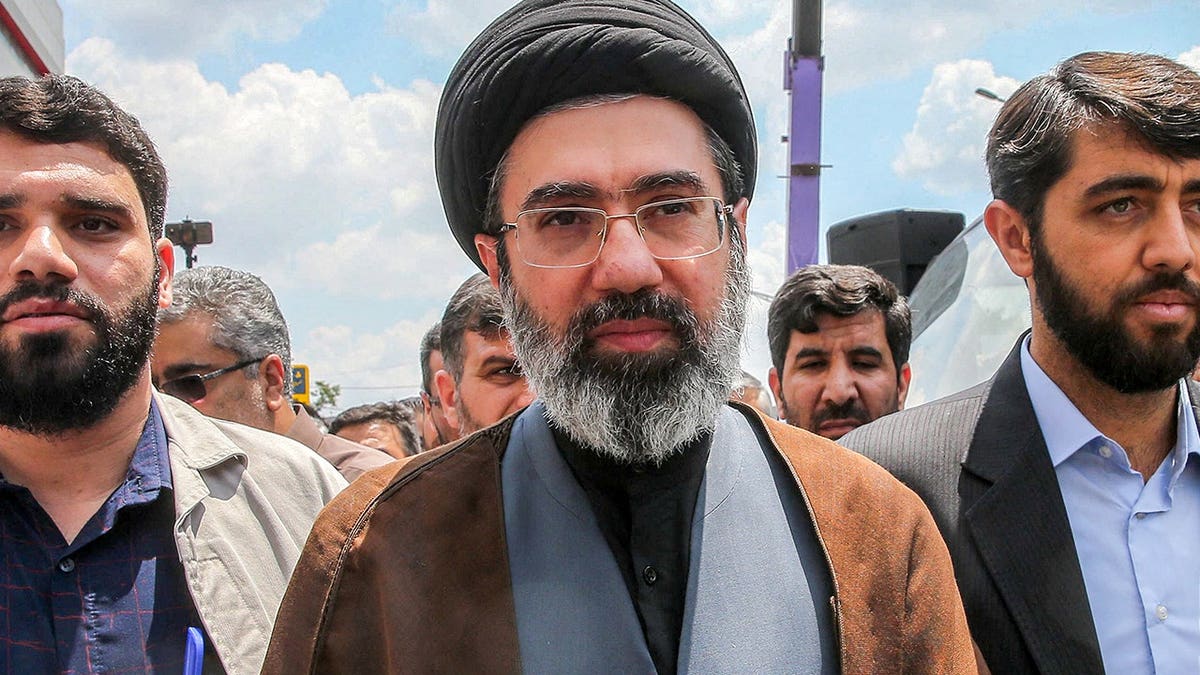
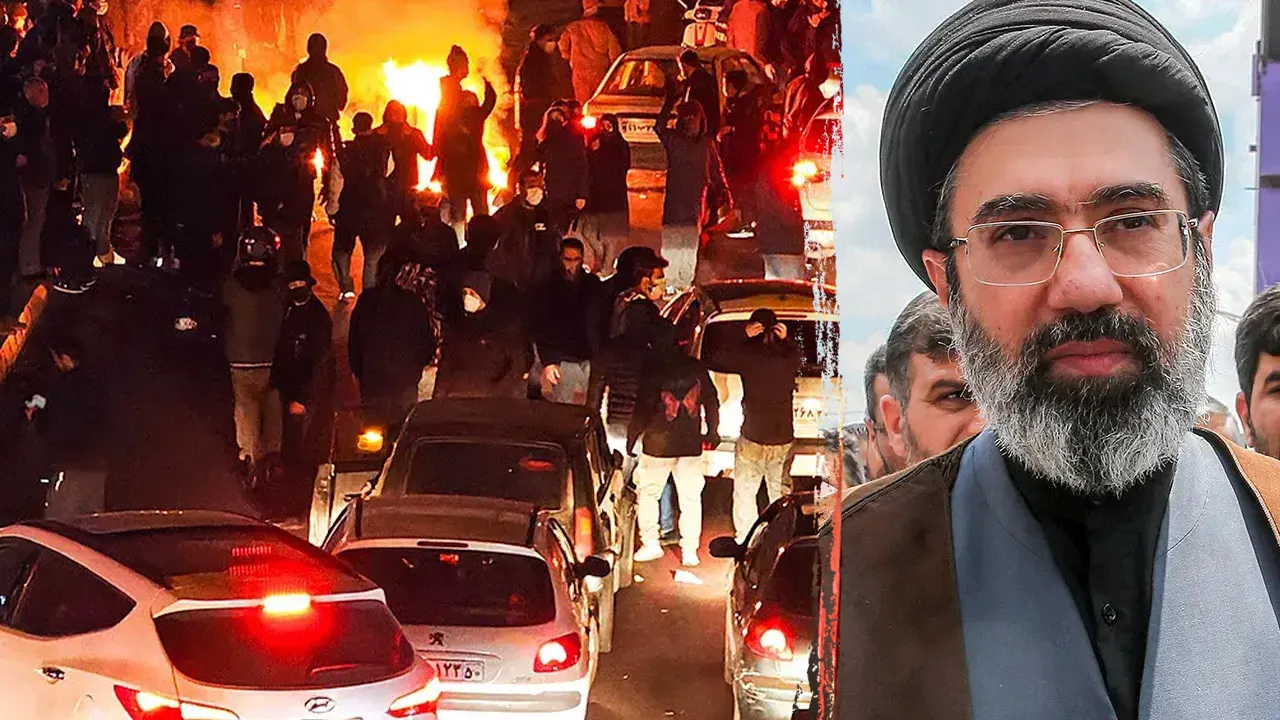
In this picture obtained from Iran’s ISNA news agency, Mojtaba Khamenei (C), son of Iran’s supreme leader Ayatollah Ali Khamenei, walks along a street in Tehran on May 31, 2019. (Hamid FOROUTAN / ISNA / AFP via Getty Images)
The complete survey methodology was not included in the material obtained by IranWire. The report reportedly did not disclose how respondents were selected, who was questioned or whether the sample reflected Iran’s geographic and demographic makeup.
Its findings therefore cannot be independently verified or treated as definitive measurements of Iranian opinion. The report also cannot establish that dissatisfaction will translate into an organized movement capable of removing the government.
Still, its findings portray multiple pressures converging at once.
Approximately 64% of respondents reported persistent anger, up roughly 12% points from a previous government survey conducted in December 2025. Half reported hopelessness, approximately 48% reported sadness or depression and about 45% reported persistent fear or anxiety, according to IranWire.
Economic distress also appears central to the public anger.
More than 81% experienced severe or partial difficulty obtaining enough food, while 75% struggled to cover medical costs, IranWire reported. Fifty-four percent said their income did not cover current household expenses, and only 8% reported earning enough to save.
Respondents blamed domestic governance more frequently than international pressure. 46.9% cited government inefficiency as the cause of Iran’s economic problems, 26.3% blamed corruption and 20.7% cited foreign sanctions.
RELATED: Taylor Swift Turns Heads With Ring at Friend’s Wedding
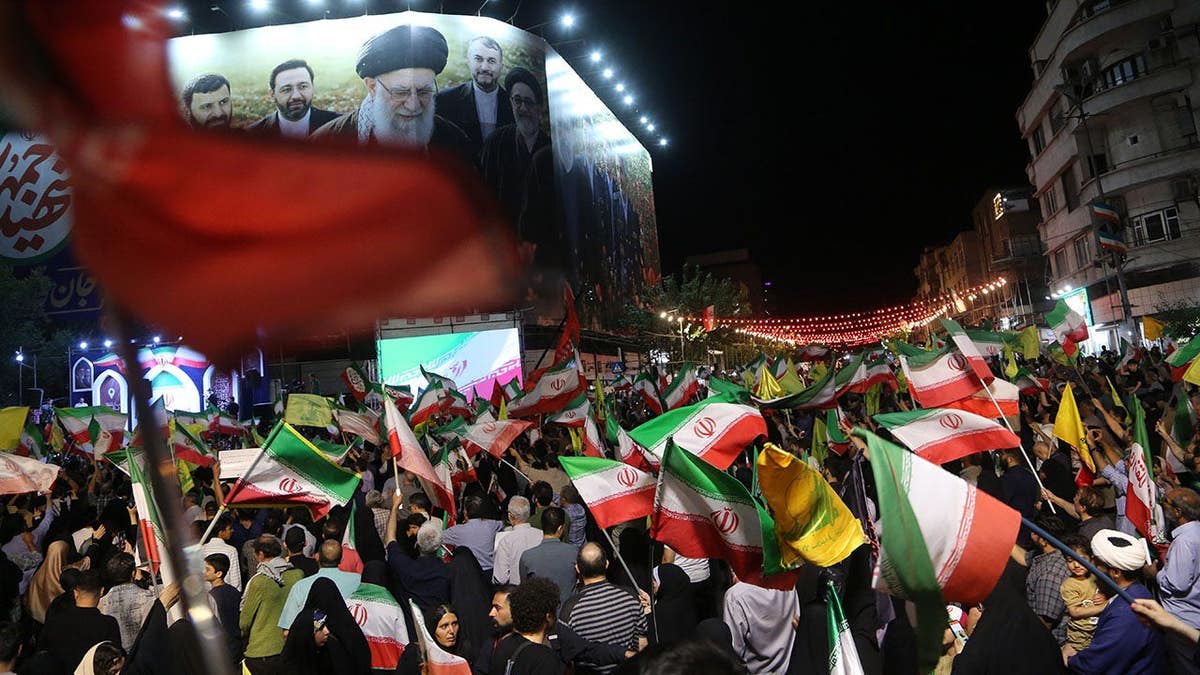
Thousands gathered at Revolution Square in Tehran on May 30, 2026, to protest attacks by the US and Israel on Iran, carrying Iranian flags and posters of the late Supreme Leader Ali Khamenei. (Fatemeh Bahrami/Anadolu)
That finding could be especially significant to the regime-change debate because it suggests many Iranians do not primarily blame outside powers for their deteriorating living conditions.
The document also points to a crisis of institutional confidence. Roughly 60% reportedly distrusted major government institutions, while 61.2% negatively assessed officials’ ability to solve Iran’s problems. Distrust of the government, parliament, judiciary and state television remained above 50%, IranWire reported.
The report’s recommendations, however, reportedly centered on managing dissatisfaction rather than addressing demands for systemic change.
Rabiei urged state institutions to better explain the impact of sanctions, moderate the rhetoric used by officials and religious platforms, present a more inclusive image through state television and avoid policies that place the government in direct confrontation with society.
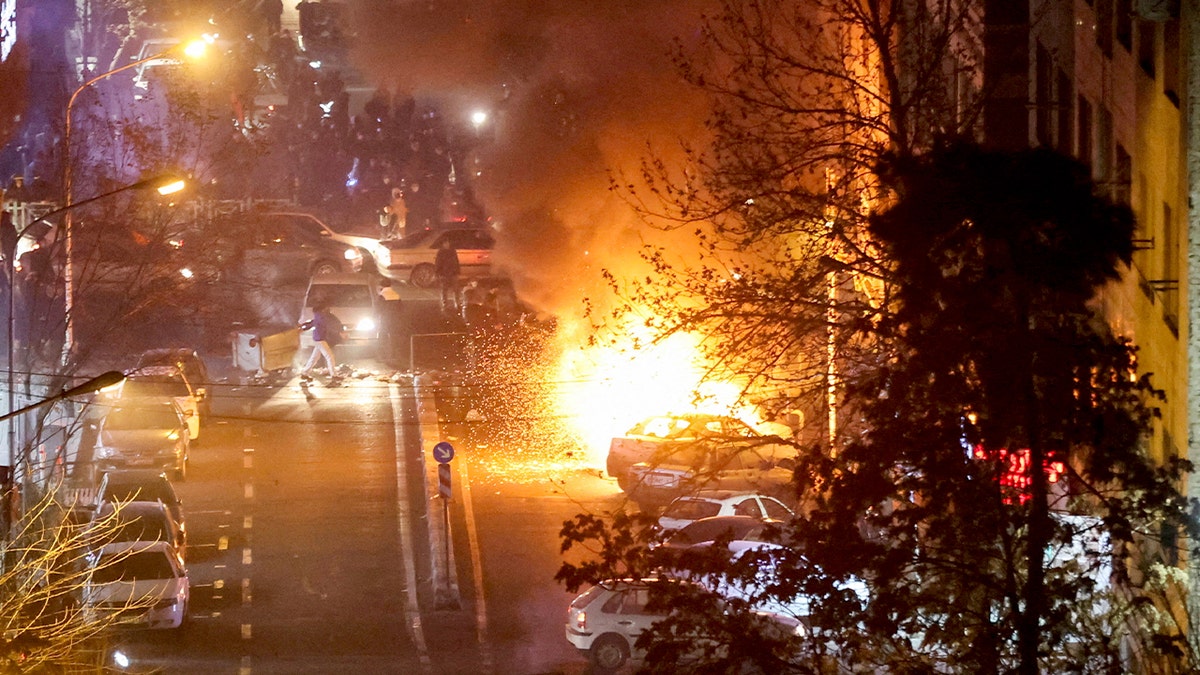
Cars burn in a street during a protest over the collapse of the currency’s value in Tehran, Iran, Jan. 8, 2026. (Stringer/WANA (West Asia News Agency) via REUTERS)
IranWire’s follow-up analysis argued that the recommendations treated Iran’s crisis primarily as a communications and public-perception problem. The report offered few concrete proposals involving institutional accountability, political liberalization or fundamental economic reform, according to the outlet.
Maleki said the findings were consistent with the expanding scale of unrest, citing demonstrations that spread from more than 80 cities in 2017 to more than 200 cities across all 31 provinces this year, alongside what he described as a quadrupling of strikes.
“Iranians have moved from being skeptical of what another revolution might bring to concluding there is no alternative to one, because reform has proven impossible,” Maleki said.
Yet the report does not resolve one of the largest obstacles to regime change: The Islamic Republic has spent decades building institutions designed to monitor, deter and violently suppress organized opposition.
“This regime was born of revolution, by revolutionaries,” Maleki said. “Preventing and crushing the next one is the one thing they genuinely know how to do.”
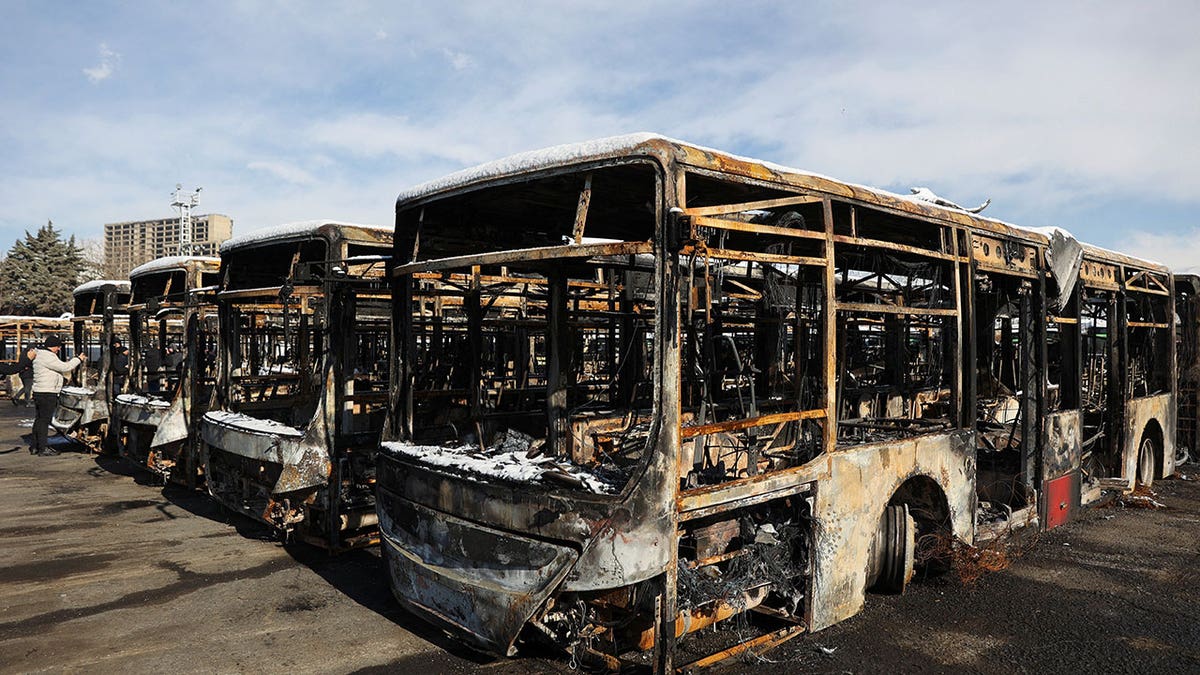
Buses that were burned during Iran’s protests, in Tehran, Iran, Jan. 21, 2026. (Majid Asgaripour/WANA (West Asia News Agency) via Reuters)
He nevertheless argued that further unrest was inevitable.
“So the discontent will translate into renewed protest,” Maleki said. “The question is not if, but when, and whether anyone is prepared to stand with the Iranian people when it does.”