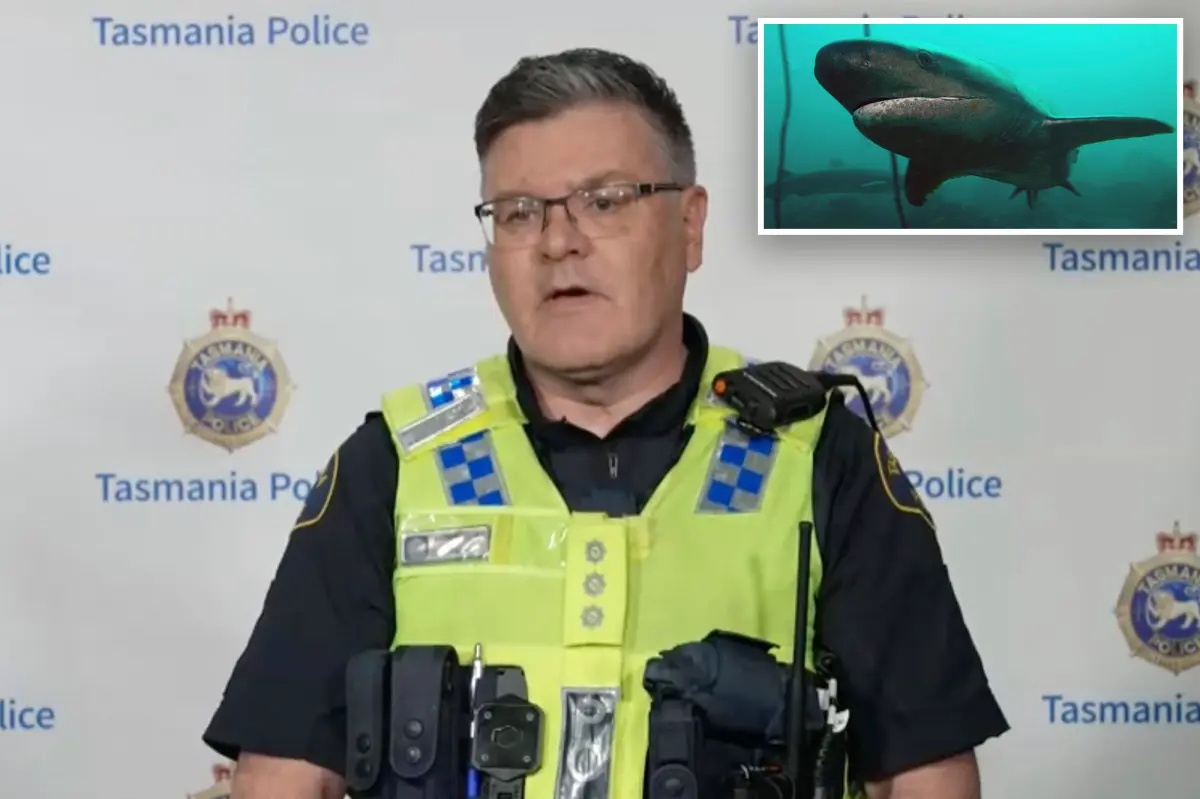

A deep-sea diver is recovering after narrowly surviving a shark bite off Australia’s coast over the weekend.
The 31-year-old man was bitten on the forearm shortly after 9 a.m. Saturday by a shark more than 6-and-a-half feet long off Tasmania, the Australian Broadcasting Corporation reported.
Tasmanian authorities said the man was diving with two others about 165 feet from the shore of Adventure Bay, at a depth of roughly 26 feet, when he was attacked by what officials believe was a broadnose sevengill shark.
The unidentified diver was helped back to shore by his fellow divers before being flown to Royal Hobart Hospital with injuries that were not considered life-threatening, Tasmania Police Inspector Darren Latham said.
Police said the diver remains in stable condition.
A beachgoer who was present as paramedics treated the man said the diver had been spearfishing when the incident occurred.
“The guy who was bitten had speared a fish and had been bitten by the shark while retrieving the fish on the spear,” said the witness, who asked not to be identified.
RELATED: How Facebook Co-Founder Dustin Moskovitz’s Activist Funding Is Shaping Breakfast Prices
“It was a pretty good bite without being anything too serious…just a good, dog-sized bite, maybe the top of his arm,” the witness added.
The broadnose sevengill shark, which was believed to be nearly 7-feet in length, is a “major predator of shark species,” according to Fishing Tasmania.
The shark species can reach nearly 10 feet in length and have seven gill slits instead of the usual five found on most other kinds of sharks, per the Shark Research Institute.
They are typically found swimming at depths of up to 150 feet and are classified as dangerous in Australia.
Shark attacks in the southern state of Australia are rare — with only 15 being recorded throughout history, six of which were fatal.
“Sevengill sharks are often encountered by Tasmanian divers, usually without incident,” shark researcher Chris Black told the outlet.
“They are curious animals and will often investigate divers by slowly circling them,” he said.
According to Black, broadnose sevengill sharks are “generally regarded as harmless, but will come belligerent in situations where there is feed in the water or where there is a stimulus, such as fish blood, in the water.”
Since the attack on Saturday, police say there have been no further sightings of the shark.