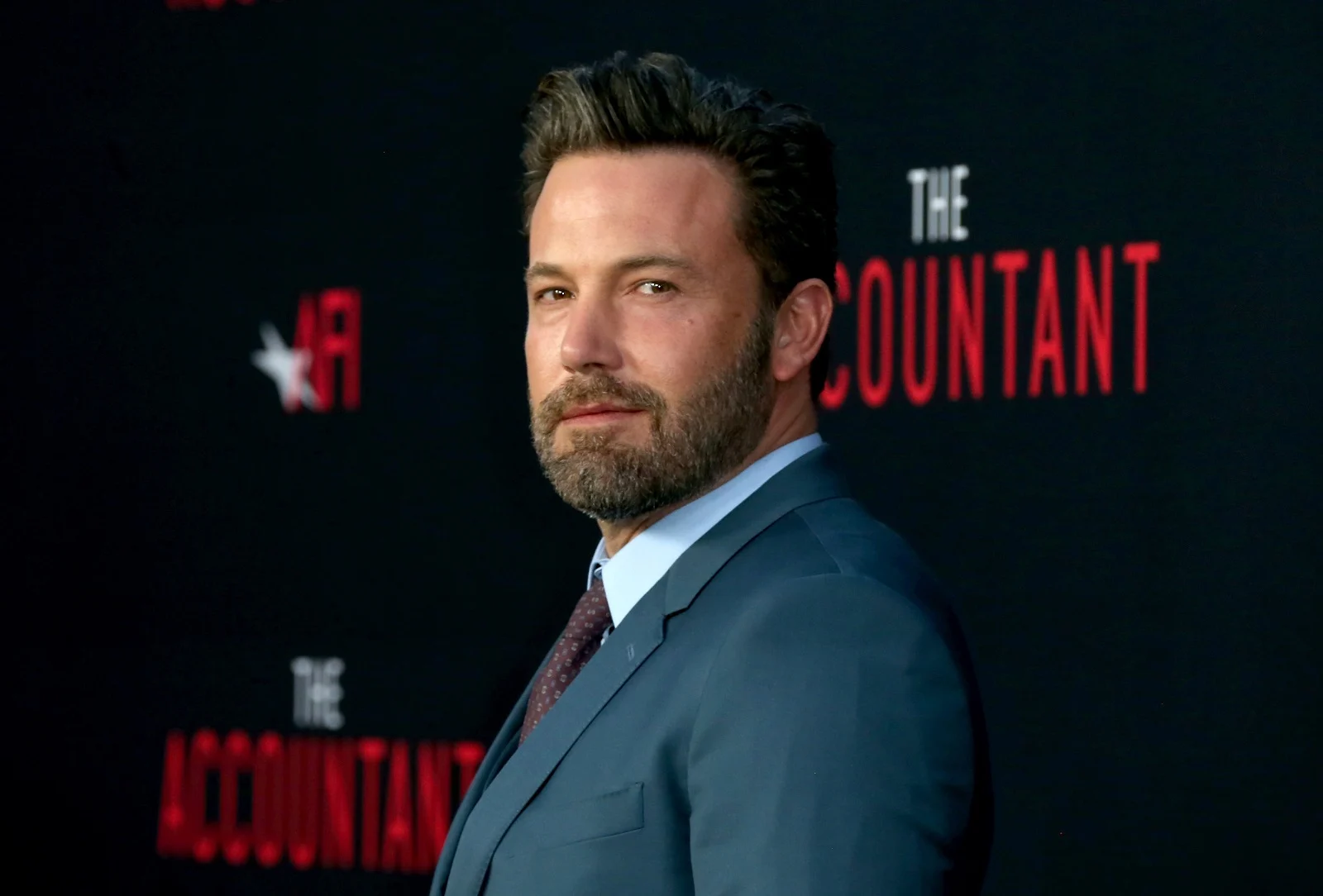
In March, Hollywood and the tech world were caught off guard by an unexpected twist: Netflix had acquired an artificial intelligence company founded by none other than Ben Affleck.
Few people seemed to know that Affleck had any role in an AI startup, much less one sophisticated enough to draw interest from the world’s biggest streaming platform. The surprise deepened when it emerged that the company, InterPositive, had actually been launched by Affleck back in 2022.
That was four years earlier.
Somehow, InterPositive had managed to stay almost entirely under the radar during one of the most intensely scrutinized periods in artificial intelligence. Even insiders who closely follow AI startups appeared to know little, if anything, about the company before Netflix made the acquisition public.
Industry reports noted that several people who routinely work with artificial intelligence startups said they had never heard of InterPositive. The company’s LinkedIn page was reportedly created only after the Netflix deal was announced, its digital presence was nearly invisible, and just a small number of employees were publicly connected to the business.
But the central question quickly became the most intriguing one: How much did Netflix pay for Ben Affleck’s secretive AI company?
SEC Filing Reveals Payday
Netflix offered a clue in the “Acquisitions” section of its quarterly report, where it included this line:
“In March 2026, the Company completed an acquisition which was accounted for as a business combination for a total purchase price of approximately $587 million, consisting of cash consideration.“

That’s it. Netflix does not identify the acquired company. The filing does not mention Ben Affleck, InterPositive, artificial intelligence, or filmmaking. It simply reveals that Netflix completed an unnamed acquisition in March for approximately $587 million in cash.
Did Ben Affleck Personally Make $587 Million?
No. Netflix paid $587 million for the company, not directly to Ben Affleck alone.
InterPositive had outside financial backing, including support from RedBird Capital Partners, the investment firm that also helped finance Affleck and Matt Damon’s production company, Artists Equity. Other investors and employees may also have owned equity.
When we first covered the acquisition, we estimated that Affleck may have owned somewhere between 30% and 50% of InterPositive. That was only a rough approximation based on his role as founder and RedBird’s financial backing, not a confirmed ownership figure.
Using the newly disclosed $587 million purchase price, those hypothetical stakes would be worth:
- 30% stake would translate to approximately $176 million before taxes and fees
- 40% stake would be worth around $235 million
- 50% stake would be worth approximately $294 million
Using a mid-range, 40% equity range, we estimate that Ben Affleck’s net worth has roughly doubled to $300 million. That makes him almost exactly twice as rich as good buddy Matt Damon’s $170 million net worth. At $300 million, he’s $100 million shy of Jennifer Lopez’s net worth. He now tops Jennifer Garner’s net worth by around $220 million. And that’s even after her food company, Once Upon a Farm, went public recently and currently sports a $760 million market cap… because she actually has a surprisingly small equity stake.
Why Does Interpositive Do?
InterPositive is not an AI system designed to produce entire movies from a written prompt. Affleck has repeatedly emphasized that he does not believe artificial intelligence can replace the human creativity involved in writing, acting, or directing.
Instead, InterPositive developed tools for the post-production process.
Affleck and his team created a proprietary dataset by shooting footage on a closed soundstage. That material was used to train an AI model to understand visual logic, editorial continuity, and cinematic consistency.
A filmmaker can then feed the system footage from a specific production, allowing InterPositive to build a customized model based only on that project’s characters, sets, lighting, and visual style. Editors and visual-effects artists can use the tools to relight shots, replace backgrounds, correct continuity problems, remove unwanted objects, and potentially create missing shots without starting from scratch.
Think of it as an extremely sophisticated post-production assistant, not an AI director.
That distinction is important in Hollywood, where writers, actors, and visual-effects workers have raised serious concerns about studios using AI to replace jobs or train systems on copyrighted work without permission. InterPositive’s technology is positioned as a creator-controlled tool trained on footage that a production owns and authorizes.
Why Netflix Was Willing To Pay So Much
A $587 million price tag may seem insane for a mysterious 16-person startup with almost no public history. But Netflix is not valuing InterPositive based on its number of employees, its social media presence, or its current revenue.
Netflix is betting on how much the technology could save across hundreds of productions.
The streaming company spends tens of billions of dollars every year acquiring and producing content. Post-production, visual effects, reshoots, and corrections can add millions of dollars to an individual project’s budget. If InterPositive can reduce those expenses across Netflix’s global production operation, the potential savings could be enormous.
Netflix co-CEO Ted Sarandos has said that approximately 300 Netflix productions have already used artificial intelligence somewhere in the creative process, with the largest concentration occurring in post-production.
Sarandos cited the Tom Hanks-backed documentary “The American Experiment,” which reportedly included 17 minutes of AI-enhanced footage. According to Sarandos, those sequences were completed twice as quickly and at half the cost of the traditional alternatives.
If InterPositive can consistently produce those kinds of results, Netflix could theoretically recover its $587 million investment through years of lower production costs.
(function() {
var _fbq = window._fbq || (window._fbq = []);
if (!_fbq.loaded) {
var fbds = document.createElement(‘script’);
fbds.async = true;
fbds.src = ”
var s = document.getElementsByTagName(‘script’)[0];
s.parentNode.insertBefore(fbds, s);
_fbq.loaded = true;
}
_fbq.push([‘addPixelId’, ‘1471602713096627’]);
})();
window._fbq = window._fbq || [];
window._fbq.push([‘track’, ‘PixelInitialized’, {}]);