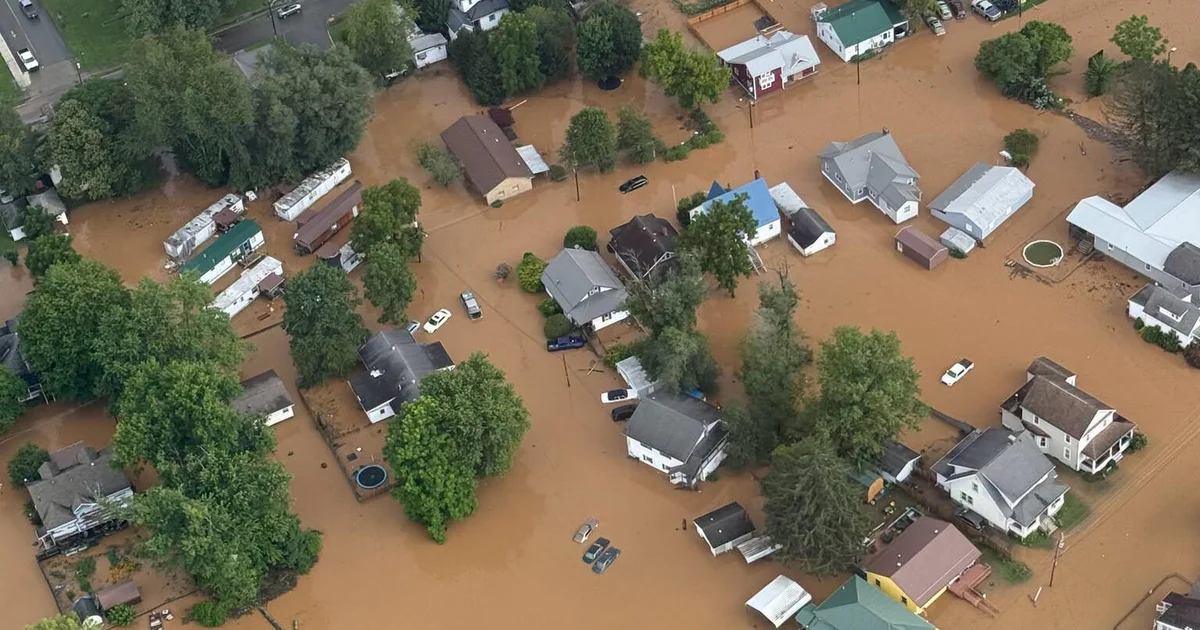

Relentless downpours triggered fast-moving flash floods across West Virginia, swamping homes and businesses, destroying bridges and prompting dozens of emergency water rescues. As search efforts continued Wednesday, Gov. Patrick Morrisey said some residents remained unaccounted for.
Morrisey deployed 500 National Guard members to the hardest-hit communities in northern West Virginia and, late Tuesday, declared a state of emergency covering all 55 counties. Officials said more than 100 people had to be pulled from floodwaters, while concerns grew that others could still be missing. Nineteen National Guard and state police helicopters were either conducting rescue operations or positioned to respond if called upon.
By Wednesday, three emergency shelters had opened and were housing more than 100 residents in total, the governor said during a news conference.
Meteorologists reported that some areas received as much as 7 inches of rain. Morrisey said certain locations were hit with 4.5 inches in just 37 minutes. “There’s no place for the water to go,” he said.
Office of West Virginia Gov. Patrick Morrisey via AP
When asked whether people were still unaccounted for, Morrisey said, “We don’t have an exact number but we are concerned about fatalities,” adding that officials would release details “as soon as we have more information.”
“This is a time for West Virginians to come together to do everything possible, not only to pray for all those who are affected, but we’re going to need a lot of help in the days and weeks ahead,” Morrisey said. “Let’s help these communities rebuild.”
Lars Dalseide, the governor’s communications director, said in an email Wednesday night that “any specific information related to the flooding will only be released after established procedures are followed and the relevant facts are verified to ensure accuracy.”
Alexis Wood via AP
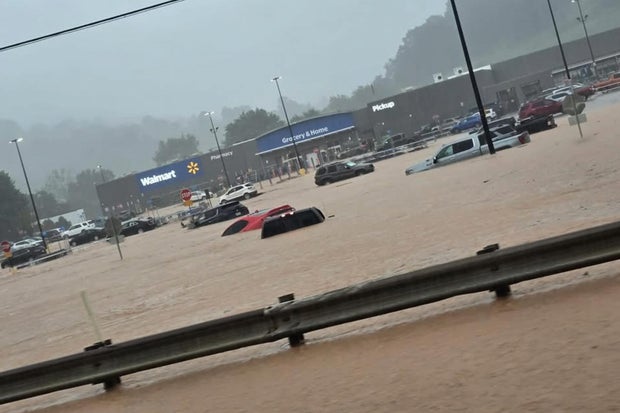
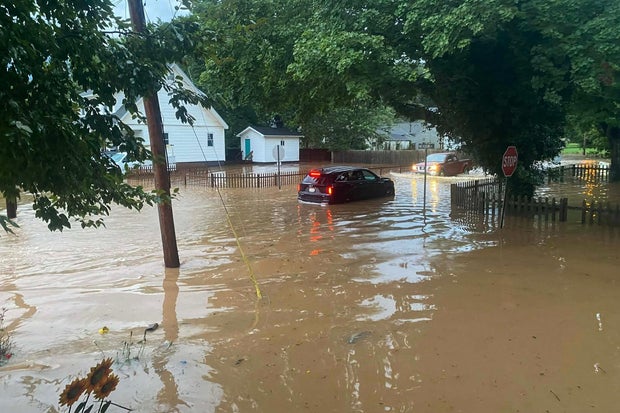
Images and videos shared on social media showed the scale of the West Virginia flooding, with vehicles submerged in parking lots, including outside a Walmart in Weston where muddy water pushed deep into the store. Across a nearby highway, floodwater covered the main floor of a hotel. In another video, a man and his son were seen leaving their home in a nearby town just minutes before their shed was swept away.
Emergency crews reported dozens of rescues of people stuck in submerged vehicles. However, some rescuers were unable to get to locations where floodwaters had cut off access.
ALSO READ: Major Networks Decline to Air Trump Address on Election Fraud Claims
Officials in some communities were still waiting for floodwaters to recede Wednesday before figuring out where the public can drop off donated supplies. Buckhannon Mayor Robbie Skinner said one such place will be West Virginia Wesleyan College.
“This is heartbreaking,” Skinner said. “This is not something you want to see in your hometown. But we will get past it. We will get through it.”
The heavy rains were part of wide-ranging storms — which also produced reports of tornadoes — stretching from the Cincinnati area across New Jersey to the New York City suburbs. In central Ohio, damaging winds ripped the roof off a church east of Columbus and brought down trees in parts of New York. There were at least 14 reported tornadoes across six states on Tuesday.
The ground was already saturated after storms dumped more than 2 inches of rain throughout the state on Saturday.
Although the rain had cleared out Wednesday, flood warnings remained in several counties for low-lying areas and areas near rivers and creeks. Flood watches were posted for a large swath from eastern Tennessee, Virginia and North Carolina.
Joe Kinzer via AP
Emergency service communication channels buzzed with activity late Tuesday night in West Virginia’s Lewis and Upshur counties, which have about 40,000 residents combined. First responders performed water rescues Tuesday night into Wednesday, Lewis County Commissioner Agnes Quinn Queen said.
“The devastation across our county is extensive,” she said in a social media post.
Floodwaters forced the closure of portions of Interstate 79, U.S. Route 48 and numerous secondary roads. A sinkhole caused by the storm swallowed a vehicle at a bar in Fayetteville.
Tuesday’s storms occurred a decade after 23 people died when heavy rains fell for hours over the same areas.
Data from a U.S. Geological Survey water gauge showed one creek tributary, Sand Run, rose to a record level near Buckhannon, topping the mark set during a November 1985 flood event that resulted in 47 deaths statewide.