
The Middle East is set to dominate the opening of the United Nations General Assembly’s annual debate Tuesday, as key U.S. partners arrive in New York confronting an unsettled regional landscape. After months of war with Iran, a resurgence of Houthi attacks and no clear resolution for Gaza, leaders will face a central question: What comes next for the region?
The leaders of Jordan, Türkiye, Qatar and Egypt are scheduled to speak during the General Debate, which begins Sept. 22. Israeli Prime Minister Benjamin Netanyahu is also expected to attend the high-level gathering.
President Donald Trump is expected to hold talks with Gulf leaders on the sidelines of UNGA, focusing on the conflict with Iran and the broader direction of the Middle East. U.S. Ambassador to the U.N. Mike Waltz told News Outlet that the administration views the meeting as a valuable chance to hear directly about Gulf governments’ concerns and priorities.
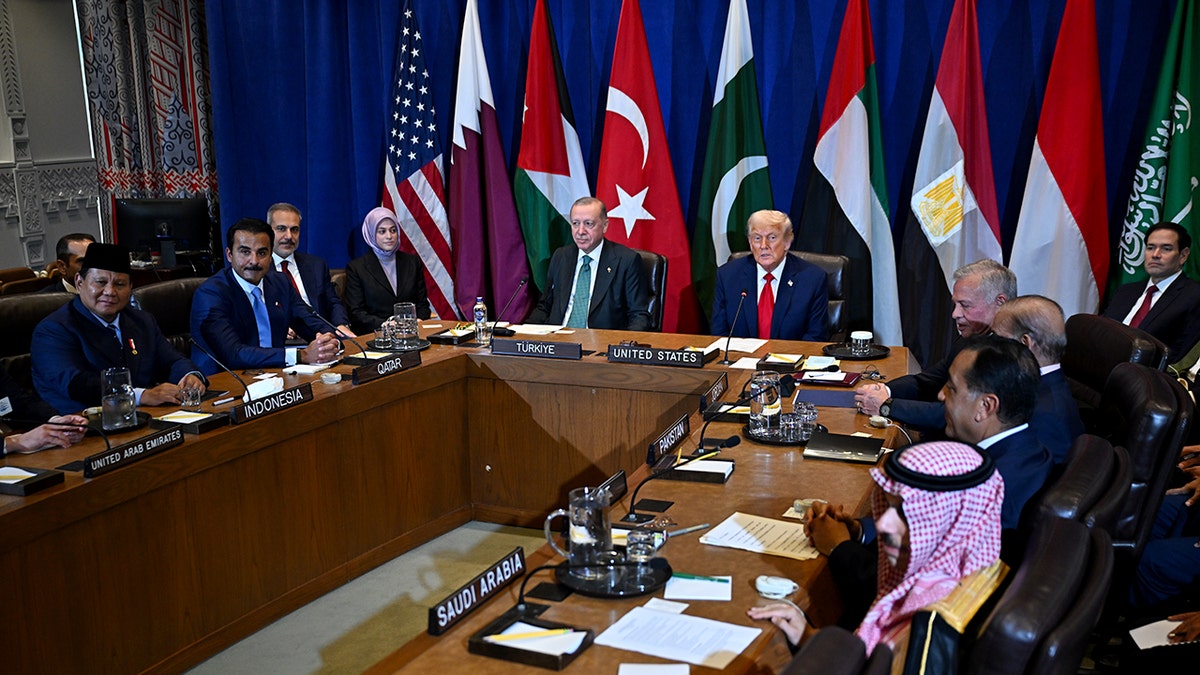
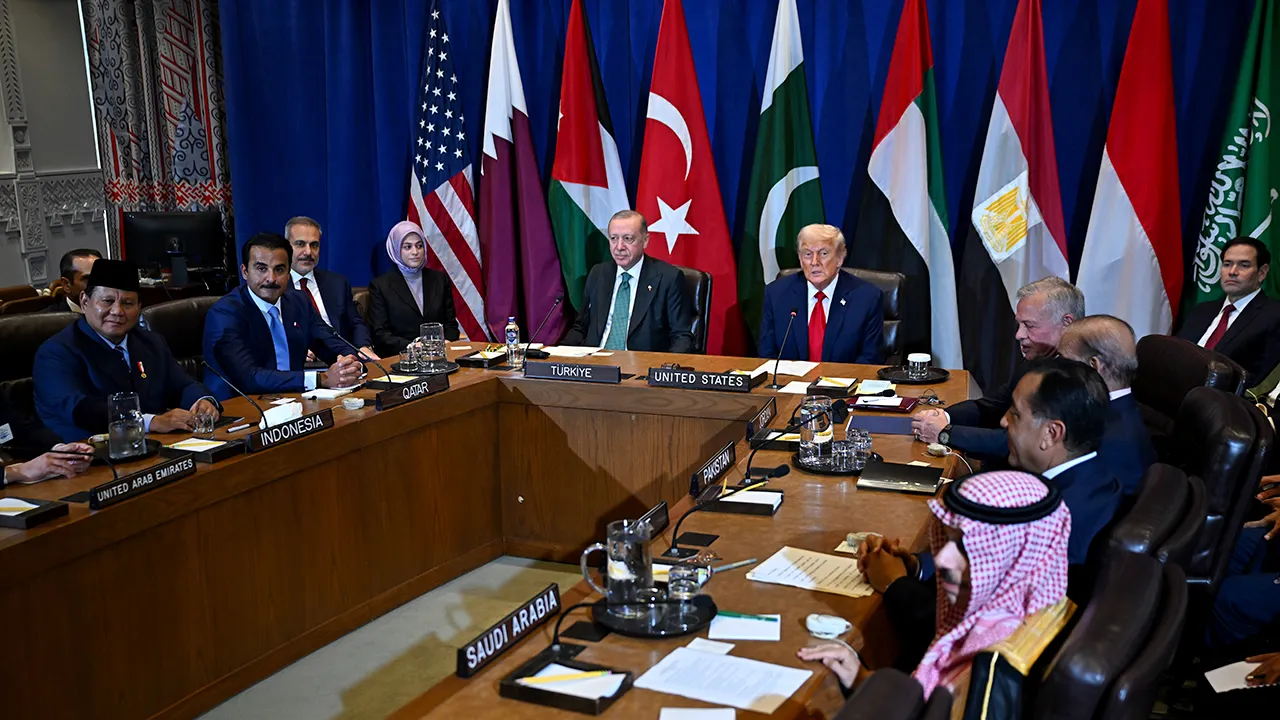
Turkish President Recep Tayyip Erdogan and President Donald Trump attend a multilateral meeting on Gaza with several Muslim country leaders during the 80th United Nations General Assembly at the U.N. Headquarters in New York, United States, on September 23, 2025. (Photo by Celal Gunes/Anadolu via Getty Images)
Rich Goldberg, a senior adviser at the Foundation for Defense of Democracies, said the war with Iran has reshaped the region’s strategic calculations. He pointed to the possibility of expanded energy cooperation and deeper ties between Israel and Arab countries as governments reassess their security and economic interests.
“Regional integration and normalization can move forward alongside energy infrastructure designed for this moment — particularly the urgent need to create alternatives to the Strait of Hormuz,” Goldberg said.
He said overland pipelines could transport Gulf energy toward the Mediterranean, potentially passing through Israel and reducing reliance on exposed maritime shipping lanes.
“We can make the Strait of Hormuz irrelevant,” Goldberg said, citing possible energy corridors linking Saudi Arabia with Israel and connecting Qatar to the Mediterranean.
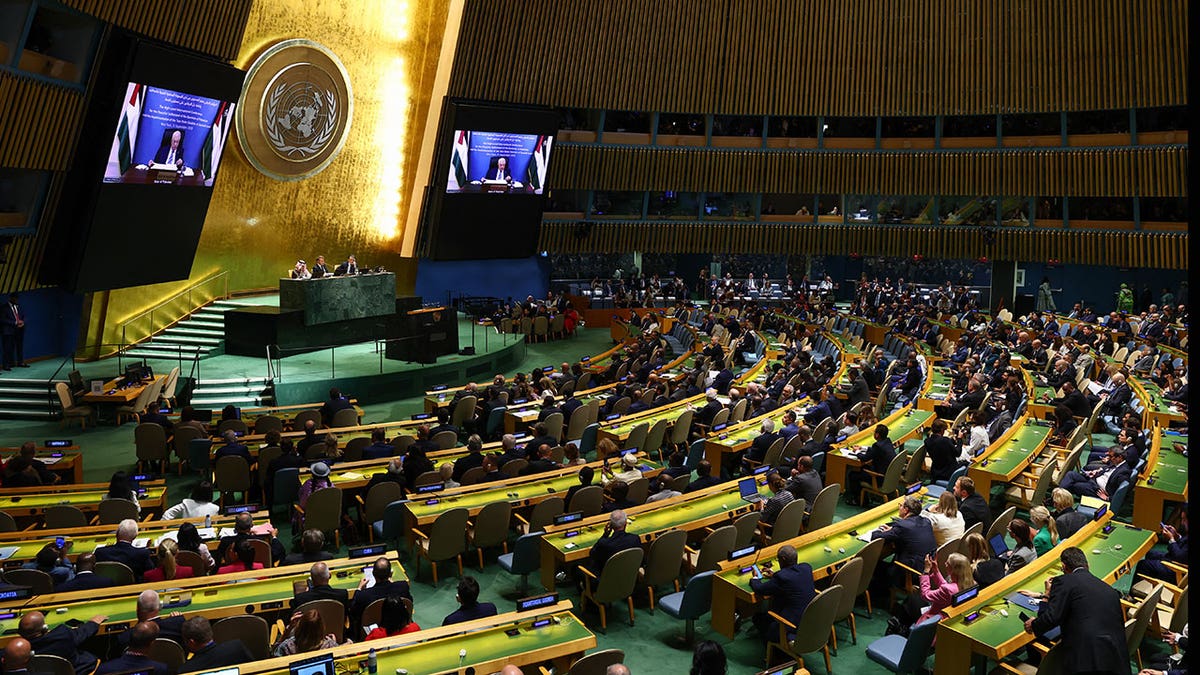
Palestinian Authority President Mahmud Abbas is displayed on a screen as he speaks remotely during a United Nations Summit on Palestinians at U.N. headquarters during the United Nations General Assembly (UNGA) in New York on Sept. 22, 2025. (Angela Weiss/AFP via Getty Images)
The risks to regional energy security, however, are no longer limited to the Strait of Hormuz. Houthi operations along Yemen’s Red Sea coastline have renewed fears about the Bab el-Mandeb, another vital maritime passage. In a Sept. 11 analysis, Washington Institute analysts April Longley Alley and Allison Minor said the campaign had “shattered the status quo” on Yemen’s western coast.
Gaza will pose an equally difficult diplomatic test. Arab governments are pushing for a political solution but remain at odds with Israel over Palestinian statehood and the future governance of the territory.
In a joint statement issued Sept. 6, the foreign ministers of Jordan, Egypt, Qatar, Türkiye, Saudi Arabia, the United Arab Emirates, Indonesia and Pakistan rejected any plan to forcibly remove Palestinians from Gaza. They reaffirmed their support for a Palestinian state based on the 1967 borders, with East Jerusalem as its capital, and cautioned that displacement proposals could weaken Trump’s Gaza peace initiative.
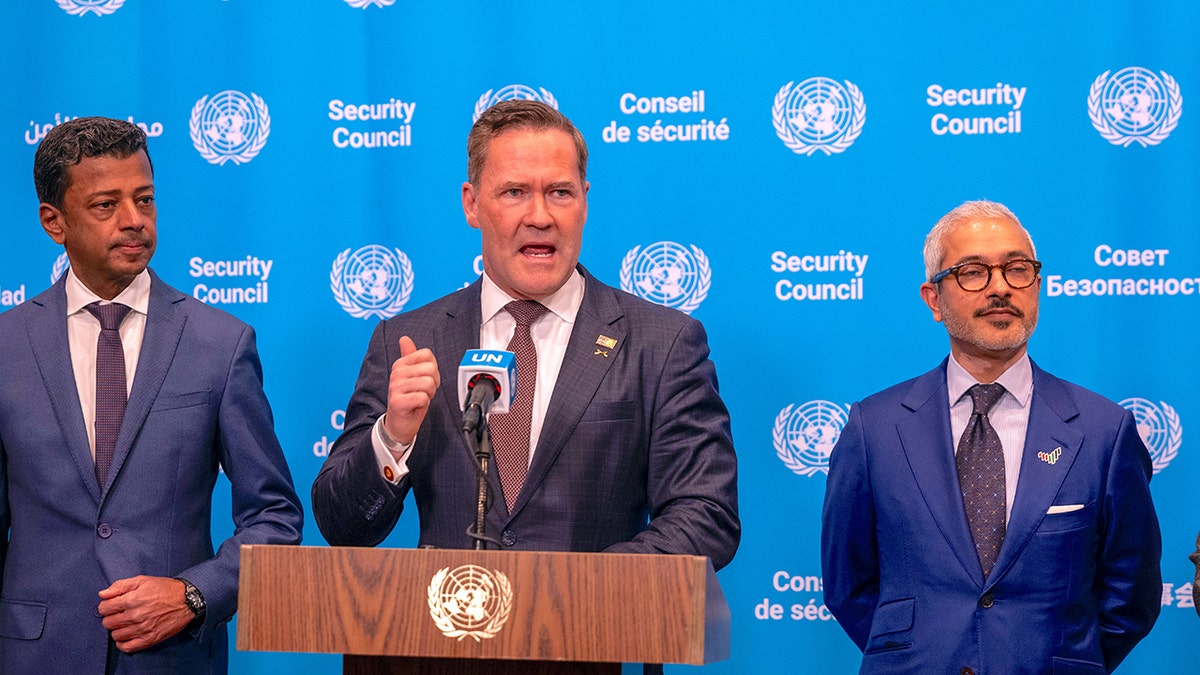
Ambassador to the United Nations Mike Waltz is joined by Ambassador Jamal Fares Alrowaiei of Bahrain (left), Permanent Representative of the United Arab Emirates Mohamed Issa Abushahab (right) and other Gulf states ambassadors as he speaks to reporters after the passing of a U.N. Security Council draft resolution on the situation with ships in the Strait of Hormuz on May 7, 2026, in New York City. (Spencer Platt/Getty Images)
Qatar has condemned both renewed Iranian strikes on Arab countries and Houthi attacks targeting Saudi Arabia and commercial shipping in the Red Sea. At the same time, Doha has continued to emphasize that the Palestinian cause must remain central to regional diplomacy.
France, Britain and Canada said in a Sept. 8 joint statement that they would prohibit imports from Israeli settlements and consider targeted action against settlements and those supporting them. The three countries also announced plans to co-chair a UNGA meeting aimed at promoting a two-state solution, a year after recognizing Palestinian statehood.
Those divides will be visible in the list of leaders appearing at the U.N. in person. Palestinian President Mahmoud Abbas was refused a U.S. visa for a second straight year, leading the General Assembly to vote Thursday to permit him to address the gathering by video.
Netanyahu is expected in New York just weeks before Israel’s Oct. 27 parliamentary elections — the first national vote since Hamas’ Oct. 7, 2023, attacks — as international support for Israel continues to erode. A June 2026 Pew Research Center survey found that a median of 67% of adults in 36 countries expressed unfavorable views of Israel, while 25% viewed the country positively.
For the United States, the task will be to preserve its regional security partnerships while navigating mounting disagreements over Gaza and the future of Washington’s relationship with Israel.
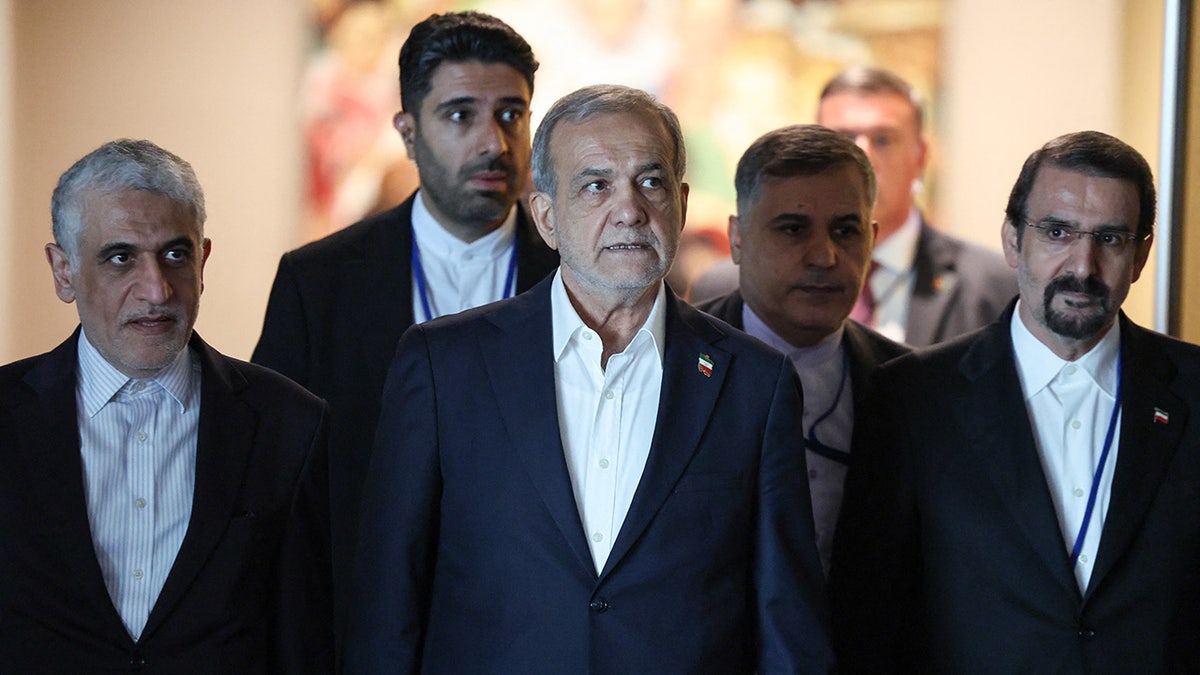
Iran’s President Masoud Pezeshkian (C) walks on his way to a bilateral meeting with France’s President Emmanuel Macron on the sidelines of the United Nations General Assembly at U.N. headquarters in New York City on Sept. 24, 2025. (Ludovic Marin/AFP via Getty Images)
Goldberg said some of the most important negotiations may happen outside the General Assembly chamber. Arab leaders, he suggested, could strike a different tone in private discussions with Trump and senior U.S. officials than they use in their public addresses.
“We may see the old propaganda of criticizing Israel and saying everybody wants a different future, and they’re going to support Gaza and the Palestinians, they demand a Palestinian state,” Goldberg said.
Behind closed doors, he predicted the discussions would focus on U.S. security guarantees, the next steps in confronting Iran and expanding regional energy infrastructure.
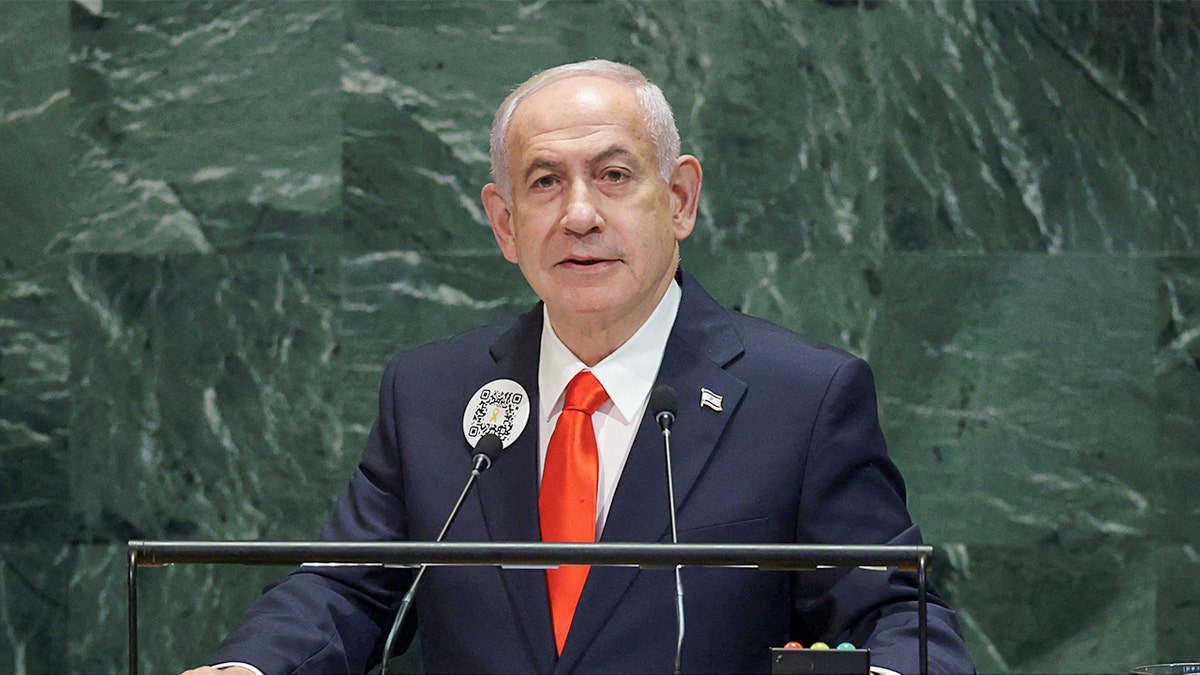
Israeli Prime Minister Benjamin Netanyahu addresses the 80th United Nations General Assembly (UNGA) at U.N. headquarters in New York City, Sept. 26, 2025. (Jeenah Moon/Reuters)
“What will be a pathway forward politically that the U.S. can provide to these leaders so that they can normalize with Israel alongside the necessary infrastructure upgrades that they need to make for their own energy securities and physical securities going forward?” Goldberg said.