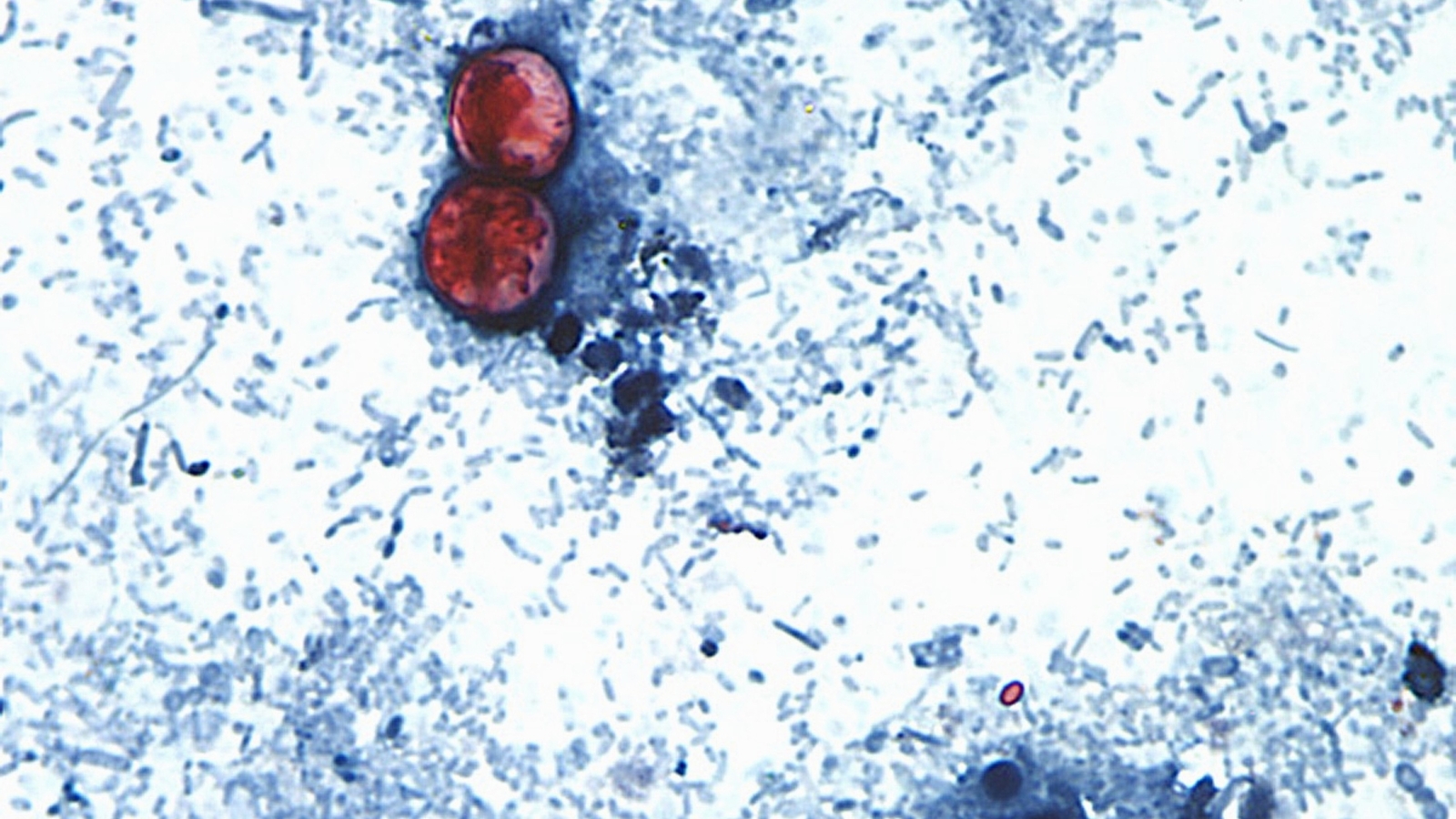

Cyclospora infections are still climbing in the United States, as health officials track a widening spread of the intestinal illness caused by the microscopic parasite.
Newly updated figures released Wednesday by the Centers for Disease Control and Prevention show more than 11,500 reported cases across 41 states. That total includes roughly 4,100 laboratory-confirmed infections and about 7,400 additional cases that have not yet been confirmed through lab testing.
At the same time, investigators are focusing on a separate outbreak believed to be tied to shredded iceberg lettuce served at Taco Bell restaurants in five states: Indiana, Kentucky, Michigan, Ohio and West Virginia.
The lettuce was supplied by Taylor Farms de Mexico and traced to central Mexico. In response, the company has issued a voluntary recall covering all of its iceberg lettuce products.
Although officials have identified more affected states and are narrowing in on a possible source, key details about the cyclosporiasis outbreak remain unresolved. Here are the major questions that are still unanswered:
Scope of the outbreak
To date, the CDC has confirmed only about 4,100 cases, while totals reported by some state health departments are considerably higher.
In Michigan, the Department of Health and Human Services reported at least 7,171 confirmed cases connected to an outbreak in data updated Wednesday. Ohio health officials, meanwhile, have confirmed 1,320 cases since May 1, though it remains unclear how many of those are outbreak-related.
The CDC has noted that reporting can lag by as much as six weeks between the time a person becomes ill and the point when the case reaches the federal agency.
Dr. Zoe Weiss, director of clinical microbiology at Tufts Medical Center in Boston, told ABC News that it can be hard to determine the scope of the outbreak.
“I think in any outbreak situation, you’re probably going to underestimate the actual number of cases,” Weiss said. “There may be people who have very minor symptoms, and they never present to care, or people who just try to tough it out and eventually get better and again never present to care.”
Although it usually takes about a week between when a person is infected with the parasite and when symptoms appear, it can range from two days to two weeks or longer, according to the CDC. The long incubation period can make it difficult to trace back what may have infected someone.
“By the time my chronic diarrhea finally drives me to the loo enough times and feels unrelenting enough that I want to present to a doctor, I can’t remember what I had for dinner and breakfast yesterday, let alone what I ate six or seven days,” Dr. Cameron Wolfe, a professor of medicine in the department of medicine at Duke University, told ABC News, describing a hypothetical patient.
Wolfe noted that it does seem public health officials are getting a better understanding of how many cases there may be, likely due to better awareness and tracking of cases.
He said with more awareness, more patients with symptoms are likely coming forward seeking care and health care professionals also know to look for the illness.
“It’s far from perfect because there’s lots of people who will have symptoms that will self-resolve and they probably don’t present, don’t get tested and we never count their case, so we probably still grossly underestimate the number of cases that are out there, but we’re getting a better handle on it,” he said.
Source of the outbreak
The CDC and Food and Drug Administration have linked a multi-state outbreak to shredded iceberg lettuce from Taylor Farms.
Last week, Taylor Farms de Mexico issued a voluntary recall of all iceberg lettuce sourced from central Mexico, with the recall affecting 27 states. The recalled products were distributed from June 29 through July 16 and have best-if-used-by dates up to Aug. 3.
The recall includes Marketside-brand products available at Walmart, according to the FDA.
Weiss said it can take some time to determine that all the affected products are off the shelves.
“A lot of lettuce or produce in general can be sold under different names,” she said. “It can be transported across state lines. There are opportunities for ambiguity about exactly where something was sourced from.”
Despite the link between Taylor Farms iceberg lettuce and the multi-state outbreak, it is possible there are other potential sources, which officials are continuing to investigate.
Additionally, 29 other states are reporting dozens of cases. New York and Texas, which have not been linked to the outbreak, are each reporting between 161 and 300 cases, according to the CDC. Similarly, North Carolina, also not linked to the outbreak, is reporting between 81 and 160 cases, the CDC said.
No sources have been identified behind the clusters in each of these states. Cases could be linked to the general parasite season — which occurs between May 1 and Aug. 31 — one source or multiple sources, public health specialists told ABC News.
“My message to colleagues last week when we thought all of it was coming from, at that point, Taylor Farms was to simply say, ‘Look, hang on, this is kind of large and so widespread at this point that I don’t know that we can yet be certain,'” Wolfe said. “In fact, I’m certain that we’re not yet certain that this has all been sourced and backtracked to one or two or three different outbreak points.”
Wolfe explained that because cases are being tracked in multiple cities and states across multiple geographies, determining sources will take some time.
“It may be, in fact, across multiple sources at this point. I don’t think we know,” Wolfe said. “I think we should be humble and say that that is hard to trace, and we do not yet have our head around that.”
Copyright © 2026 ABC News Internet Ventures.