
Donald Trump said Thursday that he is moving closer to approving a major escalation of strikes on Iran, as oil prices climbed to their highest level in two months and Tehran-aligned Houthi rebels appeared to widen the crisis with fresh action in the Red Sea.
‘I am considering a massive attack. Bigger than ever before,’ the President told Axios. ‘I am close to making a decision. We are all set for it.’
Trump said Iran was seeking an agreement, but argued that Tehran had not yet experienced ‘enough pain’ to negotiate seriously. He gave no timetable for when he would make a final call.
The Pentagon has sent a B-1 bomber over the region for the first time since the ceasefire broke down, while also moving additional special operations forces into the area. Another 150 medical personnel have been deployed to the military hospital in Germany that treats US service members injured in the Middle East.
The State Department, citing ‘heightened tensions in the Middle East,’ issued a worldwide travel caution for US citizens and advised Americans in the region that flights could be disrupted.
Trump said Israel would take part in renewed strikes if he requested it, though he maintained that Israeli assistance was not necessary. Speaking to Axios, the President said ‘relations with Bibi [Netanyahu] are very good’ and added that he would meet the Israeli prime minister if Netanyahu comes to Washington next week for Senator Lindsey Graham’s wake.
Oil prices pushed above $100 a barrel for the first time since May 26 after Houthi rebels claimed responsibility for two attacks on Saudi tankers in the Red Sea, raising fears of renewed disruption to global energy supplies. Analysts warned the strikes could threaten Saudi Arabia’s alternative export route.
Europe would face the sharpest impact if the Houthis manage to restrict Red Sea shipping, because of the continent’s reliance on Saudi oil exports moving through the route. The pressure on European supply is already being intensified by Ukrainian attacks on Russian oil refineries.

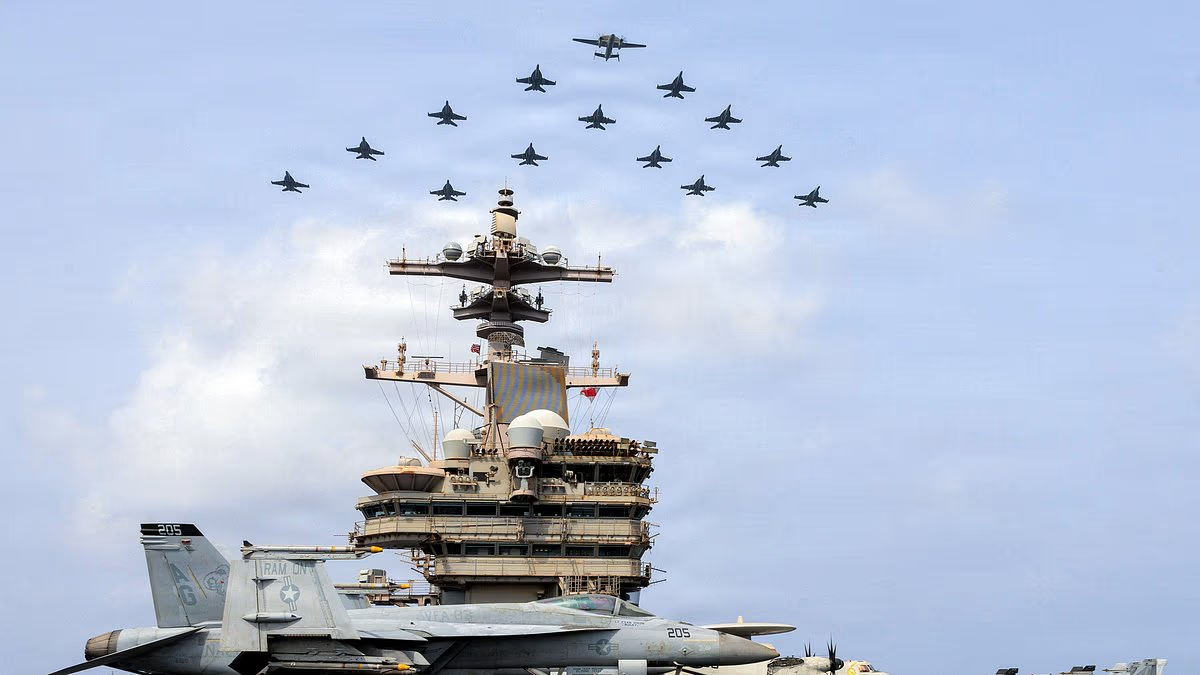
US military planes fly in formation over the USS George HW Bush in a June 30 photo from CENTCOM Public Affairs

Thousands of Houthi supporters gather in the streets of Sanaa, holding signs and raising lights during a rally backing statements by Houthi military spokesman Yahya Saree, on July 20
Trump is under pressure at home to wrap up the war as Republicans facing crucial midterm elections in November fear a bloodbath if gas prices remain elevated and push inflation higher.
Many Democrats have voiced opposition to the war since its inception.
Secretary of War Pete Hegseth was grilled in a Senate committee hearing on Tuesday, where even a Republican senator rebuked him for not giving ‘straight answers’ to questions.
Hegseth testified that the cost of the war has already exceeded $37.5 billion, and the White House is asking Congress for even more than that in emergency war funding.
Trump has made repeated threats against the Iranian regime, but since the collapse of the memorandum of understanding, the US has been unable to restore traffic through the Strait of Hormuz.
Iranian Foreign Minister Abbas Araghchi said on X that Iran would harshly answer any military action taken against it.
‘Our defense doctrine is clear: eye for an eye,’ he wrote. ‘Any aggression against Iran, including our infrastructure, will compel a powerful and decisive response.’
Secretary of State Marco Rubio shot back, telling reporters that US policy would be a ‘head for an eye’ when it comes to retaliating against Iranian action. ‘They will pay a very heavy price for the things they’re doing,’ Rubio added.

Iran has launched a new front in its war with Donald Trump in the Middle East after the regime’s proxy militants bombed oil tankers linked to US allies in the Red Sea

The US has bombed Iranian radar and missile systems along the Strait of Hormuz for nearly two weeks after Trump’s ceasefire collapsed

Previous Iranian attacks damaged an Iraqi vessel moving through the Strait of Hormuz in March
As American confidence in the war wanes, four US soldiers were killed over the weekend, bringing the death toll to 18 since the war’s beginning.
Three died in an Iranian missile and drone attack on an air base in Jordan. One died after an attempted controlled detonation of an Iranian drone.
More than 400 US troops have been wounded in the fighting.
Nearly half of voters, 49 percent, now say launching military action in Iran was the wrong thing to do, according to a Daily Mail/JL Partners poll of 1,021 registered voters taken between July 17 and 20.