
Driver repeatedly rams NY synagogue
The New York Police Department and the Department of Justice investigated the incident as a possible hate crime after a vehicle was driven repeatedly into a door at Chabad-Lubavitch World Headquarters in Brooklyn. (Daniel David Yeroshalmi via Storyful)
A New Jersey man was sentenced Wednesday to six months and one week in prison for repeatedly ramming his car into the Chabad Lubavitch World Headquarters in Brooklyn in January, causing damage to a side entrance door.
Dan Sohail, 36, received the sentence in Brooklyn federal court and was also ordered to pay $20,000 in restitution. Because he has already been held in custody for six months, the sentence means he is expected to be released in about a week.
Sohail was charged with intentionally damaging religious property and pleaded guilty to the offense in May.
Federal prosecutors had asked for a 14-month prison term, which would have kept Sohail incarcerated for approximately eight more months, but the judge rejected that recommendation. Prosecutors argued that a longer sentence was needed to discourage future attacks on Jewish institutions as antisemitic hate crimes have increased.

Dan Sohail was sentenced to six months and one week in prison for driving his car into the Chabad Lubavitch World Headquarters. (AP Photo/Yuki Iwamura)
According to prosecutors, Sohail went to the Chabad Lubavitch World Headquarters on Jan. 28, moved protective barriers and signaled for congregants to clear the area before driving into the building’s side entrance five times. The impact knocked the door off its hinges and destroyed the front bumper of his vehicle.
The doors were damaged in the incident, but no injuries were reported.
Judge Eric N. Vitaliano said he was “somewhat saddened” that the Justice Department wanted him to be influenced at sentencing by the public’s mistaken initial impression that the attack was a hate crime.
Prosecutors said ahead of sentencing that 80 of 146 hate crime incidents across New York City since the start of the year were based on crimes targeting Jewish people and institutions.
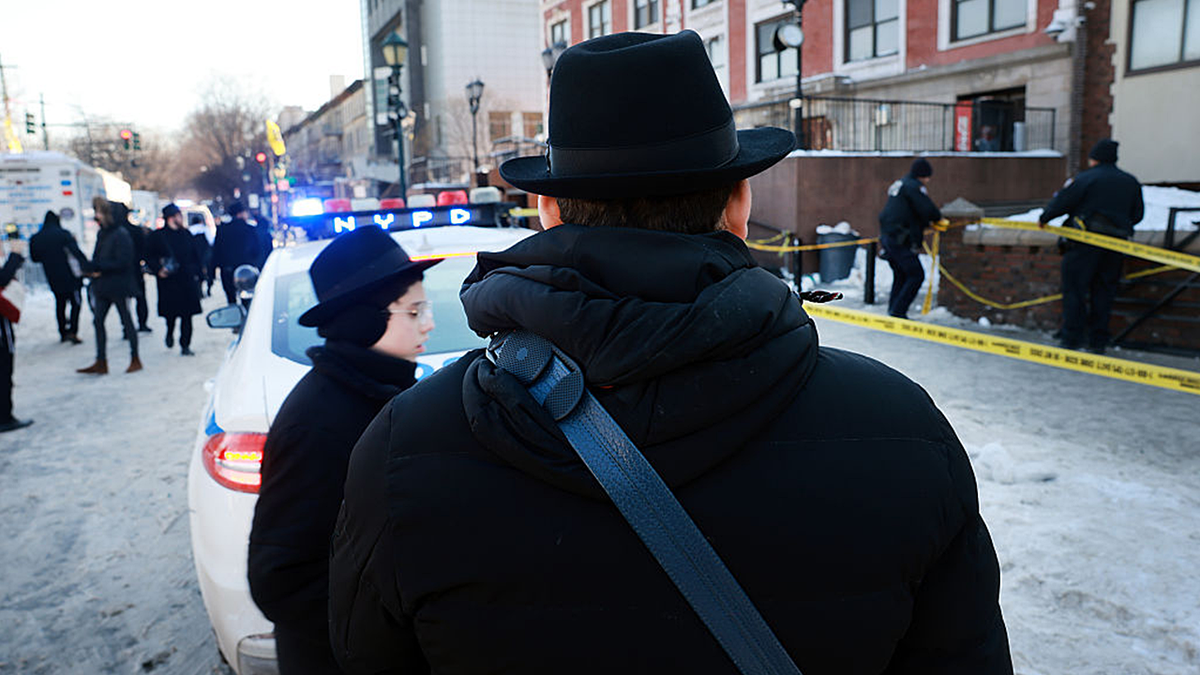
Judge Eric N. Vitaliano said he was “somewhat saddened” to see that the DOJ attempted to influence him by a mistaken initial belief among the public that the attack was a hate crime. (Spencer Platt/Getty Images)
But Vitaliano said the government’s push for a stricter sentence as a deterrent to future attacks was in part based on the incident initially being labeled as an “I-hate-the-Jews crime, or, worse, an act-of-terrorism crime.”
The judge cited a psychiatric report and said Sohail’s mental health challenges “played an important role” in his sentencing.
“This is a sad tale,” Vitaliano said.
Sohail’s lawyer, Mia Eisner-Grynberg, said he had been trying to win acceptance at the Jewish institution as he struggled with psychological issues.

Dan Sohail was charged with intentionally damaging religious property, pleading guilty in May. (Spencer Platt/Getty Images)
Eisner-Grynberg told the judge in court papers before sentencing that Sohail was battling depression and post-traumatic stress disorder after a traumatic childhood when he carried out the attack, even as he “desperately sought belonging and understanding through his exploration of Judaism.”
She said Sohail attended the Chabad he later attacked, finding rabbinical students there “warm and welcoming.”
Sohail “danced with them” and followed their recommendation to visit Israel, but he became erratic and extremely anxious after returning to the U.S., “begging” members of Chabad to help him, Eisner-Grynberg said.
Ramming the car into the building was “an irrational cry for help,” she said.